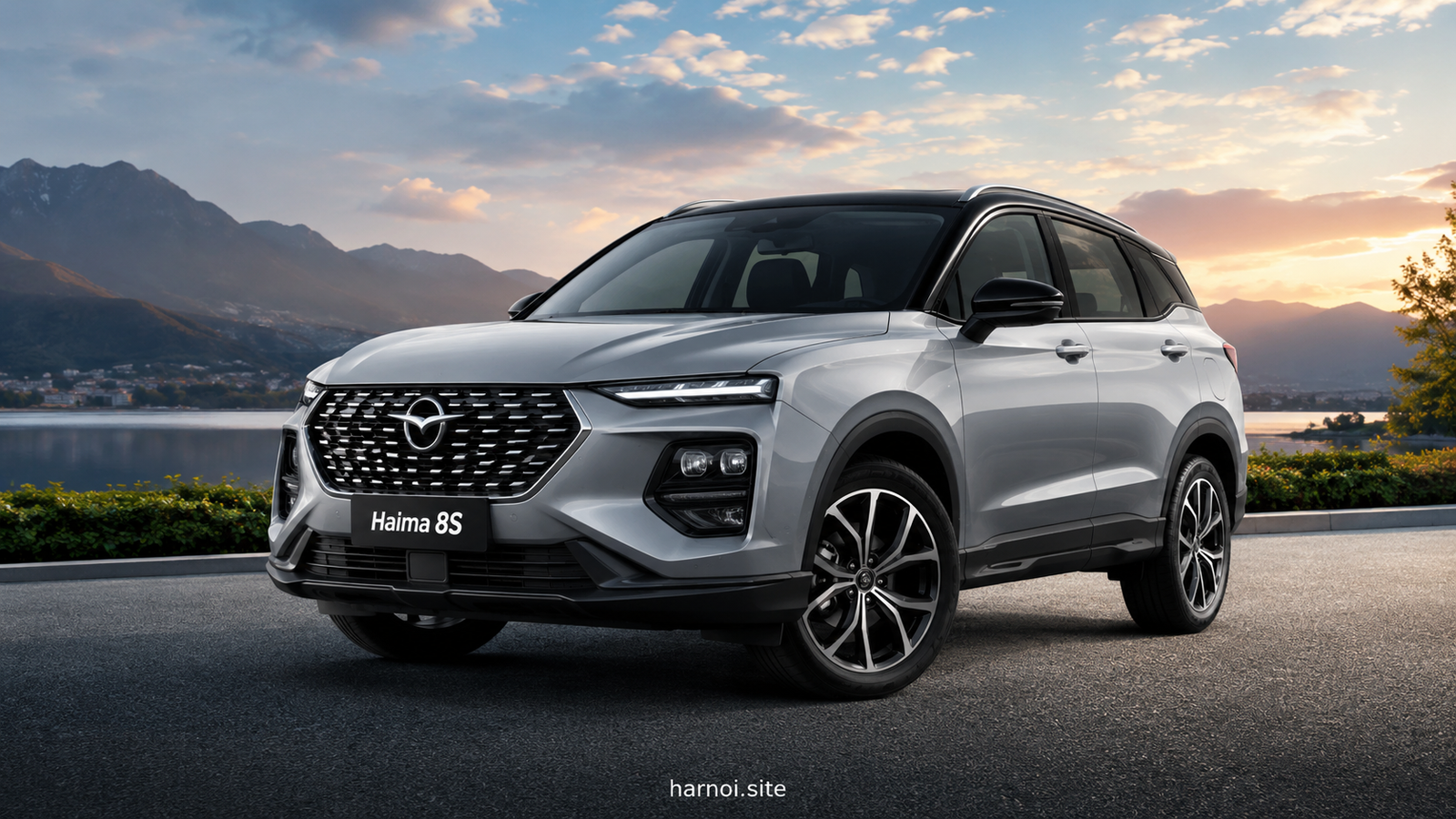
Overview of the Haima 8S
The Haima 8S is a compact crossover SUV built by Haima Automobile, a Chinese manufacturer based in Hainan that traces its roots back to a former joint venture with Mazda (the name itself blends “Hainan” and “Mazda”). Positioned as Haima’s flagship SUV, the 8S went on sale in China in July 2019, riding on the brand’s own HMGA (Haima Global Architecture) platform.
The name “8S” is a nod to the car’s claimed 0–100 km/h time of under 8 seconds — a fairly aggressive positioning for a mainstream compact SUV. Beyond China, the 8S has also been assembled in Iran by IKCO at its Binalud plant, and it made appearances at motor shows in other markets (including India’s Auto Expo 2020), though it has not seen an official, confirmed retail launch outside China and Iran. Any pricing you see for markets like India or Pakistan is typically speculative or “expected price” estimation by automotive listing sites rather than an actual on-sale figure — worth keeping in mind if you’re researching this car outside China.
Key Features
- 1.6-liter TGDI turbocharged petrol engine producing 195 hp
- Choice of 6-speed manual, 6-speed automatic/semi-automatic, or 7-speed dual-clutch transmission
- Panoramic sunroof
- 360-degree camera assist system
- Push-button start with keyless entry
- Steering-mounted paddle shifters
- Adaptive cruise control (ACC) and autonomous emergency braking (AEB)
- Electronically adjustable front seats
- Power-operated rear tailgate
- Optional wireless phone charging
- ADAS (advanced driver-assistance) suite bundled as standard on higher trims
Engine, Performance & Transmission
The 8S is powered by Haima’s self-developed “Boost Blue Power” 1.6-liter TGDI turbocharged inline-four, badged internally as the HMA GA16-YF. It produces 195 hp (143–145 kW) and 293 Nm of torque — strong figures for the segment and displacement.
Buyers could choose between three transmission options depending on trim and market:
- 6-speed manual gearbox
- 6-speed automatic/semi-automatic gearbox
- 7-speed dual-clutch transmission (DCT)
Official 0–100 km/h acceleration is quoted at around 7.8 seconds, which Haima demonstrated in testing at Tianjin’s V1 International Circuit. Top speed is listed at approximately 180 km/h. Haima also announced plans for a 1.2-liter turbo hybrid and mild-hybrid variants, though these electrified versions have not seen wide, confirmed production.
Fuel Economy & Mileage
Fuel economy figures vary slightly depending on the source and testing standard (NEDC vs. real-world), but the 8S generally falls in this range:
- Combined NEDC fuel consumption: roughly 6.9–7.2 L/100 km
- Approximate mileage: around 14–16 km/l (roughly 33–38 mpg US)
These numbers are respectable for a 195 hp turbocharged SUV of this size, though real-world consumption will run a bit higher depending on driving style, transmission choice, and load.
Exterior Design
The 8S wears a bold, sporty look for a Chinese SUV of its era. Highlights include:
- A wide hexagonal/star-shaped mesh front grille
- Split-style headlamps with slim LED daytime running lights
- Black wheel-arch cladding and skid plates for a rugged crossover stance
- A “floating roof” design with contrasting roof color on some trims
- Character lines along the sides for a dynamic profile
- Slim, connected LED tail lights spanning the rear
- Dual chrome-tipped exhaust outlets integrated into the rear bumper
In terms of footprint, the 8S sits between a compact crossover and a midsize SUV — larger than something like a Kia Sportage of the same generation, but smaller than a body-on-frame SUV like the Toyota Fortuner.
Interior, Comfort & Technology
Inside, Haima aimed for a youthful, sporty cabin rather than a purely utilitarian one. Notable elements include:
- A three-spoke, multifunction sport steering wheel with paddle shifters
- A “flying wing” style center console design
- A mix of soft-touch plastics, fabric/leatherette trim, and chrome accents
- A digital instrument cluster on higher trims
- A touchscreen infotainment system with smartphone connectivity
- Electronically adjustable front seats
- Optional wireless charging pad
- Panoramic sunroof for an airier cabin feel
The overall ergonomic layout leans toward a driver-focused design rather than a minimalist one, which suits buyers who want a sportier ownership experience over ultra-premium materials.
Safety Features
Haima equipped the 8S with a reasonably generous safety package for its class and price point at launch, including:
- ADAS (Advanced Driver Assistance Systems) suite
- Adaptive Cruise Control (ACC)
- Autonomous Emergency Braking (AEB)
- 360-degree parking camera
- Tire Pressure Monitoring System (TPMS)
- Electronic Stability Program (ESP)
- Electric parking brake
- Ventilated front disc brakes and rear disc brakes
This puts the 8S ahead of many budget SUVs from the same era on paper, though independent crash-test data (such as C-NCAP or Euro NCAP ratings) for the 8S is not widely published, so buyers should treat these as manufacturer-stated features rather than independently verified safety outcomes.
Dimensions & Cargo Space
| Specification | Measurement |
|---|---|
| Length | 4,565 mm |
| Width | 1,850 mm |
| Height | 1,682 mm |
| Wheelbase | 2,700 mm |
| Kerb weight | 1,545–1,560 kg |
| Front/rear tire size (higher trim) | 225/55 R19 |
With a 2,700 mm wheelbase, the 8S offers a fairly spacious cabin for its exterior footprint, and its dimensions place it in a comfortable middle ground between compact crossovers and larger midsize SUVs — useful if you want SUV proportions without the bulk of a full-size model.
Available Trim Levels
Haima offered the 8S in China across a handful of trims, differentiated mainly by transmission type (manual vs. automatic vs. DCT), wheel size, and equipment level (base cloth interior versus higher trims with leatherette, sunroof, wireless charging, and the full ADAS suite). Exact trim naming has varied by model year and market, and Haima has not published a single globally standardized trim lineup the way larger automakers do — so if you’re shopping for one, it’s worth confirming the exact spec sheet for the specific unit or model year you’re considering rather than assuming feature parity across “8S” listings.
Pricing and Value for Money
At its original 2019 China launch, the Haima 8S was priced from roughly 79,900 to 125,900 RMB depending on trim and transmission — positioning it as an affordable, feature-rich alternative to pricier joint-venture SUVs in the same market.
Outside China, pricing gets murkier. Listings suggesting an Indian price of around ₹12.5 lakh are labeled as “expected” on the sites that publish them, and the car has not had a confirmed retail launch in India. Similarly, no official Pakistani market pricing exists, despite local automotive media covering the car’s design and specs. If you’re looking at the 8S as a used/import vehicle (which is how most units end up outside China), pricing will depend heavily on age, mileage, import duties, and condition rather than any official MSRP.
For what it offers on paper — turbo power, a loaded features list, and a bold design — the 8S represents strong value within China’s domestic market. As an import elsewhere, value depends heavily on total landed cost and parts/service access (more on that below).
Maintenance and Ownership Costs
Because the Haima 8S is not officially distributed in most markets outside China and Iran, ownership costs outside those regions come with real caveats:
- Parts availability: Genuine Haima parts can be difficult to source outside China, often requiring import, which adds cost and lead time.
- Service network: Authorized Haima service centers are essentially nonexistent outside China/Iran, meaning owners elsewhere typically rely on independent mechanics familiar with Chinese turbo-petrol platforms.
- Turbocharged engine upkeep: Like most modern small-displacement turbo engines, the 1.6 TGDI benefits from regular oil changes with the correct spec oil, and turbo longevity depends on consistent maintenance.
- Resale value: Outside its home market, resale value is likely to be soft given limited brand recognition and support infrastructure.
Within China, ownership costs are more predictable and in line with other domestic compact SUVs — moderate fuel costs, standard service intervals, and reasonably available parts through Haima’s dealer network.
Common Problems and Reliability
Public, structured reliability data (recalls, long-term owner surveys, JD Power-style studies) for the Haima 8S is limited compared to what’s available for major global brands. Anecdotal owner discussion and forum commentary point to a few recurring themes:
- Build quality concerns on specific components (for example, door hinges and some trim pieces) have been raised by enthusiast forums, though these are largely anecdotal rather than backed by formal reliability studies.
- As with many small-capacity turbo engines, long-term reliability will depend heavily on adherence to service intervals, since turbocharged engines are generally less forgiving of maintenance neglect than naturally aspirated ones.
- Because Haima is a smaller, lower-volume manufacturer compared to giants like BYD, Chery, or Geely, there’s simply less aggregated ownership data available to draw firm reliability conclusions from.
Given the limited independent data, prospective buyers — especially of used examples — should prioritize a thorough pre-purchase inspection over relying on brand reputation alone.
Pros and Cons
Pros:
- Strong power output (195 hp) for a compact SUV in its price class
- Generous standard features list, including ADAS, sunroof, and 360-camera
- Distinctive, sporty exterior design
- Reasonably spacious cabin thanks to a 2,700 mm wheelbase
- Competitive pricing within its home market
Cons:
- No official sales or service network outside China and Iran
- Limited independent safety and reliability data
- Parts sourcing is difficult for owners outside China
- Resale value and brand recognition are weak in most international markets
- Electrified/hybrid variants announced but not widely produced
Haima 8S vs Competitors
Within China, the 8S competes against other domestic compact SUVs offering turbocharged power and generous tech at accessible prices — think similarly sized offerings from Chery, JAC, and Changan of the same era. Compared to these rivals, the 8S differentiates itself with a genuinely strong power figure (195 hp) and a sportier design language, though it trails better-established Chinese brands like Chery and Geely in overall sales volume, dealer network size, and long-term reliability data.
Outside China, since the 8S isn’t officially sold, “competitors” is really a question of what similarly priced, similarly sized used or gray-market imports are available in your region — and in most of those cases, buyers should weigh the 8S’s stronger on-paper specs against the real disadvantage of having no local parts or service support, versus a locally-supported model from an established brand.
Who Should Buy the Haima 8S?
The Haima 8S makes the most sense for:
- Buyers in China shopping in the compact SUV segment who want strong turbo performance and a loaded features list at a competitive price
- Enthusiasts of Chinese automotive brands who specifically want a distinctive, less common SUV
- Buyers comfortable sourcing parts and service independently, for those considering the 8S as a used import outside its home market
It’s a harder recommendation for buyers who prioritize:
- A well-established dealer and service network
- Extensive independent safety/reliability data before purchasing
- Strong resale value
Frequently Asked Questions (FAQs)
Is the Haima 8S available in India or Pakistan? No official retail launch has occurred in either market. The car appeared at India’s Auto Expo 2020 and has been covered by Pakistani automotive media, but pricing listed for these markets is speculative, not confirmed.
What engine does the Haima 8S use? A 1.6-liter TGDI turbocharged inline-four producing 195 hp and 293 Nm of torque.
What transmission options are available? 6-speed manual, 6-speed automatic/semi-automatic, and 7-speed DCT, depending on trim.
Does the Haima 8S have a hybrid version? Haima announced 1.2-liter turbo hybrid and mild-hybrid variants, but these have not seen wide, confirmed production.
How much does the Haima 8S cost? In China, launch pricing ranged from roughly 79,900 to 125,900 RMB depending on trim.
Is the Haima 8S reliable? There isn’t extensive independent reliability data available. Anecdotal reports suggest reasonable performance overall, with some build-quality concerns raised on enthusiast forums; a thorough pre-purchase inspection is recommended for used units.
Final Verdict
The Haima 8S is a genuinely interesting proposition on paper: a turbocharged, feature-rich compact SUV with sporty styling and a competitive price, at least within its home Chinese market. Its 195 hp engine, generous ADAS suite, and bold design punch above what you’d expect from a lesser-known Chinese brand.
The catch is availability. Outside China and Iran, the 8S exists mostly as a curiosity or a used/gray-market import rather than an officially supported vehicle — meaning prospective buyers elsewhere need to weigh its strong specs against real practical downsides: limited parts access, no authorized service network, and thin reliability data. If you’re shopping within China, the 8S is a reasonable value pick in its segment. If you’re outside China, go in with clear eyes about the support-network trade-offs before committing.