Introduction
The Venucia D60 is one of the more overlooked compact sedans to come out of China’s booming auto industry, yet it has quietly built a following among budget-conscious buyers who want Nissan-derived engineering without the Nissan price tag. Produced by Dongfeng-owned Venucia, the D60 offers both a traditional gasoline model and a fully electric variant (D60 EV), giving shoppers flexibility depending on their budget and charging access. This guide breaks down everything you need to know before considering one, whether you’re buying new in China, sourcing a used export unit, or just comparing it to more familiar brands.
Overview of the Venucia D60
The Venucia D60 is a compact three-box sedan produced by Chinese automaker Venucia, a subsidiary of Dongfeng Motor Co., Ltd., which debuted in China in late 2017 and is based on the Nissan Sylphy sedan built through the Dongfeng-Nissan joint venture. That underlying Sylphy DNA is a big part of the D60’s appeal — it borrows a proven, globally-tested platform and drivetrain rather than starting from scratch.
An electric version, the D60 EV, joined the lineup a couple of years later and has since become the more talked-about model internationally, especially as EV exports out of China have accelerated.
Exterior Design
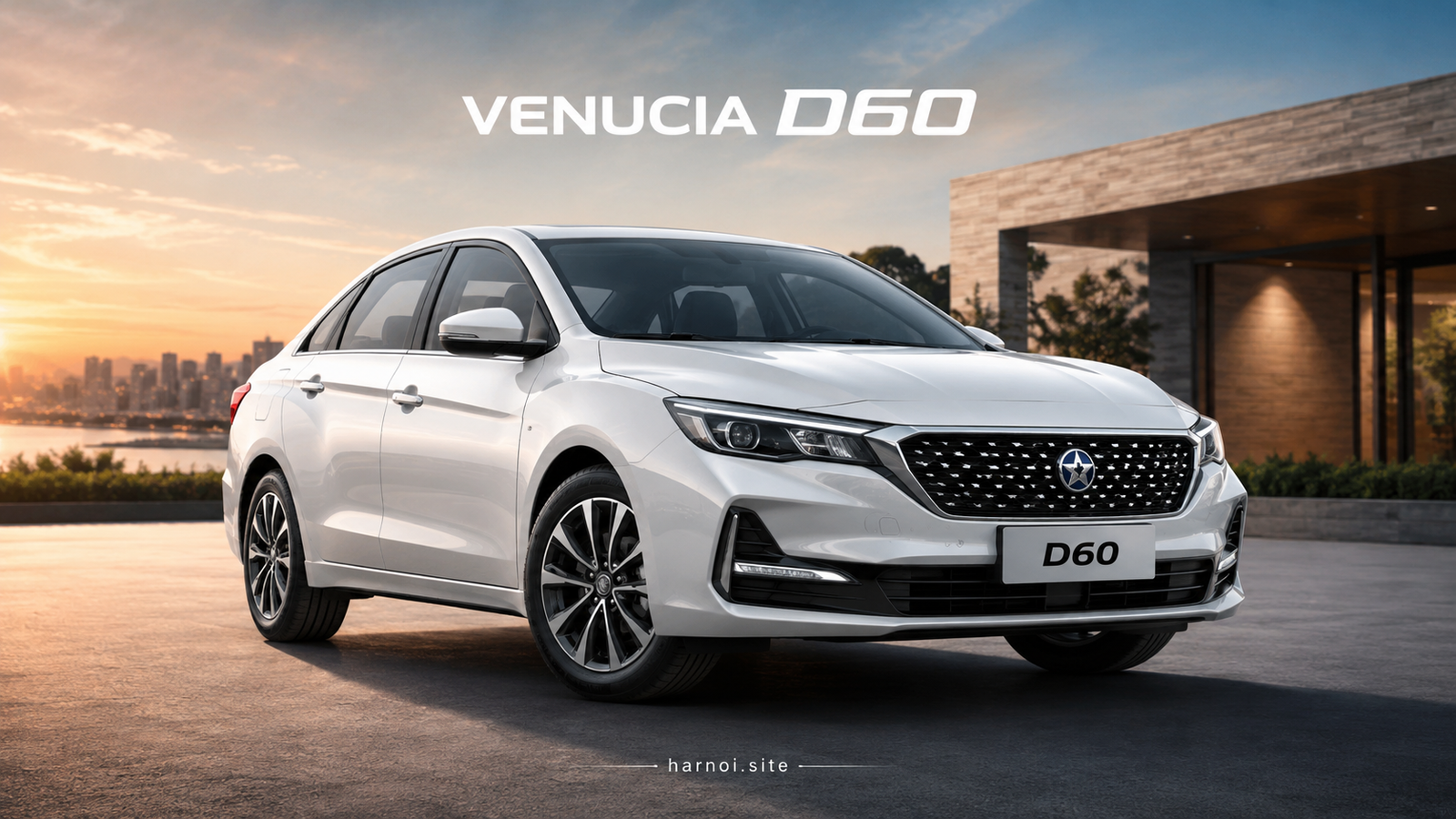
The gasoline D60 wears Venucia’s “Wind Sculpture Aesthetics” language, featuring a low, flat front end with a grille made of horizontally arranged chrome blocks, thick chrome bezels that blend into elongated headlamps, and LED daytime running lights. Newer versions adopted the brand’s “V-Galaxy Star” front face, a bezel-less design that merges the headlights and grille into a single visual unit alongside blade-style LED light clusters.
The D60 EV takes this a step further with EV-specific styling cues. It uses a closed front grille — standard for new-energy vehicles — along with an arrow-shaped fog lamp design that serves as the highlight of the entire front fascia, plus a silhouette that sits low up front and rises toward the rear. Distinctive 16-inch “starburst” alloy wheels round out the EV’s eco-forward look.
A 2021 facelift, badged the D60 Plus, gave the car a more modern front end styled after the Venucia Xing concept, and a subsequent 2023 update brought a redesigned rear end to match.
Interior Design & Comfort
Inside, the D60 aims for a spacious, relaxed cabin rather than a sporty one. The EV variant in particular is designed to prioritize passenger comfort and interior room, giving both driver and passengers room to stretch out on longer trips. Materials and tech feel appropriate for the car’s budget positioning — clean, functional, and straightforward rather than flashy — which lines up with its role as an affordable family sedan.
Engine Specifications
The gasoline-powered D60 is built around Nissan’s HR16 1.6-liter engine, a well-known, reliable unit used across multiple Nissan-Dongfeng products. Depending on model year and trim, output has been rated around 122–126 horsepower.
The D60 EV swaps this for a fully electric powertrain. It runs on a 120 kW electric motor, which converts to roughly 163 horsepower — enough for confident city and highway driving, if not outright quick.
Transmission & Drivetrain
The petrol D60 pairs its 1.6-liter engine with either a 5-speed manual transmission or a CVT gearbox, giving buyers a choice between old-school simplicity and smoother, more relaxed cruising.
The D60 EV, naturally, skips a traditional transmission altogether and sends power through a single-speed setup to the front wheels, which the EV Database review notes results in a front-wheel-drive layout that feels nimble and responsive to driver input.
Fuel Economy (Mileage)
For the gasoline D60, real-world fuel economy tracks close to what you’d expect from a 1.6-liter compact sedan with a CVT — efficient for daily commuting, though Venucia doesn’t market it on class-leading mileage figures.
The EV tells a different story, since “mileage” here means range. The D60 EV is fitted with a Ningde Times (CATL) 811 ternary lithium-ion battery pack, delivering a combined NEDC range of 481 km (about 299 miles) on a full charge — a genuinely competitive figure for its segment and price point.
Performance on the Road
Neither version of the D60 is built to be exciting — both are tuned for comfortable, predictable commuting rather than outright pace. The EV’s 163 hp motor is described as “solid but not spectacular,” trailing rivals like the Nissan Leaf (214 hp) and Chevrolet Bolt EV (200 hp) in outright punch, though it stays competitive with cars like the Hyundai Ioniq Electric. Where the D60 EV does hold its own is efficiency and value — it delivers usable range and adequate power without chasing performance-car numbers.
The gasoline D60’s HR16 engine, meanwhile, offers the kind of unremarkable but dependable delivery that’s made Nissan’s Sylphy family a mainstay in China for years.
Safety Features
Being a Sylphy-derived, budget-oriented sedan, the D60 sticks to a fairly standard safety package for its class and price bracket — front and side airbags, ABS with electronic brake distribution, and stability control on most trims. It doesn’t compete with premium ADAS suites found on flagship Chinese EVs, but it covers the safety basics buyers expect at this price point.
Technology & Infotainment
The D60’s cabin tech is functional rather than cutting-edge: a touchscreen infotainment display, Bluetooth connectivity, and basic smartphone integration are typically included, scaling up with trim level. It won’t wow anyone used to the giant screens found in newer NIO or BYD models, but it gets the essentials right.
Dimensions & Cargo Space
The D60 EV measures 4,764 mm (187.6 in) in length, with a wheelbase of 2,700 mm — putting it comfortably in compact-to-mid-size sedan territory with generous rear-seat legroom for the segment. Its electric drivetrain also nudges overall height up to 1,494 mm (58.8 in) compared with the gasoline version, largely due to battery packaging under the floor. Trunk space remains sedan-typical and practical for daily errands and small family trips.
Ride Quality & Handling
Both versions of the D60 lean toward a soft, comfort-oriented ride rather than sharp handling. The EV’s battery placement lowers the center of gravity slightly, which helps stability, but this is not a car engineered for enthusiastic cornering — it’s tuned for smooth, fatigue-free commuting, which is exactly what most buyers in this segment want.
Trim Levels & Available Variants
The D60 lineup has evolved over several generations:
- Original D60 (2017) — base 1.6L gasoline sedan with manual or CVT options
- D60 EV (2019) — electric variant with the 58 kWh CATL battery pack
- D60 Plus (2021 facelift) — redesigned front fascia inspired by the Venucia Xing
- 2023 D60 EV facelift — updated rear styling matching the D60 Plus, front end unchanged
Trims typically scale by battery/engine configuration, wheel size, and infotainment features, with pricing tiers reflecting those upgrades.
Venucia D60 Price (Latest Update)
Pricing varies significantly by model year, powertrain, and market:
- Gasoline D60: factory prices in China have ranged from roughly 69,800 to 111,800 yuan depending on trim and year, which translates to roughly $10,000–$16,000 USD before any export costs.
- D60 EV: Chinese factory pricing has been listed around 137,800–153,800 yuan (about $18,880–$21,070) at launch, though later model years and post-subsidy pricing have brought effective costs down substantially — some sources cite post-subsidy figures closer to $13,000.
For buyers sourcing used or export units, current listings (as of mid-2026) show pre-owned D60 and D60 EV models trading in China in the roughly $4,500–$13,700 range depending on age, mileage, and powertrain, before export, inspection, and shipping fees are added.
Note: Because the D60 is not officially sold in most Western markets, prices above reflect Chinese domestic pricing and export-broker listings rather than a dealer MSRP you’d see in the US or Europe.
Maintenance Cost
Thanks to its Nissan-sourced HR16 engine and conventional CVT/manual gearboxes, the gasoline D60 benefits from widely available parts and mechanical familiarity, keeping routine maintenance costs low and predictable — a real advantage for buyers wary of obscure Chinese-only components.
The D60 EV, like most EVs, trades oil changes and engine servicing for battery health monitoring and occasional software updates, generally resulting in lower long-term running costs, though buyers outside China should factor in the availability (or lack thereof) of authorized service centers and parts supply chains.
Pros and Cons
Pros:
- Proven, Nissan-derived 1.6L engine with a reputation for reliability
- Competitive EV range (481 km NEDC) for the price
- Spacious cabin and generous wheelbase for the class
- Very affordable pricing, especially on the used/export market
- Distinctive EV-specific styling that doesn’t feel like an afterthought
Cons:
- Not officially sold or supported in most Western markets
- Performance is modest in both gasoline and electric forms
- Safety and tech features trail newer, higher-end Chinese EVs
- Import/export logistics and parts support can be a hassle outside China
- Handling is tuned purely for comfort, not driving enjoyment
Venucia D60 vs Competitors
Against other budget EVs, the D60 EV holds a reasonable position: its 163 hp output sits below the Nissan Leaf’s 214 hp and the Chevrolet Bolt EV’s 200 hp, but ahead of the Hyundai Ioniq Electric’s 134 hp, and its charging time and range are broadly competitive with that group. Its main edge is price — the D60 EV consistently undercuts these rivals significantly on cost, especially in used/export form.
Against domestic gasoline rivals in the compact sedan class (like other Nissan Sylphy derivatives or entry-level Chinese sedans), the D60 competes mainly on the strength of its proven engine and low ownership costs rather than features or brand cachet.
Who Should Buy the Venucia D60?
The Venucia D60 makes the most sense for:
- Budget-focused buyers in China (or importers) who want Nissan reliability at a lower price
- EV shoppers who prioritize range and value over outright power or premium tech
- Fleet or rideshare operators looking for low-maintenance, cost-efficient vehicles
- International buyers sourcing affordable used Chinese EVs through export channels, provided they’ve done their homework on import regulations and after-sales support
It’s less suited to buyers who want cutting-edge ADAS features, strong performance, or easy access to official dealer support outside China.
Frequently Asked Questions (FAQs)
Is the Venucia D60 available outside China? It’s not officially sold through dealer networks in most Western markets, but used and new units are available through Chinese vehicle export brokers.
What’s the real-world range of the Venucia D60 EV? Its rated range is 481 km (about 299 miles) under the NEDC test cycle; real-world range will typically be somewhat lower depending on driving conditions.
Is the Venucia D60 related to the Nissan Sylphy? Yes — the gasoline D60 is built on the Nissan Sylphy platform through the Dongfeng-Nissan joint venture and shares its 1.6L HR16 engine.
Does the Venucia D60 come with a manual transmission? The gasoline version offers both a 5-speed manual and a CVT, depending on trim.
How long does it take to charge the D60 EV? On a standard Level 2 charger, a full charge takes roughly 7.5 hours.
Final Verdict
The Venucia D60 won’t turn heads with performance or flashy tech, but that was never the point. It’s a practical, Nissan-engineered sedan (and a genuinely capable EV alternative) built to deliver reliable, comfortable, low-cost transportation. For buyers within China — or those willing to navigate the export process — it represents strong value, particularly in EV form where its range and pricing punch well above its modest power output. Just go in with realistic expectations about performance, tech, and after-sales support, and the D60 is a sensible, budget-friendly choice.