Tag: car

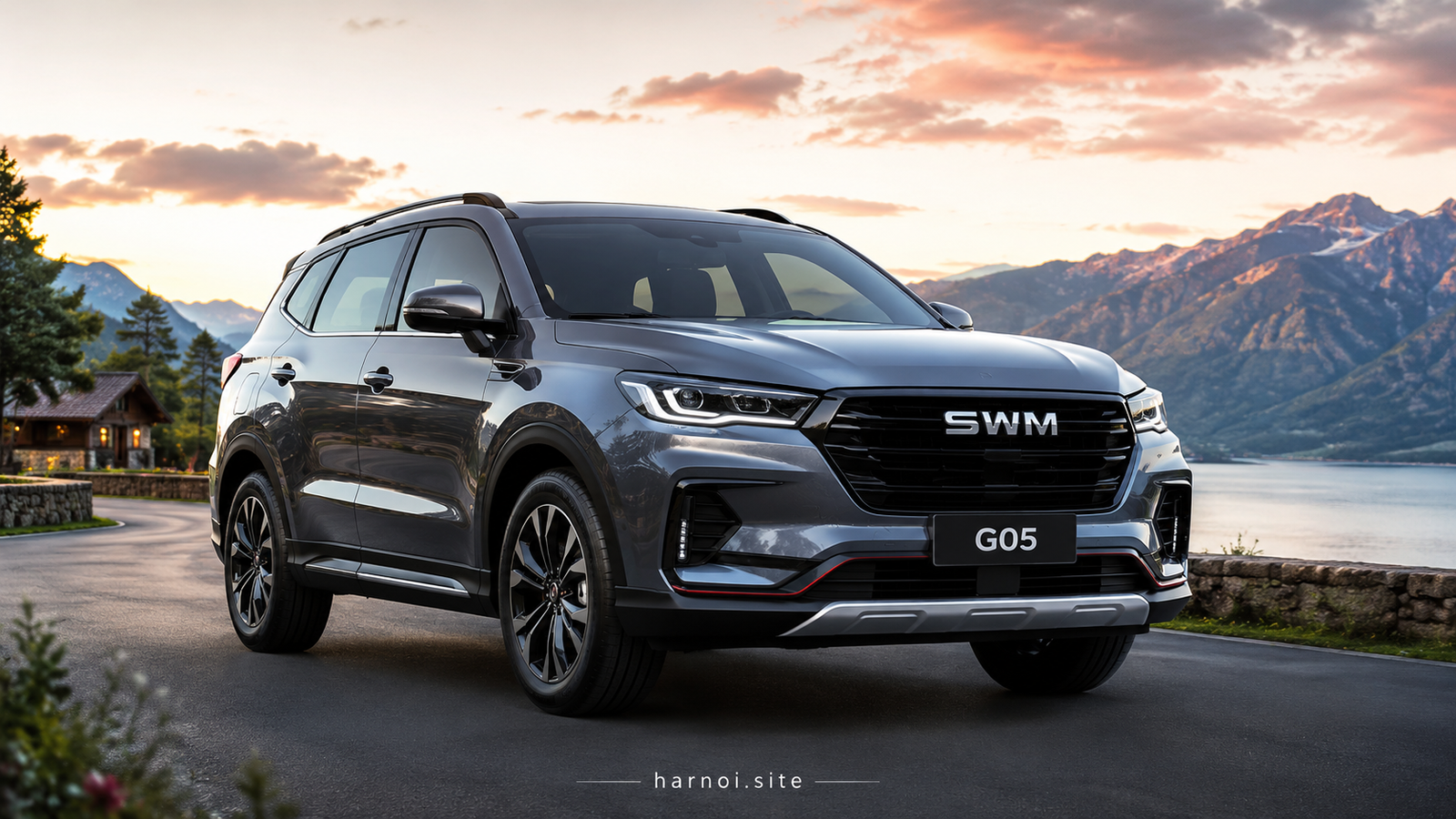
  • SWM G05 Review: Is This 7-Seater SUV Worth Buying?

    SWM G05 Review: Is This 7-Seater SUV Worth Buying?

    Overview

    The SWM G05 is a Chinese-built, seven-seat mid-size crossover from SWM (Shineray Water Motorcycle) Motors, a brand headquartered in Chongqing with a design studio in Milan, Italy. It markets itself on “Italian style, German quality,” and the G05 is the brand’s flagship attempt at a practical, feature-rich family SUV at a budget price. It’s worth flagging upfront: the G05 is sold in China, and SWM exports select models to markets like Turkey, parts of Europe, and South America — but it is not an officially available model in Pakistan, so anyone in Pakistan considering it would be looking at a grey-import rather than a dealer-backed purchase.

    SWM G05 at a Glance

    • Body style: 5-door, 7-seat mid-size crossover SUV
    • Launched: September 2019 (China), facelifted as the G05 Pro in late 2020/early 2021
    • Engines: 1.5L turbo petrol (154–156 hp) or 2.0L naturally aspirated petrol (143 hp)
    • Transmissions: 6-speed manual, 6-speed torque-converter automatic, or 7-speed dual-clutch (depending on model year/trim)
    • Drivetrain: Front-wheel drive only
    • China price: Roughly ¥70,000–¥130,000 (about $9,800–$18,000, before import costs elsewhere)

    Exterior Design

    The G05 leans on SWM’s Italian-influenced design language — a chrome-heavy front grille, wraparound LED-style headlamps, and character lines running along the shoulder to give it a chunkier, more upmarket look than its price suggests. The G05 Pro facelift sharpened the front fascia further and tidied up the tail lamp graphics. At 4.7–4.75 meters long with a 2.75-meter wheelbase, it sits in the same size bracket as established 7-seaters like the Haval H6 or Honda BR-V, though its proportions are stretched slightly more toward length for the third row.

    Interior & Cabin Quality

    Inside, the G05 punches above its price point on paper: leather (or leatherette) upholstery, a large freestanding infotainment screen (up to 12 inches on higher trims), a digital instrument cluster, and a panoramic sunroof on top variants. Fit and finish is respectable for the segment but doesn’t match established Japanese or Korean rivals — reviewers note harder plastics lower in the cabin and switchgear that feels less refined under regular use. Cabin storage is generous, with a sizeable center console, door pockets, and a slide-and-cool front armrest box on some trims.

    Seating Capacity & Comfort

    The G05 seats seven across three rows. The second row reclines up to a claimed 170 degrees on later trims and can be power-adjusted on top variants, which is a genuinely unusual feature at this price. The third row, as with most affordable 7-seaters, is best reserved for children or shorter adults on shorter trips — headroom and knee room shrink noticeably once all three rows are occupied. Both rear rows fold flat for cargo flexibility.

    Engine Specifications

    Two petrol engines have been offered over the G05’s life:

    • 1.5L turbocharged inline-4: ~154–156 hp (115 kW) and 220 Nm of torque (230 Nm on the later G05 Pro update)
    • 2.0L naturally aspirated inline-4: ~143 hp (105 kW) and 190 Nm of torque

    There’s no diesel or hybrid variant, and no all-wheel-drive option — every G05 sends power to the front wheels only.

    Performance & Driving Experience

    The 1.5T is the pick for anyone who wants usable performance; with a top speed in the region of 175–185 km/h and reasonable mid-range torque, it feels adequately brisk for daily driving and highway merging, if not outright quick. The 2.0L naturally aspirated engine is more relaxed and needs to be worked harder, especially with a full load of passengers, since it lacks the turbo’s low-end shove. Neither engine is aimed at enthusiasts — this is a family hauler tuned for comfort and predictability rather than outright pace.

    Transmission & Drivetrain

    • 1.5T engine: paired with either a 6-speed manual or a 6-speed torque-converter automatic (later replaced by a 7-speed dual-clutch on some model years)
    • 2.0L engine: manual gearbox only in most configurations
    • Drivetrain: strictly front-wheel drive, unibody construction — there’s no low-range or AWD system, so it’s built for road use, not off-roading

    Fuel Economy (Mileage)

    SWM doesn’t publish figures widely tested by independent third parties, but based on the engine sizes and outputs, real-world economy for the 1.5T sits roughly in the 8–10 km/l range in city driving and somewhat better on the highway, while the 2.0L naturally aspirated engine tends to run slightly thirstier under load given it needs more throttle input to move the car’s mass. These are ballpark estimates typical of the class rather than lab-certified numbers, so treat them as a general guide.

    Dimensions & Ground Clearance

    • Length: ~4,710–4,750 mm (Pro facelift is marginally longer)
    • Width: ~1,855–1,860 mm
    • Height: ~1,770–1,780 mm
    • Wheelbase: 2,750 mm

    SWM hasn’t widely publicized a ground clearance figure for the G05, but as a crossover-style unibody SUV on standard road-biased suspension, it sits in the typical 180–190 mm range for the class — enough for potholes and speed bumps, not for serious off-roading.

    Boot Space & Storage

    With all three rows in use, boot space is modest, as is typical for compact-to-mid-size 7-seaters — enough for a couple of soft bags, not much more. Folding the third row down opens up a genuinely large, flat load area, and folding both rear rows creates a near-van-like cargo bay, which is where this body style earns its keep for buyers who only occasionally need the extra seats.

    Safety Features

    Standard and available safety kit across the range includes:

    • Multiple airbags and side air curtains
    • Electronic Stability Control (ESC) and ABS with EBD
    • Tire pressure monitoring
    • A basic ADAS suite on higher trims (forward collision warning-type functionality)
    • Reversing camera and parking sensors, with a 360-degree camera on top trims
    • Electric parking brake

    There is no independent crash-test rating (from NCAP or C-NCAP) publicly available for the G05 that’s widely cited, which is a meaningful gap for cautious buyers — you’re relying on the brand’s own claims about high-strength steel usage rather than a verified third-party score.

    Technology & Infotainment

    Top trims get a large touchscreen (up to 12 inches) running SWM’s own “E-Go” connected-car software, with voice recognition, a digital driver’s display, and smartphone connectivity. Convenience features on higher variants include keyless entry, push-button start, a panoramic sunroof, automatic headlights and wipers, and a power tailgate. It’s a generous features list for the price bracket, even if the software polish trails more established Japanese, Korean, and even bigger Chinese brands like Haval or Chery.

    Ride Quality & Handling

    The G05 is set up for comfort over cornering sharpness — soft-ish suspension tuning soaks up rough roads reasonably well but introduces noticeable body roll if you push it through bends. Steering is light, which suits city and highway cruising but doesn’t offer much feedback. Road and wind noise insulation is average for the segment, adequate rather than outstanding.

    Pros

    • Generous equipment list (sunroof, big touchscreen, leather seats, reclining second row) for the price
    • Spacious cabin with genuinely flexible seating and cargo configurations
    • 1.5T engine offers decent everyday performance
    • Distinctive, more upmarket-looking exterior design than the price suggests

    Cons

    • No independent crash-test rating publicly available
    • Front-wheel drive only, with no AWD or hybrid option
    • Cabin materials and infotainment software lag more established rivals
    • Third row is tight for adults
    • Very limited international dealer and parts network compared to mainstream brands — and no official presence in markets like Pakistan
    • Resale value and long-term parts support are unproven compared to established brands

    Maintenance & Reliability

    This is the area where the G05 is hardest to assess with confidence. SWM is a low-volume brand outside China — in fact, even in its home market its recent monthly sales have numbered only in the hundreds — so there’s little large-scale, long-term reliability data to draw on, and service networks are sparse in most export markets. Buyers considering a G05 anywhere it isn’t officially distributed should factor in the real risk of hard-to-source spare parts and limited trained-technician support.

    Price & Variants

    In China, G05 pricing across trims and model years has run roughly from ¥70,000 up to about ¥130,000 (roughly $9,800–$18,000), depending on the engine, transmission, and equipment level, with the entry 2.0L manual at the bottom and the top 1.5T DCT/automatic trims at the top. Where SWM exports the car (Turkey, parts of Europe and South America), local pricing is set by the distributor and typically runs meaningfully higher once shipping, duties, and dealer margins are added. It is not officially sold in Pakistan, so there’s no local ex-factory or dealer price to quote — any unit here would come in through personal/grey import channels, with all the duty and after-sales caveats that involves.

    Who Should Buy the SWM G05?

    The G05 makes the most sense for a buyer who:

    • Wants a feature-loaded, spacious 7-seater on a tight budget and is comfortable with a less-established brand
    • Lives somewhere SWM has an official dealer network and parts supply
    • Mostly drives on paved roads and doesn’t need AWD or off-road capability
    • Values features and space over long-term resale value or a proven reliability track record

    It’s a harder recommendation for buyers who prioritize crash-safety certification, a wide service network, or strong resale value — areas where mainstream 7-seaters still have a clear edge.

    SWM G05 vs Competitors

    SWM G05Haval H6 (7-seat rivals aside)Honda BR-VChangan/other budget Chinese 7-seaters
    Engine options1.5T / 2.0L NA petrol1.5T / 2.0T / HEV1.5L NA petrolTypically 1.5T petrol
    DrivetrainFWD onlyFWD (AWD on some trims)FWDFWD
    Seating75 (H6 is primarily 5-seat)77
    Dealer networkVery limited outside ChinaStrong in most markets it’s soldVery strong, globalVaries by brand
    Independent crash ratingNot widely availableANCAP 5-star (facelift)Established ratings in most marketsVaries
    PositioningBudget, feature-heavyMainstream, better-supportedReliable, proven, less feature-loaded at the priceBudget, similar trade-offs to G05

    The G05’s real competition is less about outright numbers and more about the trade-off it represents: more features and space per dollar, against a much thinner support network and unproven long-term ownership costs versus brands with an established presence.

    Frequently Asked Questions (FAQs)

    Is the SWM G05 available in Pakistan? No. SWM does not have an official distributor in Pakistan, so the G05 isn’t sold through local dealerships there.

    How many seats does the SWM G05 have? Seven, arranged in a 2-3-2 configuration across three rows.

    What engines does the SWM G05 offer? A 1.5-liter turbocharged petrol (around 154–156 hp) and a 2.0-liter naturally aspirated petrol (around 143 hp).

    Does the SWM G05 have all-wheel drive? No, it’s front-wheel drive only across all variants.

    Is the SWM G05 crash-test rated? There is no widely published independent (NCAP-style) crash-test rating for the G05, which is worth weighing carefully against safety-certified rivals.

    Is the third row usable for adults? It’s workable for shorter trips or smaller adults, but tight for average-height adults on longer journeys — typical for this vehicle class and price point.

    Final Verdict

    The SWM G05 is a case study in the modern budget-Chinese-SUV trade-off: a genuinely spacious, well-equipped seven-seater with a sunroof, big touchscreen, and reclining seats that would cost significantly more from an established brand — set against real question marks on crash safety certification, long-term reliability data, and after-sales support. In markets where SWM has an official presence and a working dealer network, it’s a reasonable value pick for buyers who prioritize space and features over brand security. Outside those markets — including Pakistan, where it isn’t officially sold — it’s much harder to recommend, simply because ownership costs and parts availability become unpredictable. For most buyers, it’s worth cross-shopping seriously against better-supported 7-seat rivals before committing.
  • SWM G01 Review: Performance, Comfort, Technology & Value for Money

    SWM G01 Review: Performance, Comfort, Technology & Value for Money

    Introduction

    The SWM G01 is one of those cars that quietly proves you don’t need a famous badge to build a competent compact SUV. Designed in Milan and built in China, it blends European styling cues with budget-friendly Chinese manufacturing, and has found a genuine following in markets like China, Italy, Ecuador, and other parts of Latin America and Africa. This review breaks down everything a prospective buyer needs to know — from the way it drives to what it costs to own.

    SWM G01 Overview

    The G01 is a compact/C-segment crossover SUV from SWM Automobile, a Chinese brand that revived the historic Italian SWM name after Shineray Group (via Xinyuan Holdings) acquired the rights to it in 2014. The G01 debuted at Milan’s San Siro stadium in March 2018 and was showcased at the Beijing Auto Show the same year. Its name is a nod to the BMW X3 (internally coded G01), which is built for the Chinese market by SWM’s joint-venture partner Brilliance, though the two SUVs share nothing mechanically. A facelifted, sportier version called the G01F followed in 2019–2020, sold in Italy under the Cirelli 3 Sport badge and elsewhere as an updated G01F variant with revised styling and cabin materials.

    Exterior Design

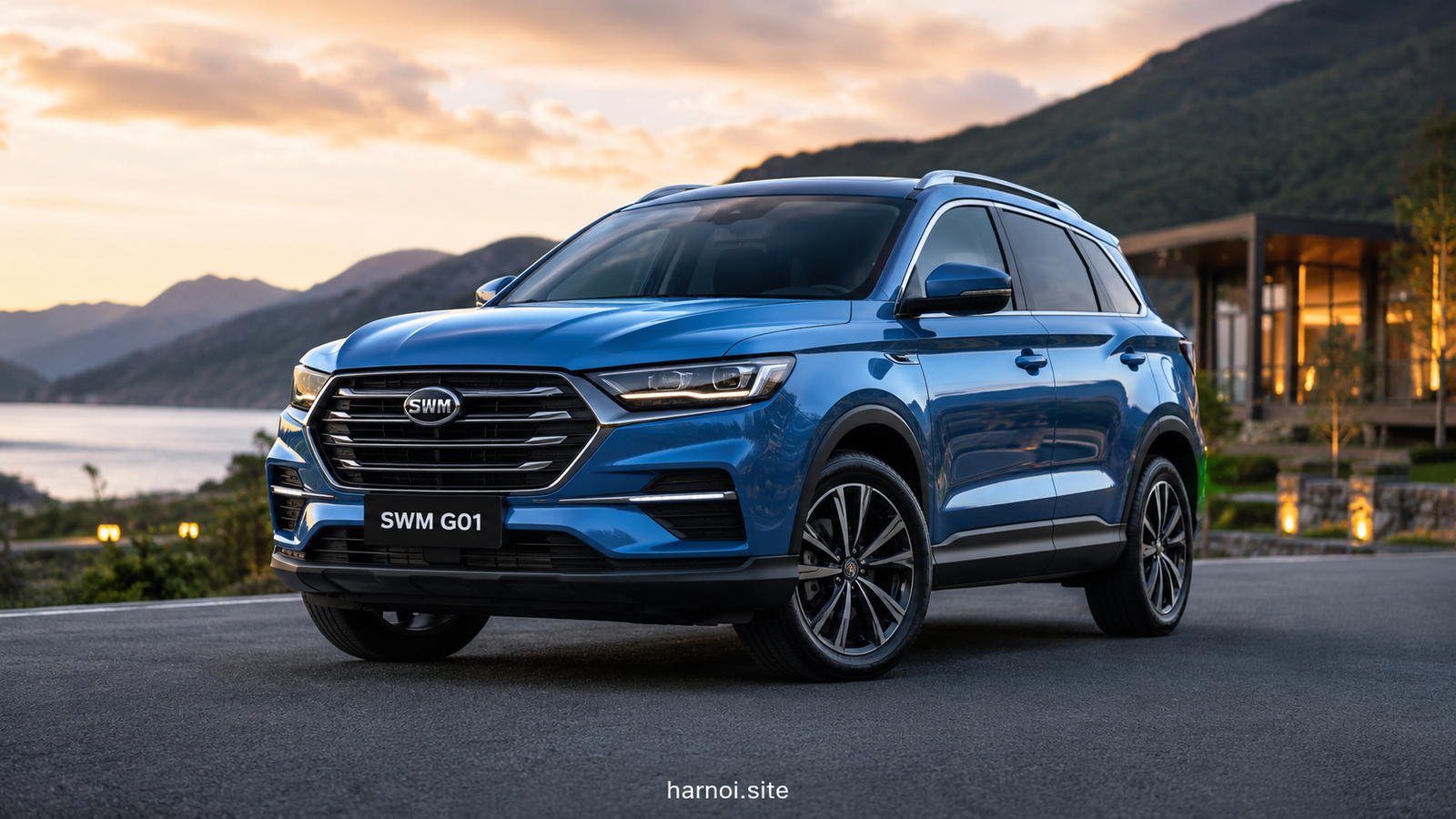
    The G01 leans into a bold, road-presence-first design language: a large front grille, sharp character lines running along the flanks, and LED headlights and daytime running lights that give it a more premium look than its price tag suggests. Alloy wheels, a roof-mounted spoiler on higher trims, and a panoramic sunroof (available on upper variants) round out an exterior that’s clearly trying to punch above its segment visually. The facelifted G01F sharpened this further with a blacked-out grille, bigger bumpers, dual exhaust tips, and slimmer LED lighting for a more athletic stance.

    Interior Design & Cabin Quality

    Inside, the G01 aims for a “feels more expensive than it is” impression. The dashboard uses soft-touch materials with chrome accents, and higher trims bring a leather-wrapped steering wheel along with leather or leatherette upholstery. Fit and finish is generally regarded as solid for the price bracket, even if some harder plastics show up lower in the cabin. Dual-zone automatic climate control, ambient touches, and a clean, driver-focused dashboard layout are common talking points in owner feedback.

    Engine Specifications

    Power comes from a 1.5-litre turbocharged four-cylinder petrol engine (developed with Brilliance) producing around 156 hp (158 PS) and enough torque for confident daily driving. Top speed is rated at roughly 180 km/h (112 mph). The engine has stayed largely consistent across trims and model years, meaning even the entry-level Basic variant gets the same core powertrain as pricier trims — only the transmission and equipment change.

    Performance & Driving Experience

    The 1.5T engine gives the G01 reasonably brisk performance for a budget crossover, with enough mid-range pull for overtaking and highway merging. It won’t feel outright quick, but power delivery is smooth and linear rather than peaky, which suits the car’s everyday, family-oriented character. A more performance-focused F-Edition variant, launched in 2019, added styling and chassis tweaks for buyers wanting a sportier edge, though the core engine output remained similar.

    Transmission

    Buyers can choose between a manual gearbox on base trims and either a 6-speed automatic or a 7-speed dual-clutch transmission (DCT) on higher trims and later production years, depending on market. The automatic options make the G01 easier to live with in city traffic, while the manual keeps entry prices low for budget-conscious buyers.

    Fuel Economy (Mileage)

    Real-world and manufacturer-quoted fuel consumption sits around 7.5 litres per 100 km, which is competitive for a turbocharged 1.5-litre crossover of this size and places it firmly among the more economical choices in its class for everyday commuting.

    Ride Comfort & Handling

    The G01 uses independent suspension at both the front and rear (front MacPherson struts, rear multi-link), a setup that generally pays off in ride comfort over broken city roads and highway expansion joints. Owner reports commonly describe well-controlled cabin noise and a suspension tune that soaks up bumps without feeling floaty, making it a comfortable, easygoing companion for city commuting and moderate highway stints rather than a sharp, sporty handler.

    Safety Features

    Safety kit varies by trim and market but typically includes six airbags (front, side, and curtain), ABS with EBD, electronic stability control/ESP, traction control, hill start assist, tyre pressure monitoring, and a rearview camera with parking sensors. Higher trims and newer model years add driver-assistance features such as lane departure warning, lane change assist, and blind-spot monitoring, bringing the G01 closer to the safety-tech expectations set by more established competitors.

    Technology & Infotainment

    A touchscreen infotainment system (around 10 inches on most trims, with some sources citing up to 10.25 inches) anchors the tech experience, supporting Apple CarPlay and Android Auto, voice control for navigation/climate/calls, Bluetooth connectivity, and in some configurations an in-car Wi-Fi hotspot. A digital instrument cluster is available on higher trims. It’s a straightforward, easy-to-use setup rather than a flashy one, which many buyers in this segment tend to prefer.

    Dimensions & Boot Space

    The SWM G01 measures approximately 4,610 mm in length, 1,855 mm in width, and 1,740 mm in height, riding on a 2,750 mm wheelbase — dimensions that put it squarely in the compact/C-SUV crossover class with a genuinely spacious cabin for its footprint. Boot capacity is reported at a minimum of around 570 litres by some sources, expandable considerably with the rear seats folded; figures do vary by source and market configuration, so it’s worth confirming cargo specs for your specific regional trim.

    Seating Capacity & Passenger Comfort

    The G01 seats five, with a notable 2,750 mm wheelbase translating into generous knee- and legroom for rear-seat passengers. The middle rear seat is narrower and less comfortable due to a pronounced transmission tunnel, which is a common trade-off in this vehicle class. Seat upholstery ranges from cloth to leather/leatherette depending on trim, with power-adjustable front seats offered on higher variants.

    Features & Equipment

    Notable equipment across the range includes a panoramic sunroof, power tailgate, keyless entry with push-button start, automatic climate control, a premium sound system, cruise control, and electric power steering. Trim levels typically span Basic (manual, fewer features) through Standard/Elite and Luxury grades that add automatic transmission, leather trim, a power-adjustable driver’s seat, and the sunroof.

    Pros

    • Distinctive, upscale-looking exterior and cabin design for the price
    • Spacious rear seating thanks to a long wheelbase
    • Reasonably efficient 1.5T engine with smooth power delivery
    • Comfortable, well-damped ride quality
    • Generous feature list (sunroof, power tailgate, touchscreen, CarPlay/Android Auto) even on mid-range trims
    • Strong value-for-money positioning against established rivals

    Cons

    • SWM is a lesser-known brand in most markets, which can affect resale value and buyer confidence
    • Middle rear seat is cramped due to the transmission tunnel
    • Interior plastics lower in the cabin can feel less premium
    • Limited official presence and dealer/service network in many countries
    • Driver-assistance tech is present but not as extensive as some rivals’ latest ADAS suites

    Price & Variants

    Pricing varies significantly by market. In China, the G01 has been sold from roughly 79,900 to 147,900 yuan (about $11,000–$21,000) across trims, with some configurations, packages, and later model years pushing higher. In Europe (Spain, for instance), pricing has started around €22,000 for a base manual Basic trim, rising to about €26,000 for the top Elite automatic variant. In Latin American markets such as Ecuador, the G01 (and locally assembled G01 Limited) is positioned as a value-focused, well-equipped SUV rather than a budget stripped-down offering. Trim naming and exact pricing differ by country, so it’s best to check with local SWM/Ambacar/Invicta dealers for current figures in your region.

    Maintenance & Reliability

    As a newer brand without decades of long-term reliability data in most markets, the G01’s reliability track record is still being written. Anecdotal owner feedback tends to be positive on day-to-day dependability, and European market cars have come with an extended seven-year warranty in some regions, which offsets some of the risk of buying from a less-established name. The bigger practical concern in many countries is parts and service network reach — SWM’s dealer footprint is much smaller than mainstream global brands, so it’s worth confirming local service support and parts availability before buying.

    Competitors

    Depending on the market, the G01 competes with a mix of budget and mainstream compact crossovers, including models like the Hyundai Creta/ix25, Kia Seltos, Chevrolet Tracker, Great Wall Haval Jolion, Chery Tiggo 4, and various other Chinese-brand crossovers (JAC, DFSK, Changan) that target the same value-conscious buyer.

    Who Should Buy the SWM G01?

    The G01 makes the most sense for buyers who want SUV styling, a genuinely spacious cabin, and a solid feature list, but don’t want (or can’t justify) the price premium of a more established brand — and who are comfortable with a newer, less mainstream nameplate. It suits urban and suburban families prioritizing comfort and equipment over outright brand prestige or resale value, especially in markets where SWM has an established dealer presence.

    Final Verdict

    The SWM G01 is a solid demonstration of what a Chinese-manufactured, Italian-designed budget SUV can achieve today: strong styling, a comfortable ride, a well-equipped cabin, and efficient power, all at a price that undercuts many established rivals. Its main handicaps are brand recognition, resale value uncertainty, and a still-developing dealer network in several countries. For buyers prioritizing value and features over badge prestige, and who have confirmed good local service support, the G01 is a genuinely competitive choice in the compact SUV segment.

    Frequently Asked Questions (FAQs)

    1. What engine does the SWM G01 use? A 1.5-litre turbocharged petrol engine producing around 156 hp (158 PS), paired with manual, automatic, or dual-clutch transmission options depending on trim and market.

    2. What is the fuel economy of the SWM G01? Around 7.5 litres per 100 km in typical use, which is competitive for its engine size and segment.

    3. How many people can the SWM G01 seat? Five passengers, with generous rear legroom thanks to its long wheelbase, though the middle rear seat is narrower due to the transmission tunnel.

    4. Does the SWM G01 have a sunroof? Yes, a panoramic sunroof is offered on higher trims.

    5. Is the SWM G01 available with Apple CarPlay and Android Auto? Yes, its touchscreen infotainment system supports both.

    6. Where is the SWM G01 sold? It’s sold primarily in China, Italy, and several markets in Latin America (including Ecuador), Southeast Asia, and Africa. Availability varies significantly by country.

    7. Is the SWM G01 a reliable car? Long-term reliability data is limited since SWM is a relatively young brand, but early owner feedback has generally been positive. Checking local service and parts availability is recommended before buying.

    8. How much does the SWM G01 cost? Pricing depends heavily on market: roughly 79,900–147,900 yuan in China, and around €22,000–€26,000 in parts of Europe. Contact local dealers for current regional pricing and trims.

    9. What is the boot space of the SWM G01? Reported figures vary by source, with a commonly cited minimum cargo capacity of around 570 litres, expandable with the rear seats folded down.

    10. Does the SWM G01 have advanced safety features? Standard safety includes ABS, EBD, electronic stability control, traction control, and multiple airbags, with lane departure warning and blind-spot monitoring available on higher trims and newer model years.

  • Bestune B70 Sedan Review: Design, Engine, Fuel Economy & Reliability

    Bestune B70 Sedan Review: Design, Engine, Fuel Economy & Reliability

    Overview of the Bestune B70 Sedan

    The Bestune B70 is a mid-size sedan built by FAW Group under its Bestune brand. The nameplate has been around since 2006, originally sharing its underpinnings with the Mazda6, but the current (third) generation is a clean-sheet design built on FAW’s own FMA (FAW Modular Architecture) platform. It’s positioned as a value-forward alternative to established mid-size sedans like the Toyota Camry, Honda Accord, Hyundai Sonata, and Kia K5, aiming to win buyers over with a long feature list, bold styling, and a lower price tag. It’s sold across several Middle Eastern and Asian markets, including the UAE and Saudi Arabia, where Chinese brands have been rapidly gaining ground.

    Exterior Design

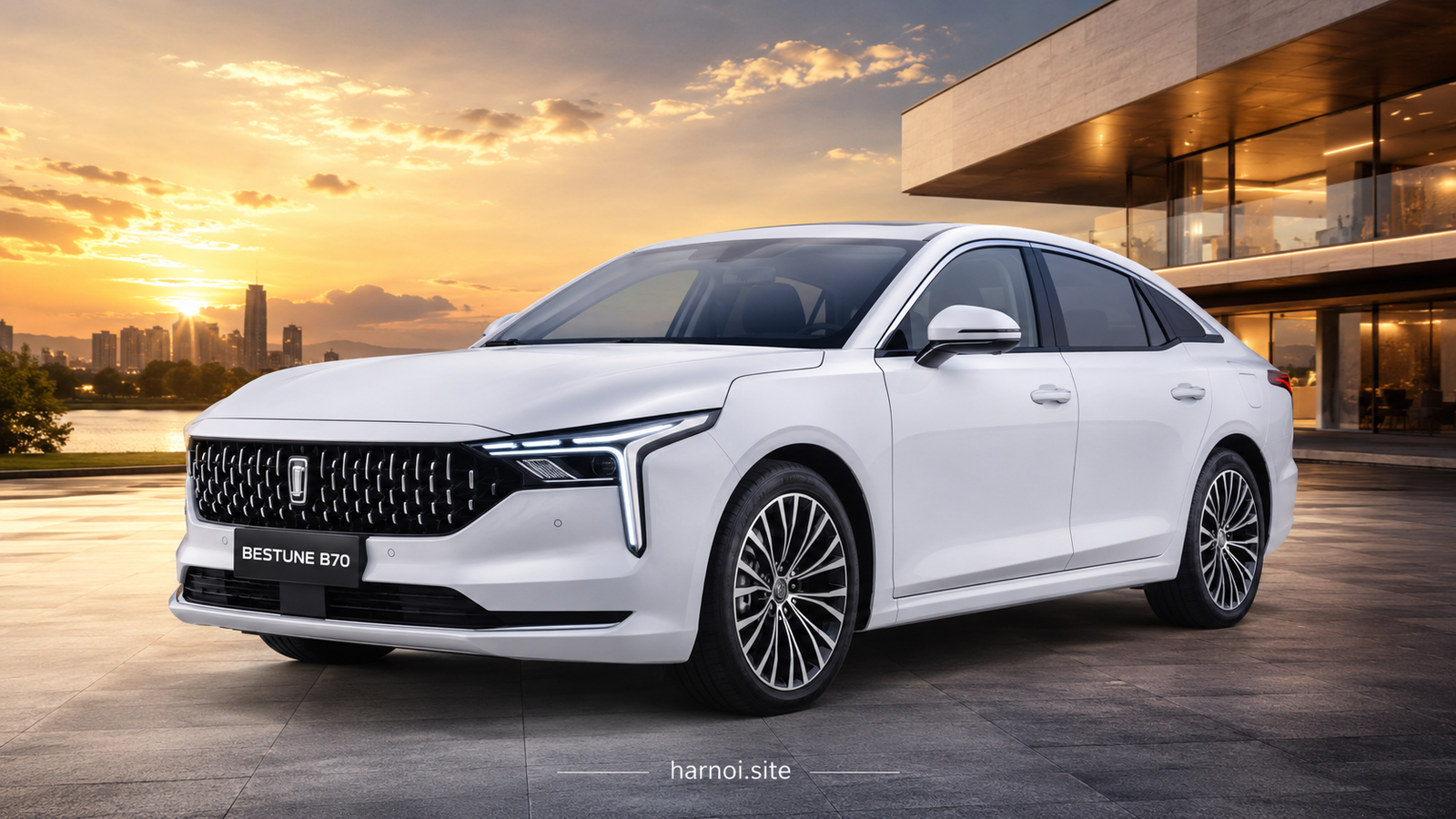
    The B70 wears a distinctive front fascia with a knotted, mesh-style grille and an emblem that some reviewers say evokes a Lincoln-like presence. The body is a sportback-style sedan — essentially a four-door with a liftback-style rear hatch — which gives it a coupe-ish roofline while retaining hatchback practicality. Highlights include a rear lip spoiler, dual square exhaust tips, and wraparound taillamps that stretch across the trunk lid. Wheel sizes vary by trim, from 18-inch alloys on base Comfort trims up to 19-inch wheels on the range-topping Limousine trim.

    Interior Design and Comfort

    Inside, the B70 leans heavily on screens. The dashboard typically features a digital instrument cluster paired with a large central touchscreen, and higher trims add a third, smaller display dedicated to climate controls, operated with a mix of touch input and physical chrome-finished dials. Leather or leather-style upholstery, some with cooling/ventilation, is available on upper trims, and the cabin has a double-deck center console design that adds extra hidden storage. Rear seat space is generous thanks to the long 2,800 mm wheelbase, with enough legroom and headroom for adults even though the sloped roofline slightly narrows the rear window’s view.

    Engine Specifications

    The B70 lineup centers on a 1.5-liter turbocharged four-cylinder petrol engine (1,498 cc), with some markets also offering a larger 2.0-liter turbo option on higher trims. Depending on the trim and market, output figures range roughly from 168 hp up to around 214 hp, with torque figures spanning approximately 265–350 Nm. No diesel or hybrid variant is currently offered.

    Performance and Driving Experience

    The 1.5T engine delivers adequate, city-friendly performance, though a few owners note it can feel a bit soft off the line in its default drive mode. Switching into a Sport or “turbo” driving mode noticeably sharpens throttle response and helps the engine feel more eager. The larger 2.0-liter unit, where available, provides noticeably stronger acceleration and is better suited to highway overtaking and a more spirited driving style. Overall, the B70 is tuned more for comfortable daily commuting than outright sportiness.

    Fuel Economy (Mileage)

    Real-world fuel economy for the B70 generally falls in the range of 10–12 km/l (roughly 8.3–10 L/100km) in mixed driving, with a fuel tank capacity of around 58 liters. This puts it in a similar ballpark to other turbocharged mid-size sedans in its class, though slightly thirstier than some Japanese and Korean hybrid rivals.

    Transmission Options

    The B70 is offered exclusively with automatic transmissions — no manual gearbox is available in current markets. Depending on generation and market, this has included a 7-speed dual-clutch transmission on 1.5T variants and a 6-speed torque-converter automatic (some sourced from Aisin) on 2.0-liter variants. The facelifted version discontinued the dual-clutch unit from the 1.5T in favor of a more conventional automatic in some markets, likely to improve smoothness in stop-and-go traffic.

    Safety Features

    Bestune has loaded the B70 with a fairly extensive safety suite for its price point, including:

    • Six airbags (front, side, and curtain on higher trims)
    • Anti-lock Braking System (ABS) with Electronic Brakeforce Distribution (EBD) and Brake Assist
    • Electronic Stability Program and Traction Control
    • Adaptive Cruise Control
    • Forward Collision Warning and Automatic Emergency Braking
    • Lane Departure Warning and Lane Keep/Lane Tracing Assist
    • Blind Spot Warning and Lane Change Indicator
    • 360-degree camera system
    • Hill Start Assist and Auto Hold
    • Tire Pressure Monitoring System and rear seatbelt warnings for all positions

    This puts the B70 roughly on par with, or ahead of, many rivals in its segment on paper, particularly regarding driver-assistance tech.

    Technology and Infotainment

    The cabin’s tech centerpiece is its dual- or triple-screen layout: a digital driver display, a large central touchscreen infotainment system, and on some trims a secondary lower screen dedicated to climate settings. Most trims support wireless smartphone projection, voice control, and connected app features that have become a strong suit for Chinese automakers. The 360-degree camera system doubles as both a safety and convenience feature, offering clear graphical overlays for tight parking situations.

    Dimensions and Cargo Space

    The B70 measures approximately 4,810 mm in length, 1,840 mm in width, and about 1,472 mm in height, riding on a 2,800 mm wheelbase. It seats five and offers around 522 liters of boot space beneath its liftback-style trunk, which on some trims opens via a dash-mounted button rather than a traditional exterior handle — a small but notable design quirk.

    Ride Quality and Handling

    Reviewers generally describe the B70’s ride as smooth and comfortable, tuned to soak up city and highway imperfections rather than deliver sharp handling. It’s a car built for relaxed cruising and family use rather than for enthusiast driving. Body control is adequate at normal speeds, and the steering is light, which suits urban maneuvering, though it doesn’t offer much in the way of feedback.

    Reliability and Maintenance Costs

    As a newer entrant from a Chinese automaker, the B70 doesn’t yet have the decades of long-term reliability data that Japanese and Korean rivals do. FAW has been building vehicles for a long time domestically, but international long-term ownership data on this specific generation is still limited. Maintenance costs are generally expected to be competitive, as Chinese brands typically price parts and service more affordably to attract budget-conscious buyers, though parts availability and dealer network maturity can vary significantly by region.

    Common Problems (If Any)

    Specific, widely-documented problem patterns for the B70 aren’t yet well established given its relatively recent international launch. A few points worth watching based on owner feedback include:

    • The engine can feel underwhelming in normal driving mode unless switched to a sportier setting
    • Some convenience features (such as auto engine start-stop) have been reported as inconsistent or not activating on certain units
    • As with most newer Chinese-brand vehicles, buyers should confirm local parts and service support before purchasing, since dealer networks are still expanding in some markets

    Pros and Cons

    Pros:

    • Strong equipment-per-dollar value, especially for safety and driver-assistance tech
    • Spacious, feature-rich interior with multiple screens
    • Comfortable ride suited to families and daily commuting
    • Distinctive, upscale-looking exterior design
    • Competitive pricing versus established mid-size sedans

    Cons:

    • Limited long-term reliability track record internationally
    • Engine can feel soft in default drive mode
    • Resale value uncertainty, typical of newer Chinese brands in many markets
    • Dealer network and parts support still maturing in some regions
    • No manual or hybrid powertrain option

    Bestune B70 vs Competitors

    Against rivals such as the Toyota Camry, Honda Accord, Hyundai Sonata, and Kia K5, the B70 competes primarily on price and feature count rather than outright refinement or brand reputation. It typically undercuts these established nameplates while offering a comparable or longer list of standard safety and tech features. However, the Japanese and Korean competitors generally hold an edge in proven long-term reliability, resale value, and dealer network maturity — factors that matter a great deal to buyers thinking beyond the first ownership cycle.

    Who Should Buy the Bestune B70?

    The B70 is best suited to buyers who:

    • Prioritize feature content and safety tech over brand pedigree
    • Want a spacious, comfortable family sedan for city and highway commuting
    • Are budget-conscious and looking to maximize value per dollar
    • Are comfortable with a newer brand that doesn’t yet have an extensive reliability track record
    • Have access to a reasonably established Bestune dealer network in their region for service and parts

    Buyers who prioritize long-term resale value, a fully proven reliability record, or strong dynamic driving characteristics may be better served by a more established competitor.

    Ownership Costs

    Ownership costs for the B70 are generally expected to be lower than mainstream Japanese and Korean rivals, driven by competitive service pricing and a lower initial purchase price. That said, prospective buyers should factor in:

    • Insurance costs, which can sometimes run higher for newer or less-common brands due to parts and repair cost uncertainty
    • Potential depreciation risk, since newer Chinese brands often see steeper resale drops than established players
    • Warranty coverage terms, which vary by market and are worth confirming directly with local dealers
    • Fuel costs based on the 10–12 km/l real-world economy range

    Frequently Asked Questions (FAQs)

    Is the Bestune B70 available with a diesel engine? No. The B70 is offered only with petrol engines (1.5L turbo and, in some markets, 2.0L turbo).

    Does the Bestune B70 come with a manual transmission? No. It’s automatic-only across all trims.

    How many airbags does the Bestune B70 have? Higher trims come with six airbags, including front, side, and curtain airbags.

    What is the boot space of the Bestune B70? Approximately 522 liters, thanks to its liftback-style trunk design.

    How is the Bestune B70’s fuel economy? Real-world mileage generally falls between 10–12 km/l depending on driving conditions and trim.

    Is the Bestune B70 a reliable car? It’s too new internationally to have an extensive long-term reliability record, though FAW has decades of manufacturing experience domestically in China.

    Final Verdict

    The Bestune B70 makes a compelling case on paper: a spacious, well-equipped, comfortable mid-size sedan loaded with driver-assistance tech and screens, all at a price that undercuts many established rivals. Design-wise it stands out in a crowded segment, and the cabin experience punches above its price point. The main question marks are the ones common to most newer Chinese brands entering international markets — long-term reliability, resale value, and dealer network maturity. For buyers prioritizing value, features, and comfort over brand history, the B70 is well worth a test drive and cross-shop. For those who weigh long-term ownership certainty most heavily, it’s worth waiting for a longer track record or sticking with a more established nameplate for now.

  • Bestune T55 Review: A Practical SUV for Everyday Driving

    Bestune T55 Review: A Practical SUV for Everyday Driving

    Overview of the Bestune T55

    The Bestune T55 is a compact crossover SUV built by FAW Group under its Bestune brand, on sale in China since 2021. It sits in a crowded segment of budget-friendly Chinese SUVs, competing largely on space, tech, and price rather than outright performance or prestige. The T55 has been positioned as an everyday family vehicle — something that handles school runs, commutes, and the occasional road trip without asking for a premium price tag.

    Exterior Design

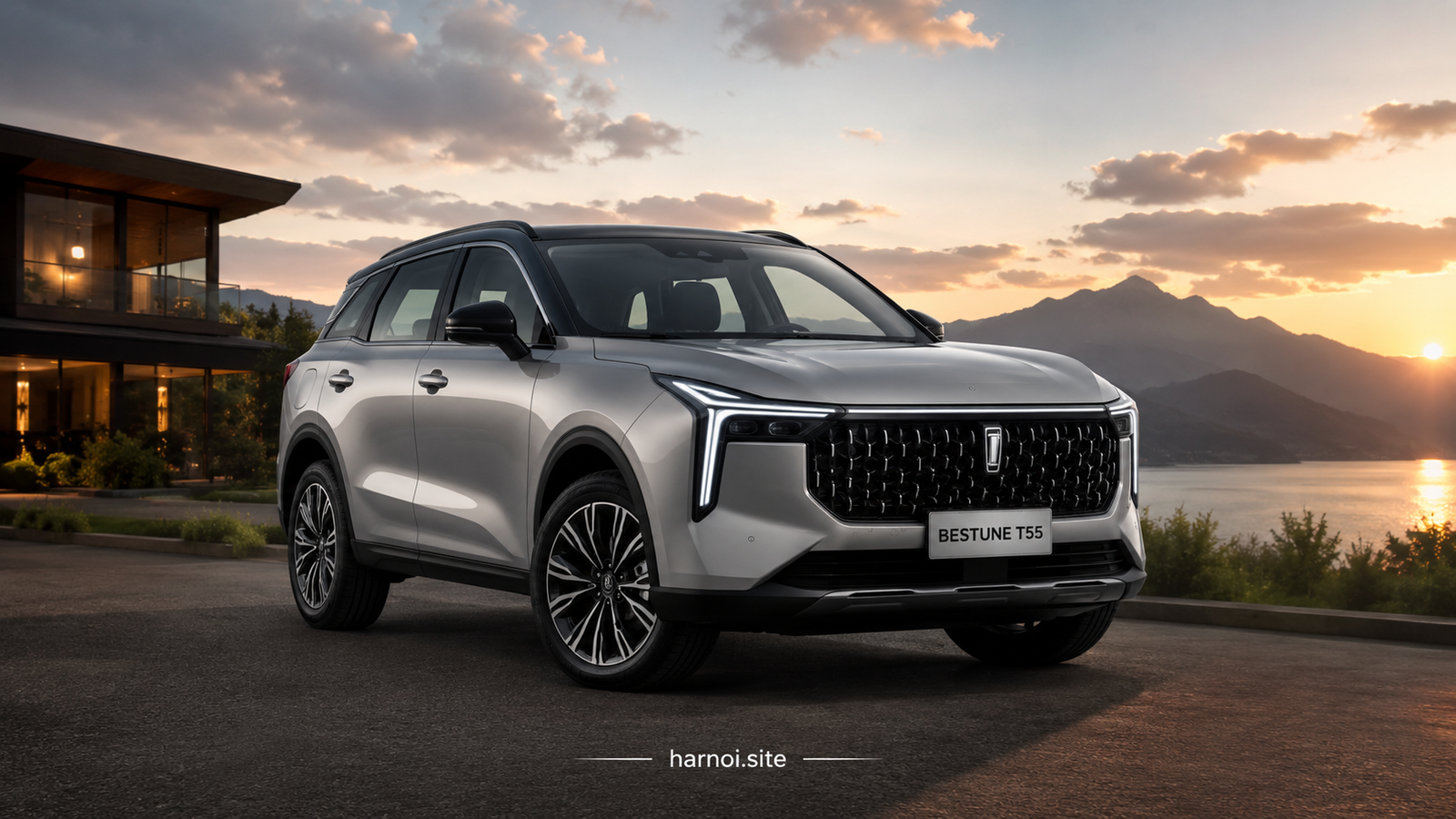
    The T55’s styling borrows cues from its larger sibling, the Bestune T77, but with a more youthful treatment. A crisp character line runs from the headlights through the front doors to the taillights, giving the profile a sense of visual continuity. Around back, a full-width light bar connects the taillamps, a look that’s become something of a signature among newer Chinese SUVs. A small roof-mounted spoiler and hidden exhaust outlets round out the rear, while chrome trim on the D-pillar and a “floating roof” effect add a touch of upscale detailing that belies the car’s budget positioning.

    Interior and Cabin Quality

    Inside, the T55 uses a wraparound dashboard design with the center stack angled toward the driver. The dual-screen layout — a digital instrument cluster paired with a touchscreen infotainment display — is the visual centerpiece of the cabin. Materials are a mix of soft-touch plastics, perforated leather on the steering wheel, and wood-grain trim on the passenger side, with gold-toned chrome accents around the vents and control buttons. It’s not a luxury cabin, but for the price bracket it competes in, the finish feels more considered than you might expect.

    Engine Specifications

    The T55 has been offered with two turbocharged four-cylinder options over its production run:

    • 1.2T engine: roughly 142 hp (105 kW), paired with either a manual or dual-clutch transmission
    • 1.5T engine: roughly 168–170 hp (124–127 kW) and about 258 N·m of torque, paired exclusively with a 7-speed DCT

    Later model years appear to have standardized on the 1.5T engine across the lineup, dropping the smaller 1.2T option in some markets.

    Performance and Driving Experience

    With around 170 hp on tap and a curb weight typical of a compact crossover, the T55 delivers adequate, unremarkable performance — enough for confident highway merging and city driving without feeling sluggish. The dual-clutch transmission shifts crisply once underway, though like many DCTs it can be a touch hesitant at low speeds in stop-and-go traffic. Steering is light and easy to manage in parking lots, and the suspension leans toward comfort over sharpness, soaking up rough pavement reasonably well at the cost of some body roll in corners. This is a car tuned for commuting, not enthusiast driving.

    Fuel Economy

    Official combined fuel consumption figures put the 1.2T variant at around 6.3 L/100km and the 1.5T at around 6.6 L/100km under Chinese testing standards. Real-world figures will vary with driving style and conditions, but both engines land in a reasonably efficient range for the class.

    Safety Features

    Depending on trim and market, the T55 offers a familiar suite of driver-assistance features: multiple airbags, adaptive cruise control, lane-keeping assist, and an electric parking brake. Higher trims add more advanced driver-assist functions, though buyers should check exact equipment lists carefully, as safety feature availability varies noticeably between trim levels and export markets.

    Technology and Infotainment

    Technology is one of the T55’s stronger selling points. The dual 12.3-inch curved screens combine a fully digital instrument cluster with a touchscreen infotainment system running Bestune’s D-Life software. Standard functions include online navigation, streaming music, and connected services, along with front and rear USB/USB-C charging ports and ambient interior lighting. Smartphone connectivity and wireless charging are also available depending on trim.

    Comfort and Passenger Space

    At 4,437mm long (4,475mm on some higher trims) with a 2,650mm wheelbase, the T55 offers reasonably generous interior space for its class. Front seats are supportive for daily use, and rear legroom is workable for adults on shorter trips, if a little tight for taller passengers on longer drives. Cabin width of 1,850mm helps shoulder room feel less cramped than some rivals.

    Cargo Capacity

    Like most compact crossovers in this segment, the T55 offers a practical if not class-leading cargo area, with folding rear seats to expand capacity for larger items. It’s suited well to grocery runs, luggage for weekend trips, and typical family hauling duties, though buyers with larger cargo needs may want to compare it directly against segment rivals with folding-seat volume specs in hand.

    Trim Levels and Available Options

    The T55 has been sold in multiple trims across markets and model years — commonly including “Comfort,” “Regular,” and “Sport” style designations, plus trims marketed under names like Lehuo and Jinxiang in China. Trim differences typically affect wheel size (starting around 18 inches), interior materials, infotainment features, and driver-assistance equipment. Because trim names and equipment vary by market, it’s worth checking the specific configuration list for your region before deciding.

    Maintenance and Ownership Costs

    As a mainstream, mass-produced crossover from an established state-backed automaker (FAW), the T55 is designed for accessible, budget-conscious ownership. Parts and service costs are generally in line with other Chinese compact SUVs — noticeably lower than equivalent Japanese, Korean, or European offerings in most markets where it’s sold. As with any newer or less globally established brand, it’s worth confirming local dealer and parts network coverage before buying, since service infrastructure can vary significantly by region.

    Reliability and Warranty

    Bestune positions the T55 as a dependable daily driver, backed by a warranty that’s typically more generous than what legacy brands offer in the same price bracket — a common strategy among Chinese automakers looking to build trust with new buyers. Long-term reliability data outside China is still limited, since the T55 is a relatively recent export in many markets, so buyers should weigh warranty terms carefully against the vehicle’s shorter international track record.

    Pros and Cons

    Pros:

    • Distinctive, modern exterior styling for the price
    • Well-equipped tech package with dual 12.3-inch screens
    • Comfortable, absorbent ride for daily commuting
    • Competitive fuel economy
    • Generous warranty coverage
    • Strong value proposition against pricier rivals

    Cons:

    • Limited international track record for long-term reliability
    • DCT can feel hesitant in low-speed traffic
    • Rear seat space is adequate rather than spacious
    • Safety and equipment levels vary significantly by trim and market
    • Dealer/service network may be limited outside China

    Bestune T55 vs Competitors

    Against other compact crossovers in its price class — vehicles like the Chery Tiggo, Haval Jolion, or Changan CS35 — the T55’s main advantages are its tech-forward cabin and distinctive styling. Where it can fall behind is brand recognition and resale value, since Bestune has less established presence in many international markets compared to some rivals. Buyers cross-shopping this segment should weigh styling and features against each brand’s local reputation, warranty terms, and dealer support.

    Who Should Buy the Bestune T55?

    The T55 makes the most sense for budget-conscious buyers who want a modern-feeling cabin and up-to-date tech without paying a premium. It suits commuters, small families, and first-time SUV buyers who prioritize value and features over outright performance or brand prestige. Buyers who put a high premium on established resale value or a long domestic service history may want to cross-shop more established brands first.

    Frequently Asked Questions (FAQs)

    What engine does the Bestune T55 use? It’s available with a 1.2T or 1.5T turbocharged four-cylinder engine, depending on trim and model year, paired with a dual-clutch transmission.

    How much horsepower does the Bestune T55 have? The 1.2T engine produces around 142 hp, while the 1.5T produces around 168–170 hp.

    Is the Bestune T55 fuel efficient? Yes — official combined consumption figures are around 6.3–6.6 L/100km depending on engine choice, which is competitive for the compact SUV class.

    Does the Bestune T55 have advanced safety features? Higher trims offer features like adaptive cruise control and lane-keeping assist, though exact equipment varies by trim and market, so it’s worth checking the specific configuration available to you.

    Is the Bestune T55 available outside China? Bestune has been expanding its export presence, but availability varies by region — check with local dealers for current market offerings.

    Final Verdict

    The Bestune T55 is a solid, no-frills option in the compact SUV segment — one that leans on generous tech features, distinctive styling, and everyday comfort to compete against better-known rivals. It won’t excite driving enthusiasts, and its longer-term reliability outside China is still an open question for many buyers. But as a practical, well-equipped daily driver at a competitive price, it’s a reasonable choice for anyone whose priorities are space, features, and value over badge prestige.

  • Haima 8S: A Complete Buyer’s Guide to Features, Specs & Ownership

    Haima 8S: A Complete Buyer’s Guide to Features, Specs & Ownership

    Overview of the Haima 8S

    The Haima 8S is a compact crossover SUV built by Haima Automobile, a Chinese manufacturer based in Hainan that traces its roots back to a former joint venture with Mazda (the name itself blends “Hainan” and “Mazda”). Positioned as Haima’s flagship SUV, the 8S went on sale in China in July 2019, riding on the brand’s own HMGA (Haima Global Architecture) platform.

    The name “8S” is a nod to the car’s claimed 0–100 km/h time of under 8 seconds — a fairly aggressive positioning for a mainstream compact SUV. Beyond China, the 8S has also been assembled in Iran by IKCO at its Binalud plant, and it made appearances at motor shows in other markets (including India’s Auto Expo 2020), though it has not seen an official, confirmed retail launch outside China and Iran. Any pricing you see for markets like India or Pakistan is typically speculative or “expected price” estimation by automotive listing sites rather than an actual on-sale figure — worth keeping in mind if you’re researching this car outside China.

    Key Features

    • 1.6-liter TGDI turbocharged petrol engine producing 195 hp
    • Choice of 6-speed manual, 6-speed automatic/semi-automatic, or 7-speed dual-clutch transmission
    • Panoramic sunroof
    • 360-degree camera assist system
    • Push-button start with keyless entry
    • Steering-mounted paddle shifters
    • Adaptive cruise control (ACC) and autonomous emergency braking (AEB)
    • Electronically adjustable front seats
    • Power-operated rear tailgate
    • Optional wireless phone charging
    • ADAS (advanced driver-assistance) suite bundled as standard on higher trims

    Engine, Performance & Transmission

    The 8S is powered by Haima’s self-developed “Boost Blue Power” 1.6-liter TGDI turbocharged inline-four, badged internally as the HMA GA16-YF. It produces 195 hp (143–145 kW) and 293 Nm of torque — strong figures for the segment and displacement.

    Buyers could choose between three transmission options depending on trim and market:

    • 6-speed manual gearbox
    • 6-speed automatic/semi-automatic gearbox
    • 7-speed dual-clutch transmission (DCT)

    Official 0–100 km/h acceleration is quoted at around 7.8 seconds, which Haima demonstrated in testing at Tianjin’s V1 International Circuit. Top speed is listed at approximately 180 km/h. Haima also announced plans for a 1.2-liter turbo hybrid and mild-hybrid variants, though these electrified versions have not seen wide, confirmed production.

    Fuel Economy & Mileage

    Fuel economy figures vary slightly depending on the source and testing standard (NEDC vs. real-world), but the 8S generally falls in this range:

    • Combined NEDC fuel consumption: roughly 6.9–7.2 L/100 km
    • Approximate mileage: around 14–16 km/l (roughly 33–38 mpg US)

    These numbers are respectable for a 195 hp turbocharged SUV of this size, though real-world consumption will run a bit higher depending on driving style, transmission choice, and load.

    Exterior Design

    The 8S wears a bold, sporty look for a Chinese SUV of its era. Highlights include:

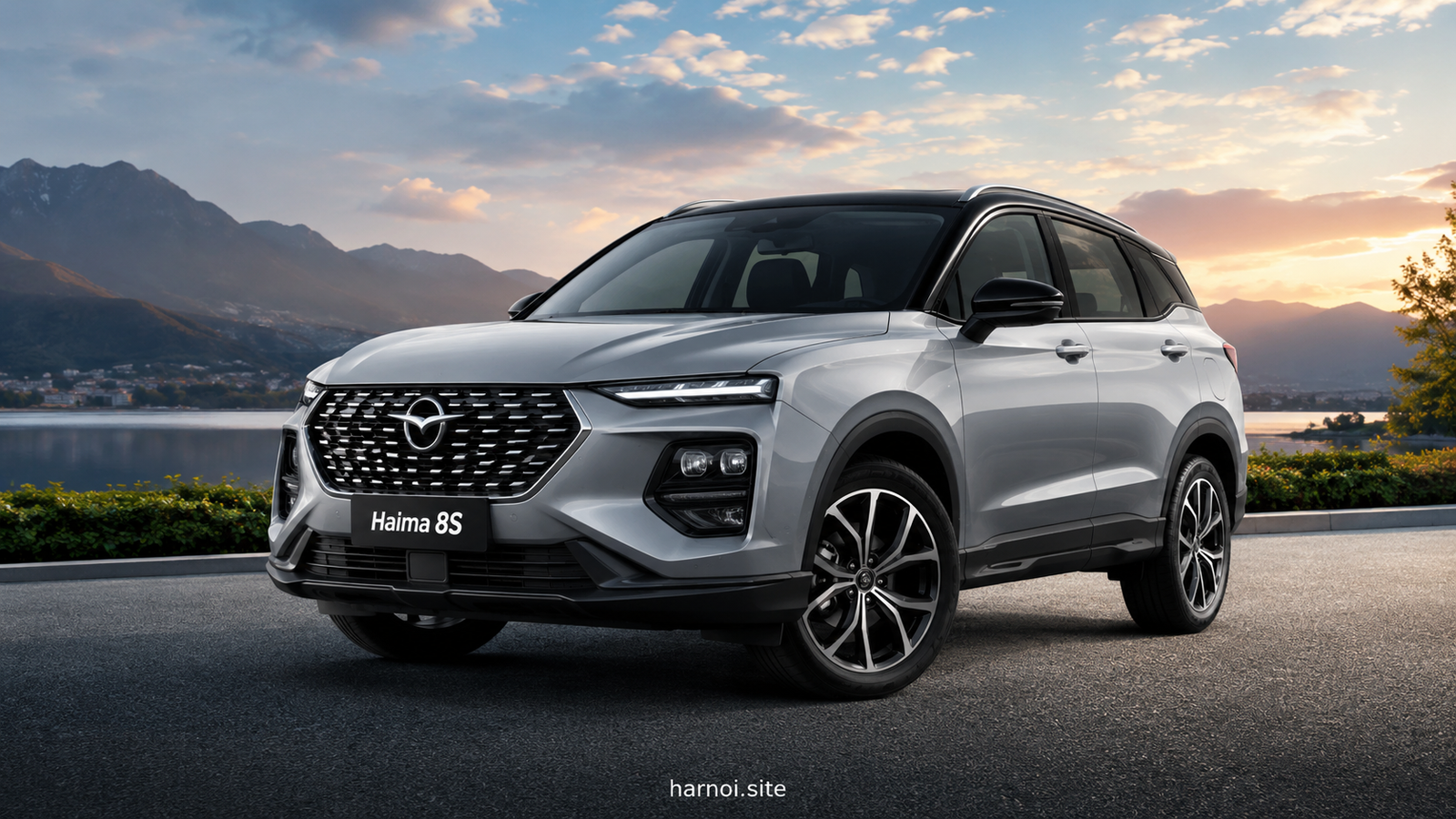
    • A wide hexagonal/star-shaped mesh front grille
    • Split-style headlamps with slim LED daytime running lights
    • Black wheel-arch cladding and skid plates for a rugged crossover stance
    • A “floating roof” design with contrasting roof color on some trims
    • Character lines along the sides for a dynamic profile
    • Slim, connected LED tail lights spanning the rear
    • Dual chrome-tipped exhaust outlets integrated into the rear bumper

    In terms of footprint, the 8S sits between a compact crossover and a midsize SUV — larger than something like a Kia Sportage of the same generation, but smaller than a body-on-frame SUV like the Toyota Fortuner.

    Interior, Comfort & Technology

    Inside, Haima aimed for a youthful, sporty cabin rather than a purely utilitarian one. Notable elements include:

    • A three-spoke, multifunction sport steering wheel with paddle shifters
    • A “flying wing” style center console design
    • A mix of soft-touch plastics, fabric/leatherette trim, and chrome accents
    • A digital instrument cluster on higher trims
    • A touchscreen infotainment system with smartphone connectivity
    • Electronically adjustable front seats
    • Optional wireless charging pad
    • Panoramic sunroof for an airier cabin feel

    The overall ergonomic layout leans toward a driver-focused design rather than a minimalist one, which suits buyers who want a sportier ownership experience over ultra-premium materials.

    Safety Features

    Haima equipped the 8S with a reasonably generous safety package for its class and price point at launch, including:

    • ADAS (Advanced Driver Assistance Systems) suite
    • Adaptive Cruise Control (ACC)
    • Autonomous Emergency Braking (AEB)
    • 360-degree parking camera
    • Tire Pressure Monitoring System (TPMS)
    • Electronic Stability Program (ESP)
    • Electric parking brake
    • Ventilated front disc brakes and rear disc brakes

    This puts the 8S ahead of many budget SUVs from the same era on paper, though independent crash-test data (such as C-NCAP or Euro NCAP ratings) for the 8S is not widely published, so buyers should treat these as manufacturer-stated features rather than independently verified safety outcomes.

    Dimensions & Cargo Space

    SpecificationMeasurement
    Length4,565 mm
    Width1,850 mm
    Height1,682 mm
    Wheelbase2,700 mm
    Kerb weight1,545–1,560 kg
    Front/rear tire size (higher trim)225/55 R19

    With a 2,700 mm wheelbase, the 8S offers a fairly spacious cabin for its exterior footprint, and its dimensions place it in a comfortable middle ground between compact crossovers and larger midsize SUVs — useful if you want SUV proportions without the bulk of a full-size model.

    Available Trim Levels

    Haima offered the 8S in China across a handful of trims, differentiated mainly by transmission type (manual vs. automatic vs. DCT), wheel size, and equipment level (base cloth interior versus higher trims with leatherette, sunroof, wireless charging, and the full ADAS suite). Exact trim naming has varied by model year and market, and Haima has not published a single globally standardized trim lineup the way larger automakers do — so if you’re shopping for one, it’s worth confirming the exact spec sheet for the specific unit or model year you’re considering rather than assuming feature parity across “8S” listings.

    Pricing and Value for Money

    At its original 2019 China launch, the Haima 8S was priced from roughly 79,900 to 125,900 RMB depending on trim and transmission — positioning it as an affordable, feature-rich alternative to pricier joint-venture SUVs in the same market.

    Outside China, pricing gets murkier. Listings suggesting an Indian price of around ₹12.5 lakh are labeled as “expected” on the sites that publish them, and the car has not had a confirmed retail launch in India. Similarly, no official Pakistani market pricing exists, despite local automotive media covering the car’s design and specs. If you’re looking at the 8S as a used/import vehicle (which is how most units end up outside China), pricing will depend heavily on age, mileage, import duties, and condition rather than any official MSRP.

    For what it offers on paper — turbo power, a loaded features list, and a bold design — the 8S represents strong value within China’s domestic market. As an import elsewhere, value depends heavily on total landed cost and parts/service access (more on that below).

    Maintenance and Ownership Costs

    Because the Haima 8S is not officially distributed in most markets outside China and Iran, ownership costs outside those regions come with real caveats:

    • Parts availability: Genuine Haima parts can be difficult to source outside China, often requiring import, which adds cost and lead time.
    • Service network: Authorized Haima service centers are essentially nonexistent outside China/Iran, meaning owners elsewhere typically rely on independent mechanics familiar with Chinese turbo-petrol platforms.
    • Turbocharged engine upkeep: Like most modern small-displacement turbo engines, the 1.6 TGDI benefits from regular oil changes with the correct spec oil, and turbo longevity depends on consistent maintenance.
    • Resale value: Outside its home market, resale value is likely to be soft given limited brand recognition and support infrastructure.

    Within China, ownership costs are more predictable and in line with other domestic compact SUVs — moderate fuel costs, standard service intervals, and reasonably available parts through Haima’s dealer network.

    Common Problems and Reliability

    Public, structured reliability data (recalls, long-term owner surveys, JD Power-style studies) for the Haima 8S is limited compared to what’s available for major global brands. Anecdotal owner discussion and forum commentary point to a few recurring themes:

    • Build quality concerns on specific components (for example, door hinges and some trim pieces) have been raised by enthusiast forums, though these are largely anecdotal rather than backed by formal reliability studies.
    • As with many small-capacity turbo engines, long-term reliability will depend heavily on adherence to service intervals, since turbocharged engines are generally less forgiving of maintenance neglect than naturally aspirated ones.
    • Because Haima is a smaller, lower-volume manufacturer compared to giants like BYD, Chery, or Geely, there’s simply less aggregated ownership data available to draw firm reliability conclusions from.

    Given the limited independent data, prospective buyers — especially of used examples — should prioritize a thorough pre-purchase inspection over relying on brand reputation alone.

    Pros and Cons

    Pros:

    • Strong power output (195 hp) for a compact SUV in its price class
    • Generous standard features list, including ADAS, sunroof, and 360-camera
    • Distinctive, sporty exterior design
    • Reasonably spacious cabin thanks to a 2,700 mm wheelbase
    • Competitive pricing within its home market

    Cons:

    • No official sales or service network outside China and Iran
    • Limited independent safety and reliability data
    • Parts sourcing is difficult for owners outside China
    • Resale value and brand recognition are weak in most international markets
    • Electrified/hybrid variants announced but not widely produced

    Haima 8S vs Competitors

    Within China, the 8S competes against other domestic compact SUVs offering turbocharged power and generous tech at accessible prices — think similarly sized offerings from Chery, JAC, and Changan of the same era. Compared to these rivals, the 8S differentiates itself with a genuinely strong power figure (195 hp) and a sportier design language, though it trails better-established Chinese brands like Chery and Geely in overall sales volume, dealer network size, and long-term reliability data.

    Outside China, since the 8S isn’t officially sold, “competitors” is really a question of what similarly priced, similarly sized used or gray-market imports are available in your region — and in most of those cases, buyers should weigh the 8S’s stronger on-paper specs against the real disadvantage of having no local parts or service support, versus a locally-supported model from an established brand.

    Who Should Buy the Haima 8S?

    The Haima 8S makes the most sense for:

    • Buyers in China shopping in the compact SUV segment who want strong turbo performance and a loaded features list at a competitive price
    • Enthusiasts of Chinese automotive brands who specifically want a distinctive, less common SUV
    • Buyers comfortable sourcing parts and service independently, for those considering the 8S as a used import outside its home market

    It’s a harder recommendation for buyers who prioritize:

    • A well-established dealer and service network
    • Extensive independent safety/reliability data before purchasing
    • Strong resale value

    Frequently Asked Questions (FAQs)

    Is the Haima 8S available in India or Pakistan? No official retail launch has occurred in either market. The car appeared at India’s Auto Expo 2020 and has been covered by Pakistani automotive media, but pricing listed for these markets is speculative, not confirmed.

    What engine does the Haima 8S use? A 1.6-liter TGDI turbocharged inline-four producing 195 hp and 293 Nm of torque.

    What transmission options are available? 6-speed manual, 6-speed automatic/semi-automatic, and 7-speed DCT, depending on trim.

    Does the Haima 8S have a hybrid version? Haima announced 1.2-liter turbo hybrid and mild-hybrid variants, but these have not seen wide, confirmed production.

    How much does the Haima 8S cost? In China, launch pricing ranged from roughly 79,900 to 125,900 RMB depending on trim.

    Is the Haima 8S reliable? There isn’t extensive independent reliability data available. Anecdotal reports suggest reasonable performance overall, with some build-quality concerns raised on enthusiast forums; a thorough pre-purchase inspection is recommended for used units.

    Final Verdict

    The Haima 8S is a genuinely interesting proposition on paper: a turbocharged, feature-rich compact SUV with sporty styling and a competitive price, at least within its home Chinese market. Its 195 hp engine, generous ADAS suite, and bold design punch above what you’d expect from a lesser-known Chinese brand.

    The catch is availability. Outside China and Iran, the 8S exists mostly as a curiosity or a used/gray-market import rather than an officially supported vehicle — meaning prospective buyers elsewhere need to weigh its strong specs against real practical downsides: limited parts access, no authorized service network, and thin reliability data. If you’re shopping within China, the 8S is a reasonable value pick in its segment. If you’re outside China, go in with clear eyes about the support-network trade-offs before committing.

  • Soueast A5: Specs, Interior, Exterior & Driving Experience

    Soueast A5: Specs, Interior, Exterior & Driving Experience

    Introduction

    The Soueast A5 (known in its home market as the A5 Yiwu, 翼舞) is a budget-friendly compact sedan from Chinese manufacturer Soueast Motors. It’s built for buyers who want a simple, no-frills car rather than a tech-loaded flagship. This guide walks through everything worth knowing about the A5 — from its engine and cabin to running costs and how it stacks up against rivals — so you can decide whether it deserves a spot on your shortlist.

    Overview of the Soueast A5

    Soueast introduced the A5 Yiwu in August 2018 at the Chengdu Auto Show, positioning it as the replacement for the older Soueast V5 Lingzhi. It’s a single-generation model that has stayed in production largely unchanged since launch, sold in China and exported in modest numbers to markets like Egypt, Saudi Arabia, and parts of Southeast Asia. Unlike Soueast’s newer SUV-focused lineup (S05, S06, S07, S09), which leans into large touchscreens and driver-assist tech, the A5 sticks to the basics: a compact, front-wheel-drive sedan built to be affordable to buy and cheap to run.

    Engine Specifications

    The A5 is powered by a Mitsubishi-derived 1.5-liter naturally aspirated four-cylinder petrol engine.

    • Displacement: 1,499cc
    • Power: 120 hp
    • Torque: 143 Nm
    • Transmission: 5-speed manual or CVT automatic
    • Drivetrain: Front-wheel drive

    This is a modest, unstressed engine tuned for everyday driving rather than outright performance — there’s no turbocharged or hybrid variant.

    Performance & Driving Experience

    With 120 hp moving a compact sedan, the A5 feels adequate rather than quick. It’s happiest in city traffic and daily commuting, where the engine’s low-end response and light steering make it easy to place in tight spaces. On the highway, acceleration is unhurried, and the CVT (where fitted) prioritizes smoothness and fuel economy over sportiness. The manual gearbox version gives a bit more control for drivers who prefer to row their own gears, though clutch and shift feel are tuned for ease of use rather than engagement. Overall, this is a car built for relaxed, predictable commuting rather than spirited driving.

    Fuel Economy (Mileage)

    Real-world and manufacturer figures put the A5 at roughly 7 liters per 100 km (around 14 km/liter) in mixed driving, which is competitive for the class. With a 50-liter fuel tank, that translates to a real-world range of around 650–700 km per tank, making it a genuinely economical daily driver.

    Exterior Design

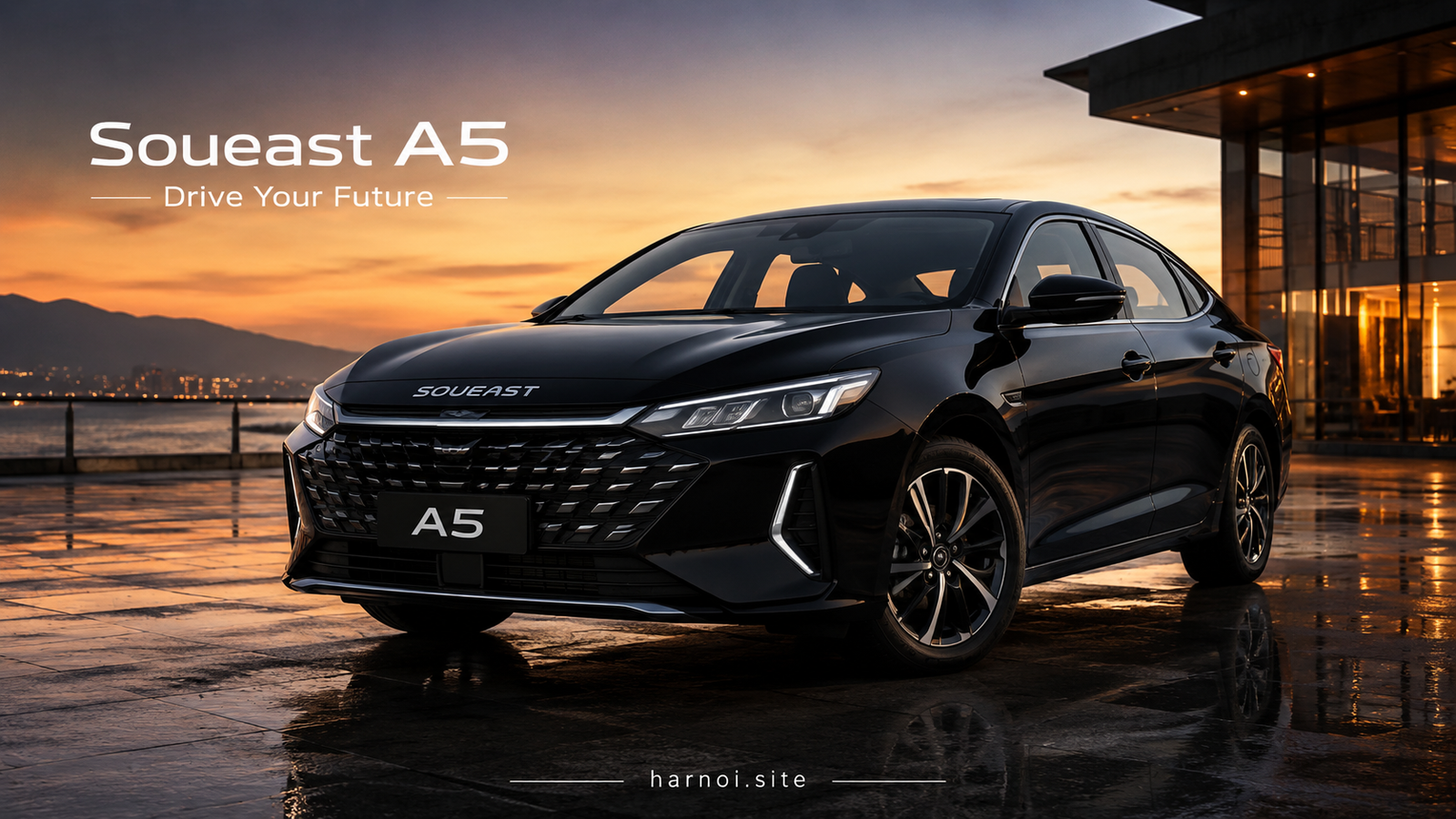
    The A5’s exterior is straightforward and inoffensive rather than daring. It carries a simple front fascia with a conventional grille, swept-back headlamps, and clean body panels without aggressive creases. Standard exterior touches include halogen or basic LED lighting (depending on trim/market), body-colored mirrors and door handles, and modest alloy wheel designs on upper trims. It won’t turn heads, but it also won’t look dated quickly — a sensible, unfussy design aimed at buyers who prioritize substance over styling drama.

    Interior & Cabin Quality

    Inside, the A5 keeps things simple with a driver-focused dashboard, cloth or leatherette upholstery depending on trim, and hard-wearing plastics typical of the budget-sedan segment. Fit and finish is acceptable for the price point but doesn’t try to compete with pricier compact sedans on soft-touch materials or ambient lighting. Higher trims add leather seating and a few extra convenience touches, but the overall cabin philosophy is functional rather than plush.

    Infotainment & Technology Features

    Technology is kept basic and practical:

    • A multimedia touchscreen (available on most trims) supporting basic media playback
    • Bluetooth connectivity
    • Electric/power windows and mirrors
    • Remote keyless entry, with push-button start on some versions
    • Manual or basic automatic climate control

    Don’t expect the large 12–15 inch displays, Snapdragon-powered infotainment chips, or built-in navigation suites that appear on Soueast’s newer SUVs — the A5 predates that generation of tech and stays deliberately simple.

    Comfort & Passenger Space

    As a compact sedan, the A5 comfortably seats five, with reasonable front-seat space for taller occupants. Rear legroom is adequate for the segment but not class-leading, making it best suited to small families or couples rather than regularly carrying three adults in the back. Air conditioning is standard, and features like electric mirrors and central locking come on most trims, adding to everyday livability.

    Cargo Space (Boot Capacity)

    The A5’s boot is sized appropriately for a compact sedan, offering enough room for weekly grocery runs, a couple of suitcases, or everyday errands. It’s not a large boot by class standards, but it matches expectations for a car in this price bracket, and rear seats can typically be folded (depending on trim) for extra flexibility.

    Safety Features

    Safety equipment reflects the A5’s budget positioning rather than a modern ADAS suite. Typical features across trims include:

    • Front airbags (dual airbags standard; additional airbags on some trims/markets)
    • Anti-lock Braking System (ABS) with Electronic Brakeforce Distribution (EBD)
    • Tire Pressure Monitoring System (TPMS) on select trims
    • Rear parking sensors on higher trims
    • Central locking with remote keyless entry

    There’s no adaptive cruise control, lane-keeping assist, or automatic emergency braking on the A5 — those advanced driver-assist features are reserved for Soueast’s newer SUV models like the S06 and S07.

    Dimensions & Weight

    SpecMeasurement
    Length4,588 mm
    Width1,780 mm
    Height1,485 mm
    Seating capacity5
    Fuel tank capacity50 liters
    Drivetrain layoutFront engine, front-wheel drive

    These dimensions place the A5 squarely in the compact/C-segment sedan class, comparable in footprint to entry-level sedans from other budget-focused brands.

    Suspension, Steering & Brakes

    The A5 uses a conventional setup for its class: MacPherson strut front suspension and a torsion-beam rear axle, tuned for a comfortable ride over sporty handling. Steering is light and city-friendly, making low-speed maneuvering and parking easy, though it offers limited feedback at higher speeds. Braking uses front disc and rear drum brakes on most trims (a common cost-saving choice in this segment), paired with ABS and EBD for adequate stopping performance.

    Available Trim Levels

    The A5 has historically been sold in a limited trim spread rather than an extensive lineup — commonly a base/standard trim and a higher “Luxury” or “Flagship” trim, each paired with either the manual or CVT gearbox. In some markets, such as Saudi Arabia, it has been offered in just a single trim configuration. Trim availability and naming vary by country, so it’s worth checking with a local dealer for the exact lineup where you are.

    Color Options

    Exterior color choices are limited compared to mainstream sedans, typically including standard options like white, black, silver, and grey, with occasional additional colors depending on the export market. Interior color schemes generally stick to black or beige, matched to cloth or leatherette upholstery.

    Pros and Cons

    Pros:

    • Affordable purchase price for a compact sedan
    • Fuel-efficient 1.5L engine
    • Easy, light steering ideal for city driving
    • Reasonable standard equipment for the price (AC, keyless entry, touchscreen on most trims)
    • Roomy-enough cabin for daily family use

    Cons:

    • No advanced driver-assistance features (no ACC, no lane-keep assist)
    • Modest performance, especially at highway speeds
    • Limited trim and color choices in most markets
    • Rear drum brakes on most trims
    • Not widely available outside a handful of export markets

    Common Problems & Reliability

    As a fairly simple, mechanically conventional car built on well-proven Mitsubishi-derived underpinnings, the A5 doesn’t have a reputation for major systemic issues. That said, being a lesser-known brand outside China means there’s limited independent long-term reliability data compared to mainstream Japanese or Korean rivals. Anecdotal owner reports in export markets point to normal wear-and-tear items (brakes, suspension bushings) rather than widespread mechanical failures, but buyers should budget for the fact that dealer support and long-term data are thinner than with more established brands.

    Maintenance & Service Costs

    Routine maintenance costs are generally low, in line with the car’s budget positioning and its conventional, non-turbocharged engine, which keeps servicing straightforward. Where Soueast has an official dealer network (such as Egypt or Saudi Arabia), factory warranties of around 6 years/160,000 km have been offered on the A5, along with dealer service packages. In markets without an official Soueast presence, owners may need to rely on independent mechanics familiar with Mitsubishi-based drivetrains.

    Spare Parts Availability

    Parts availability depends heavily on your region. In markets with an official Soueast distributor (Egypt, Saudi Arabia, and a few others), genuine parts and dealer service are accessible. In markets without official representation, sourcing parts can be slower and may rely on aftermarket or Mitsubishi-compatible components, given the shared engine heritage. This is worth researching locally before buying, since it directly affects long-term ownership convenience.

    Competitors

    The A5 competes in the value-focused compact sedan segment against cars such as:

    • Chery Arrizo 5
    • MG5
    • Changan Eado
    • Geely Emgrand
    • Entry-level trims of established compact sedans from Japanese and Korean brands, where locally competitive on price

    Most rivals in this segment compete on similar ground: low price, decent fuel economy, and basic-but-sufficient equipment.

    Who Should Buy the Soueast A5?

    The A5 makes the most sense for budget-conscious buyers who want a straightforward, fuel-efficient sedan for city commuting and don’t need advanced tech or driver-assist features. It suits first-time car buyers, small families, or anyone prioritizing low running costs over performance or luxury. Buyers who want cutting-edge infotainment, strong resale value, or a dense dealer/parts network may be better served by a more established brand or by one of Soueast’s newer SUV models.

    Frequently Asked Questions (FAQs)

    Is the Soueast A5 still in production? The A5 has been sold largely unchanged since its 2018 launch, and it sits outside Soueast’s current SUV-focused push (S05–S09), so availability varies significantly by market — check with a local dealer to confirm current-year availability.

    What engine does the Soueast A5 use? A 1.5-liter, 120 hp, 143 Nm naturally aspirated engine, paired with either a 5-speed manual or CVT gearbox.

    Does the Soueast A5 have advanced safety features like adaptive cruise control? No. The A5 offers basic safety equipment (airbags, ABS, EBD) but no ADAS suite. Advanced driver-assist features are found on newer Soueast SUVs like the S06 and S07.

    Is the Soueast A5 available in Pakistan? There’s no confirmed official presence of the Soueast A5 in Pakistan at this time; it’s primarily sold in China, Egypt, Saudi Arabia, and a handful of other export markets.

    How is the fuel economy? Around 7 L/100 km in mixed driving, which is competitive for a compact sedan of this size.

    Final Verdict

    The Soueast A5 is an honest, no-nonsense compact sedan: affordable, easy to drive, and cheap to run, but without the tech, refinement, or brand recognition of more established competitors. It’s best suited to buyers who value low cost of ownership over features and are shopping in a market where Soueast has an established dealer and parts network. If you need modern driver-assistance tech or a wide range of colors and trims, it’s worth cross-shopping other budget sedans — or looking at Soueast’s newer SUV lineup — before committing.

  • Soueast DX5 Buying Guide: Features, Specs and Ownership Costs

    Soueast DX5 Buying Guide: Features, Specs and Ownership Costs

    Introduction

    If you’re shopping for an affordable subcompact SUV and have come across the Soueast DX5, you’re looking at one of the more budget-friendly crossover options currently sold in the Middle East and CIS markets. This guide walks through everything a prospective buyer needs to know — from the engine and features to running costs and how it stacks up against rivals — so you can decide whether it deserves a spot on your shortlist.

    Overview of the Soueast DX5

    The DX5 is a subcompact crossover SUV styled by the Italian design house Pininfarina and built by the Chinese manufacturer Soueast Motors. It first debuted at the 2019 Chengdu Auto Show and originally slotted between the smaller DX3 and the larger DX7 in Soueast’s lineup. In 2022, Soueast entered a partnership with Chery Automobile, and as part of that collaboration the DX5 also went on to be rebadged and sold as the Jetour X50 in several overseas markets, including Malaysia and the Philippines. Today, the DX5 is marketed primarily to buyers in the UAE, wider GCC region, and CIS countries as a value-oriented family crossover.

    Key Features

    The DX5 focuses on giving budget buyers a reasonably well-equipped package rather than chasing flashy extras. Depending on trim, you’ll find items like a rearview/360-degree camera setup, parking sensors front and rear, keyless entry, cruise control, and a touchscreen infotainment display with smartphone connectivity. It’s a car built to hit the essentials that matter to everyday family use rather than compete on luxury.

    Engine and Performance

    The DX5 has been offered with two 1.5-liter petrol engines over its production run:

    • A naturally aspirated 1.5L engine producing around 120 hp
    • A turbocharged 1.5L unit producing around 156 hp (115 kW) and roughly 225 Nm of torque

    Top speed varies by configuration, with figures reported anywhere from about 175 km/h to 210 km/h depending on the engine and transmission pairing. Performance is adequate for city and highway commuting, though this isn’t a car aimed at buyers chasing quick acceleration.

    Fuel Economy (Mileage)

    Soueast has claimed a fuel efficiency figure of around 13.5 km/l (roughly 7.4 L/100km) for the turbocharged variant in real-world market listings. As with most claimed figures, actual mileage will vary based on driving style, traffic conditions, and whether you’re running the manual or automatic gearbox — but the DX5 is generally positioned as an economical choice within its segment.

    Transmission Options

    Buyers have had a choice of transmissions across the DX5’s lifecycle:

    • 5-speed manual transmission
    • 6-speed automatic transmission
    • 8-speed CVT (in some earlier configurations)
    • Current UAE-market cars are commonly listed with a 7-speed automatic

    Power is sent to the front wheels only (FWD); there is no all-wheel-drive variant.

    Interior Design and Comfort

    Inside, the DX5 aims for a clean, functional cabin with comfort touches like a center armrest and reasonably supportive seating for five occupants. Reviewers commonly note that the interior feels spacious for the car’s footprint, and features like heated/cooled seats and wood-effect trim have appeared on higher-spec used examples. It won’t feel premium next to more expensive SUVs, but it delivers reasonable comfort for the price point.

    Exterior Styling

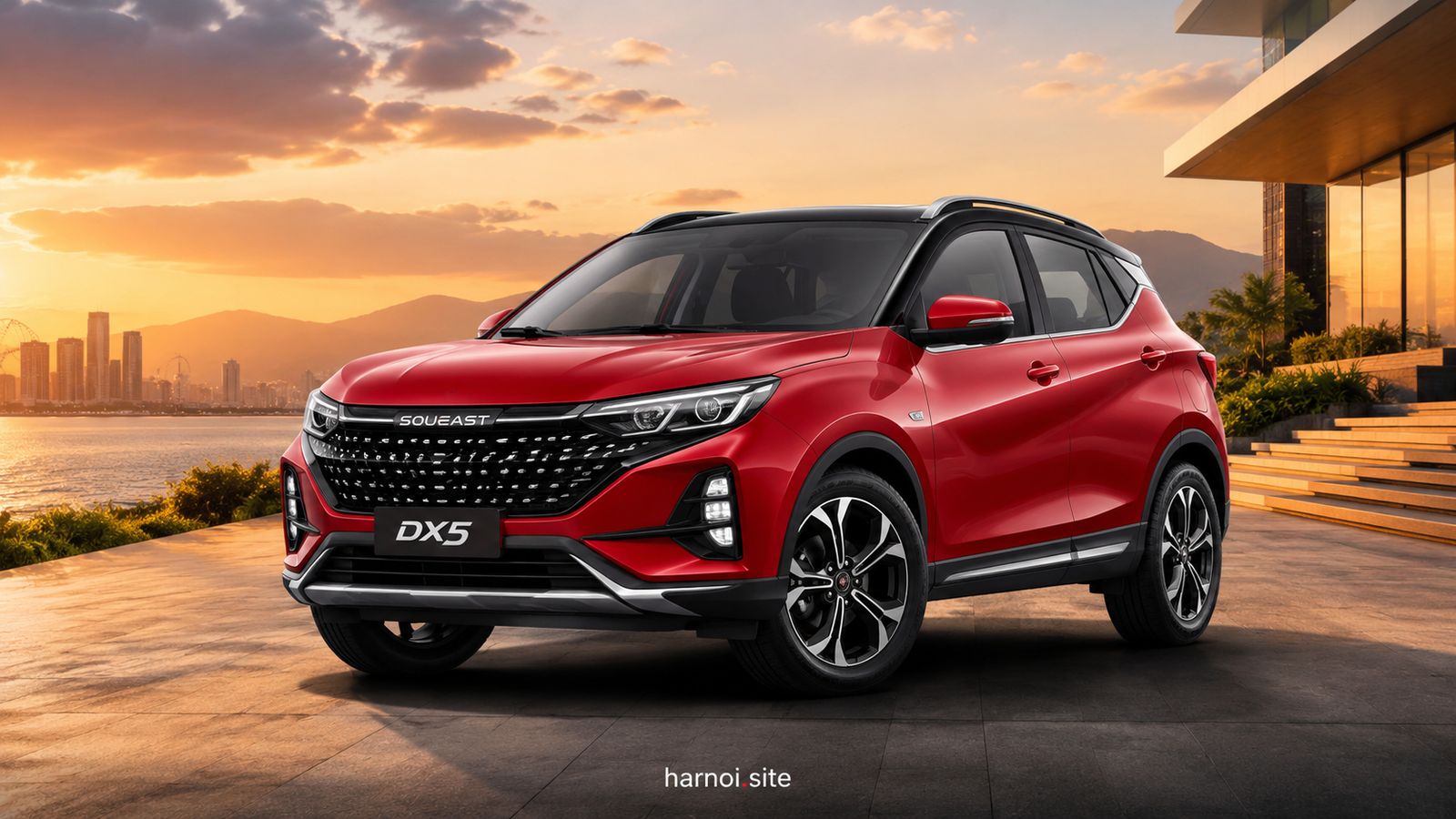
    The Pininfarina-influenced design gives the DX5 a more distinctive look than many budget crossovers, with details like LED daytime running lights, fog lamps, chrome door handles and exhaust tips, and alloy wheels featured across various trims. It reads as a fairly modern, SUV-styled crossover rather than a bare-bones economy car.

    Safety Features

    Safety equipment on the DX5 includes a fairly long list for its price class:

    • Multiple airbags
    • ABS with EBD and Brake Assist
    • Electronic Stability Control / Vehicle Stability Control
    • Hill Assist and Hill Descent Control
    • Traction control and cornering assist
    • Front and rear parking sensors, plus a rear or 360-degree camera
    • Anti-theft alarm and immobilizer
    • ISOFIX child seat anchors

    Exact safety content varies by trim and model year, so it’s worth confirming the specific feature list with the dealership before purchase.

    Technology and Infotainment

    The DX5 comes with a touchscreen infotainment system supporting smartphone connectivity, along with USB charging ports front and rear. It’s a functional, no-frills tech package rather than a class-leading one — don’t expect the large dual-screen setups found in pricier crossovers.

    Dimensions and Cargo Space

    Depending on model year and source, the DX5 measures approximately:

    • Length: ~4,406 mm (some sources list ~4,475 mm)
    • Width: ~1,840 mm
    • Height: ~1,680 mm
    • Wheelbase: ~2,615 mm
    • Cargo space: around 500 liters

    These dimensions put it firmly in the subcompact/compact crossover class, with seating for five.

    Trim Levels and Variants

    In the UAE, the DX5 is typically offered in a small number of trims, most commonly a “Standard” or “Honorable” base trim and a higher “Comfort” or “1.5T Top” trim with the turbocharged engine and additional equipment. Historically, in its home Chinese market, the DX5 launched with as many as six variants across both engine options.

    Price and Value for Money

    Pricing varies noticeably depending on the source and exact trim, but recent UAE listings put the DX5 in roughly the following range:

    • Base “Standard” trim: from around AED 54,000–55,000 (ex-factory, per some listings)
    • Higher trims / turbo variants: up to around AED 68,500 (on-the-road)
    • Used examples: available from roughly AED 52,000–53,000

    Given the spread between sources, it’s worth getting an up-to-date, dealership-confirmed quote before budgeting, as on-the-road pricing can differ meaningfully from ex-factory figures. At the lower end of this range, the DX5 is genuinely one of the more affordable crossover SUVs available in the region, undercutting rivals like the Nissan Kicks while offering a comparable feature set to something like the JAC S3.

    Maintenance and Ownership Costs

    As a budget Chinese-brand SUV, the DX5 is generally positioned as an affordable-to-run vehicle, with a straightforward 1.5L petrol engine that keeps servicing relatively simple. That said, buyers should factor in a few practical considerations:

    • Dealer and parts network for Soueast is smaller than for established Japanese or Korean brands in the region, which can affect parts availability and resale value.
    • Warranty terms should be confirmed directly with the dealer, as coverage can vary by market.
    • Insurance costs for Chinese-brand vehicles can sometimes run higher due to smaller claims histories and repair-cost assumptions among insurers — it’s worth getting a quote before committing.

    Common Problems and Reliability

    Independent long-term reliability data on the DX5 is limited compared to more established brands, since it’s a relatively low-volume model outside China. Prospective buyers, especially of used examples, should pay particular attention to:

    • Full-service history, since a smaller dealer network can mean inconsistent maintenance records
    • Verification of accident/repaint history — this has come up in some used listings
    • A pre-purchase inspection, as with any budget-segment used SUV

    Because the model has a shorter track record in Middle Eastern and CIS markets, it’s sensible to treat reliability claims with some caution until more real-world ownership data accumulates.

    Pros and Cons

    Pros

    • Competitive pricing relative to segment rivals
    • Distinctive Pininfarina-influenced styling
    • Reasonably generous safety and comfort equipment for the price
    • Decent cargo space and interior room for its size
    • Available with a punchier turbocharged engine option

    Cons

    • Smaller dealer and parts network than mainstream brands
    • Limited long-term reliability track record in the region
    • FWD only, no AWD option
    • Infotainment and technology feel basic next to newer competitors
    • Resale value is harder to predict given the brand’s limited market history

    Competitors and Alternatives

    Within its price bracket, the DX5 is most commonly cross-shopped against:

    • JAC S3
    • Nissan Kicks
    • Other budget Chinese crossovers competing in the same subcompact SUV space in the GCC and CIS regions

    Buyers should compare not just price and specs, but also after-sales support and warranty terms, since these vary significantly between brands in this segment.

    Who Should Buy the Soueast DX5?

    The DX5 makes the most sense for buyers who:

    • Want a compact, practical family SUV on a tight budget
    • Value distinctive styling over outright brand prestige
    • Don’t need all-wheel drive or top-tier infotainment
    • Are comfortable with a smaller dealer network in exchange for a lower purchase price

    It’s less suited to buyers who prioritize long resale value, extensive dealer support, or a proven multi-year reliability record.

    Frequently Asked Questions (FAQs)

    What engines are available in the Soueast DX5? A naturally aspirated 1.5L engine (around 120 hp) and a turbocharged 1.5L engine (around 156 hp) have both been offered.

    What transmission options does the DX5 come with? Manual, automatic, and CVT versions have existed across different markets and model years; current UAE-market cars are commonly automatic.

    Is the DX5 available with all-wheel drive? No, the DX5 is front-wheel drive only.

    What is the DX5’s fuel economy? Soueast has claimed roughly 13.5 km/l for the turbo variant, though real-world figures will vary.

    How much cargo space does the DX5 have? Around 500 liters, depending on configuration.

    How does the DX5 compare to the JAC S3 and Nissan Kicks? The DX5 is generally priced competitively against both, undercutting the Kicks while offering a broadly similar feature set to the S3 — though buyers should compare warranty and dealer support carefully.

    Final Verdict

    The Soueast DX5 is a compelling option for budget-conscious buyers who want a stylish, reasonably well-equipped subcompact SUV without stretching their budget. Its Pininfarina design and long features list for the price are genuine strengths. The trade-offs are a smaller service network and a shorter reliability track record compared to more established brands — factors that matter more the longer you plan to keep the car. If you go in with realistic expectations about brand support and do your due diligence (especially on a used example), the DX5 can be solid value for money.

  • Venucia D60 Review: Features, Specs, Price & Performance Guide

    Venucia D60 Review: Features, Specs, Price & Performance Guide

    Introduction

    The Venucia D60 is one of the more overlooked compact sedans to come out of China’s booming auto industry, yet it has quietly built a following among budget-conscious buyers who want Nissan-derived engineering without the Nissan price tag. Produced by Dongfeng-owned Venucia, the D60 offers both a traditional gasoline model and a fully electric variant (D60 EV), giving shoppers flexibility depending on their budget and charging access. This guide breaks down everything you need to know before considering one, whether you’re buying new in China, sourcing a used export unit, or just comparing it to more familiar brands.

    Overview of the Venucia D60

    The Venucia D60 is a compact three-box sedan produced by Chinese automaker Venucia, a subsidiary of Dongfeng Motor Co., Ltd., which debuted in China in late 2017 and is based on the Nissan Sylphy sedan built through the Dongfeng-Nissan joint venture. That underlying Sylphy DNA is a big part of the D60’s appeal — it borrows a proven, globally-tested platform and drivetrain rather than starting from scratch.

    An electric version, the D60 EV, joined the lineup a couple of years later and has since become the more talked-about model internationally, especially as EV exports out of China have accelerated.

    Exterior Design

    The gasoline D60 wears Venucia’s “Wind Sculpture Aesthetics” language, featuring a low, flat front end with a grille made of horizontally arranged chrome blocks, thick chrome bezels that blend into elongated headlamps, and LED daytime running lights. Newer versions adopted the brand’s “V-Galaxy Star” front face, a bezel-less design that merges the headlights and grille into a single visual unit alongside blade-style LED light clusters.

    The D60 EV takes this a step further with EV-specific styling cues. It uses a closed front grille — standard for new-energy vehicles — along with an arrow-shaped fog lamp design that serves as the highlight of the entire front fascia, plus a silhouette that sits low up front and rises toward the rear. Distinctive 16-inch “starburst” alloy wheels round out the EV’s eco-forward look.

    A 2021 facelift, badged the D60 Plus, gave the car a more modern front end styled after the Venucia Xing concept, and a subsequent 2023 update brought a redesigned rear end to match.

    Interior Design & Comfort

    Inside, the D60 aims for a spacious, relaxed cabin rather than a sporty one. The EV variant in particular is designed to prioritize passenger comfort and interior room, giving both driver and passengers room to stretch out on longer trips. Materials and tech feel appropriate for the car’s budget positioning — clean, functional, and straightforward rather than flashy — which lines up with its role as an affordable family sedan.

    Engine Specifications

    The gasoline-powered D60 is built around Nissan’s HR16 1.6-liter engine, a well-known, reliable unit used across multiple Nissan-Dongfeng products. Depending on model year and trim, output has been rated around 122–126 horsepower.

    The D60 EV swaps this for a fully electric powertrain. It runs on a 120 kW electric motor, which converts to roughly 163 horsepower — enough for confident city and highway driving, if not outright quick.

    Transmission & Drivetrain

    The petrol D60 pairs its 1.6-liter engine with either a 5-speed manual transmission or a CVT gearbox, giving buyers a choice between old-school simplicity and smoother, more relaxed cruising.

    The D60 EV, naturally, skips a traditional transmission altogether and sends power through a single-speed setup to the front wheels, which the EV Database review notes results in a front-wheel-drive layout that feels nimble and responsive to driver input.

    Fuel Economy (Mileage)

    For the gasoline D60, real-world fuel economy tracks close to what you’d expect from a 1.6-liter compact sedan with a CVT — efficient for daily commuting, though Venucia doesn’t market it on class-leading mileage figures.

    The EV tells a different story, since “mileage” here means range. The D60 EV is fitted with a Ningde Times (CATL) 811 ternary lithium-ion battery pack, delivering a combined NEDC range of 481 km (about 299 miles) on a full charge — a genuinely competitive figure for its segment and price point.

    Performance on the Road

    Neither version of the D60 is built to be exciting — both are tuned for comfortable, predictable commuting rather than outright pace. The EV’s 163 hp motor is described as “solid but not spectacular,” trailing rivals like the Nissan Leaf (214 hp) and Chevrolet Bolt EV (200 hp) in outright punch, though it stays competitive with cars like the Hyundai Ioniq Electric. Where the D60 EV does hold its own is efficiency and value — it delivers usable range and adequate power without chasing performance-car numbers.

    The gasoline D60’s HR16 engine, meanwhile, offers the kind of unremarkable but dependable delivery that’s made Nissan’s Sylphy family a mainstay in China for years.

    Safety Features

    Being a Sylphy-derived, budget-oriented sedan, the D60 sticks to a fairly standard safety package for its class and price bracket — front and side airbags, ABS with electronic brake distribution, and stability control on most trims. It doesn’t compete with premium ADAS suites found on flagship Chinese EVs, but it covers the safety basics buyers expect at this price point.

    Technology & Infotainment

    The D60’s cabin tech is functional rather than cutting-edge: a touchscreen infotainment display, Bluetooth connectivity, and basic smartphone integration are typically included, scaling up with trim level. It won’t wow anyone used to the giant screens found in newer NIO or BYD models, but it gets the essentials right.

    Dimensions & Cargo Space

    The D60 EV measures 4,764 mm (187.6 in) in length, with a wheelbase of 2,700 mm — putting it comfortably in compact-to-mid-size sedan territory with generous rear-seat legroom for the segment. Its electric drivetrain also nudges overall height up to 1,494 mm (58.8 in) compared with the gasoline version, largely due to battery packaging under the floor. Trunk space remains sedan-typical and practical for daily errands and small family trips.

    Ride Quality & Handling

    Both versions of the D60 lean toward a soft, comfort-oriented ride rather than sharp handling. The EV’s battery placement lowers the center of gravity slightly, which helps stability, but this is not a car engineered for enthusiastic cornering — it’s tuned for smooth, fatigue-free commuting, which is exactly what most buyers in this segment want.

    Trim Levels & Available Variants

    The D60 lineup has evolved over several generations:

    • Original D60 (2017) — base 1.6L gasoline sedan with manual or CVT options
    • D60 EV (2019) — electric variant with the 58 kWh CATL battery pack
    • D60 Plus (2021 facelift) — redesigned front fascia inspired by the Venucia Xing
    • 2023 D60 EV facelift — updated rear styling matching the D60 Plus, front end unchanged

    Trims typically scale by battery/engine configuration, wheel size, and infotainment features, with pricing tiers reflecting those upgrades.

    Venucia D60 Price (Latest Update)

    Pricing varies significantly by model year, powertrain, and market:

    • Gasoline D60: factory prices in China have ranged from roughly 69,800 to 111,800 yuan depending on trim and year, which translates to roughly $10,000–$16,000 USD before any export costs.
    • D60 EV: Chinese factory pricing has been listed around 137,800–153,800 yuan (about $18,880–$21,070) at launch, though later model years and post-subsidy pricing have brought effective costs down substantially — some sources cite post-subsidy figures closer to $13,000.

    For buyers sourcing used or export units, current listings (as of mid-2026) show pre-owned D60 and D60 EV models trading in China in the roughly $4,500–$13,700 range depending on age, mileage, and powertrain, before export, inspection, and shipping fees are added.

    Note: Because the D60 is not officially sold in most Western markets, prices above reflect Chinese domestic pricing and export-broker listings rather than a dealer MSRP you’d see in the US or Europe.

    Maintenance Cost

    Thanks to its Nissan-sourced HR16 engine and conventional CVT/manual gearboxes, the gasoline D60 benefits from widely available parts and mechanical familiarity, keeping routine maintenance costs low and predictable — a real advantage for buyers wary of obscure Chinese-only components.

    The D60 EV, like most EVs, trades oil changes and engine servicing for battery health monitoring and occasional software updates, generally resulting in lower long-term running costs, though buyers outside China should factor in the availability (or lack thereof) of authorized service centers and parts supply chains.

    Pros and Cons

    Pros:

    • Proven, Nissan-derived 1.6L engine with a reputation for reliability
    • Competitive EV range (481 km NEDC) for the price
    • Spacious cabin and generous wheelbase for the class
    • Very affordable pricing, especially on the used/export market
    • Distinctive EV-specific styling that doesn’t feel like an afterthought

    Cons:

    • Not officially sold or supported in most Western markets
    • Performance is modest in both gasoline and electric forms
    • Safety and tech features trail newer, higher-end Chinese EVs
    • Import/export logistics and parts support can be a hassle outside China
    • Handling is tuned purely for comfort, not driving enjoyment

    Venucia D60 vs Competitors

    Against other budget EVs, the D60 EV holds a reasonable position: its 163 hp output sits below the Nissan Leaf’s 214 hp and the Chevrolet Bolt EV’s 200 hp, but ahead of the Hyundai Ioniq Electric’s 134 hp, and its charging time and range are broadly competitive with that group. Its main edge is price — the D60 EV consistently undercuts these rivals significantly on cost, especially in used/export form.

    Against domestic gasoline rivals in the compact sedan class (like other Nissan Sylphy derivatives or entry-level Chinese sedans), the D60 competes mainly on the strength of its proven engine and low ownership costs rather than features or brand cachet.

    Who Should Buy the Venucia D60?

    The Venucia D60 makes the most sense for:

    • Budget-focused buyers in China (or importers) who want Nissan reliability at a lower price
    • EV shoppers who prioritize range and value over outright power or premium tech
    • Fleet or rideshare operators looking for low-maintenance, cost-efficient vehicles
    • International buyers sourcing affordable used Chinese EVs through export channels, provided they’ve done their homework on import regulations and after-sales support

    It’s less suited to buyers who want cutting-edge ADAS features, strong performance, or easy access to official dealer support outside China.

    Frequently Asked Questions (FAQs)

    Is the Venucia D60 available outside China? It’s not officially sold through dealer networks in most Western markets, but used and new units are available through Chinese vehicle export brokers.

    What’s the real-world range of the Venucia D60 EV? Its rated range is 481 km (about 299 miles) under the NEDC test cycle; real-world range will typically be somewhat lower depending on driving conditions.

    Is the Venucia D60 related to the Nissan Sylphy? Yes — the gasoline D60 is built on the Nissan Sylphy platform through the Dongfeng-Nissan joint venture and shares its 1.6L HR16 engine.

    Does the Venucia D60 come with a manual transmission? The gasoline version offers both a 5-speed manual and a CVT, depending on trim.

    How long does it take to charge the D60 EV? On a standard Level 2 charger, a full charge takes roughly 7.5 hours.

    Final Verdict

    The Venucia D60 won’t turn heads with performance or flashy tech, but that was never the point. It’s a practical, Nissan-engineered sedan (and a genuinely capable EV alternative) built to deliver reliable, comfortable, low-cost transportation. For buyers within China — or those willing to navigate the export process — it represents strong value, particularly in EV form where its range and pricing punch well above its modest power output. Just go in with realistic expectations about performance, tech, and after-sales support, and the D60 is a sensible, budget-friendly choice.

  • Cowin Showjet: A Complete Overview for Car Enthusiasts

    Cowin Showjet: A Complete Overview for Car Enthusiasts

    A note before we start: the Showjet is a Chinese-market subcompact crossover, and information on it in English is limited compared to mainstream global models. This overview pulls together what’s publicly documented — official specs, launch details, and market history — while being upfront about where independent, long-term ownership data (like reliability track records) simply isn’t available yet.

    Introduction to Cowin Showjet

    The Cowin Showjet is a subcompact crossover SUV that was <cite index=”2-1″>produced by the Chinese manufacturer Cowin Auto, a subsidiary of Chery, sharing its platform with the earlier Chery Tiggo 5x and carrying styling input from Pininfarina</cite>. It was built as an affordable, style-forward entry point into Cowin’s SUV lineup, aimed squarely at young, budget-conscious buyers in China’s smaller cities.

    Today the car is better known internationally as the Kaiyi Showjet, following a corporate rebrand (more on that below). If you see it referred to by either name, it’s the same vehicle lineage.

    History and Background

    The Showjet’s story is tied closely to the history of its parent brand:

    • Origins of the “Cowin” name: The name dates back to 2003, originally used for a facelifted version of the Chery Fulwin. <cite index=”8-2″>Cowin Auto was established as a standalone subsidiary of Chery in 2014, aimed at developing a new niche in China’s car market by targeting young buyers in medium and small towns with low prices.</cite>
    • Corporate restructuring: <cite index=”8-3″>In 2018, part of Cowin was sold to the city of Yibin, with Yibin’s investment vehicles taking a combined 51% stake while Chery retained 49%, in a deal valuing the company at roughly RMB 5 billion (about $800 million). The headquarters moved to Yibin, Sichuan, and a new production plant there began building the X5 in January 2019.</cite>
    • Showjet’s debut: <cite index=”9-1″>The vehicle, internally developed under the code FX11, was officially named “Showjet” on December 17, 2019, with production set for Cowin Auto’s smart plant in Yibin.</cite> <cite index=”5-1″>It launched with a starting price of just CNY 53,900 (about USD 7,622), designed by Lowie Vermeersch, the former chief designer at Pininfarina.</cite>
    • Rebrand to Kaiyi: <cite index=”8-1″>In July 2022, Cowin Auto rebranded as Kaiyi Auto, adopting a more Chinese-sounding name along with a new design language across its model range.</cite> The Showjet continued under the Kaiyi badge, though “Cowin Showjet” remains widely used, especially in export markets and older listings.
    • International reach: <cite index=”1-1″>A restyled Showjet Pro underwent a redesign in February 2024, gaining a new front fascia, reshaped bumper, and an updated interior with a new multimedia screen.</cite> The car has also found its way to a handful of overseas markets — for example, <cite index=”2-1″>an Italian importer, Eurasia Motors, began selling a rebadged version in September 2022 under a new brand called EMC, renamed the “EMC Wave 3,” locally converted to run on LPG in Piedmont.</cite>

    Exterior Design

    The Showjet was built to look sportier and more premium than its price tag suggests, which was central to its “budget but stylish” positioning.

    • <cite index=”10-1″>The front end comes in two grille styles — a “W”-shaped grille and a “Gypsophila” (baby’s breath) patterned grille — giving buyers some visual choice within the lineup.</cite>
    • <cite index=”10-1″>Color options span five solid body colors (white, red, blue, gray, and blue-toned variants) plus two-tone combinations like black-and-red, black-and-white, and black-and-blue.</cite>
    • <cite index=”10-1″>Wheel designs include five-spoke and blade-aluminum styles across multiple sizes.</cite>
    • <cite index=”10-1″>A hidden pillar treatment along the side creates a “floating roof” visual effect, a popular styling trick on crossovers in this segment.</cite>
    • The Showjet Pro facelift went further, adding <cite index=”1-1″>a lower front air intake, a reshaped bumper, and distinctive teardrop-shaped bezels beneath the headlights.</cite>

    Interior Features and Comfort

    Inside, the Showjet leans on screen real estate and connectivity to punch above its price class:

    • <cite index=”10-1″>Both the central touchscreen and the digital instrument cluster use 10.25-inch high-resolution displays with dual-screen linkage.</cite>
    • <cite index=”10-1″>The infotainment system supports 1080p video playback, navigation projection, multimedia streaming, and multiple UI themes.</cite>
    • <cite index=”10-1″>Interior color schemes include a pure black cabin and a black-and-red option with contrast stitching.</cite>
    • On the Showjet Pro, standard comfort and convenience kit expanded to include <cite index=”29-1″>keyless entry, one-touch start, electric air conditioning, dual USB ports, and a dual-spoke multifunction steering wheel, along with wireless phone charging and in-car Wi-Fi.</cite>

    Engine Specifications

    The Showjet has been offered with a small but evolving set of powertrains over its lifespan:

    • Base Showjet: <cite index=”2-1″>A 1.5-litre naturally aspirated inline-4 producing 116 PS (85 kW / 114 hp) and 143 N⋅m of torque.</cite>
    • Showjet Pro: <cite index=”2-1″>A turbocharged 1.5-litre inline-4 (SQRE4T15 engine), producing 115 kW (154 hp / 156 PS).</cite>
    • Newer Pro trims: More recent listings show turbo outputs stretching further, with variants advertised at <cite index=”6-1″>1.5T engines rated around 150 PS and 160 PS, still delivering 143 N⋅m of torque.</cite>
    • Showjet Pro EV: The fully electric variant uses <cite index=”4-1″>a permanent-magnet synchronous motor rated at 120 kW (about 163 hp) with 280 N⋅m of peak torque, paired with a 53.6 kWh CATL/”Ningde era” lithium-iron-phosphate battery.</cite>

    Performance and Driving Experience

    Because this is a budget crossover built for city and semi-urban use rather than outright pace, official performance benchmarks are modest and sparsely published. The clearest figure available is for the EV: <cite index=”15-1″>the Showjet Pro EV can accelerate from a standstill to 50 km/h in about 3.77 seconds</cite>, which is brisk in city-driving terms thanks to the instant torque typical of electric motors. For the petrol versions, the naturally aspirated 1.5L is tuned for smooth, unhurried driving, while the turbocharged 1.5T in Pro trims adds noticeably more usable mid-range power for highway merging and overtaking — a common upgrade path buyers take when they want more than the base engine offers.

    Fuel Efficiency

    Cowin/Kaiyi has not published widely-cited independent fuel economy figures for international audiences, which is typical for a car sold mainly in China’s domestic market. As a general reference point, naturally aspirated 1.5L engines in this power and weight class typically return figures in the region of 6.5–7.5 L/100km (city/highway blended) under Chinese testing cycles, while the turbocharged variant would trade a bit of efficiency for its extra power. The EV’s range is better documented: <cite index=”4-1″>it has an NEDC-rated range of about 401 kilometers per charge, with 30%–80% DC fast charging support.</cite>

    Transmission Options

    The Showjet has offered a fairly wide transmission spread for a budget model:

    • <cite index=”2-1″>A 5-speed manual gearbox or a CVT on the base 1.5L engine.</cite>
    • <cite index=”29-1″>The Showjet Pro expanded this to three powertrain/transmission combinations: 1.5L with 5-speed manual, 1.5L with CVT, and 1.5T (turbo) with CVT.</cite>
    • The EV variant, as with most electric vehicles, uses a single-speed reduction gear rather than a traditional multi-speed transmission.

    Safety Features

    Documented safety equipment on newer Showjet Pro trims includes a reasonably generous list for the price segment:

    • <cite index=”6-1″>360-degree camera, anti-lock braking (ABS), Level 2 assisted driving, electronic brakeforce distribution (EBD/CBC), and electronic stability program (ESP/DSC).</cite>
    • <cite index=”6-1″>Occupant-sensing airbags, traction/anti-slip control (TCS/ASR), and adaptive cruise control on higher trims.</cite>
    • The EV variant adds <cite index=”4-1″>automatic parking, a 360-degree panoramic camera system, and lane departure warning.</cite>

    As with performance and reliability data, independent crash-test ratings (Euro NCAP, C-NCAP, etc.) for the Showjet specifically aren’t widely published in English, so treat safety claims as manufacturer-stated equipment rather than independently verified crash performance.

    Technology and Infotainment

    The Showjet’s tech package is arguably where it tries hardest to stand out for its price point:

    • <cite index=”29-1″>A built-in voice-assistant system (iFLYTEK-powered) that can be woken with a spoken command, plus phone-mirroring/mapping projection.</cite>
    • <cite index=”29-1″>A companion smartphone app (“Kaiyi Zhixing”) that allows remote control of certain vehicle functions.</cite>
    • <cite index=”4-1″>Voice control, a “phone butler” contact/call management feature, and one-button start round out the EV’s tech suite.</cite>

    Dimensions and Cargo Space

    <cite index=”10-1″>The Cowin Showjet measures 4,400mm in length, 1,831mm in width, and 1,653mm in height, riding on a 2,632mm wheelbase.</cite> These dimensions place it firmly in the subcompact crossover class — comparable in footprint to cars like the Honda HR-V or Renault Kiger — with enough wheelbase to offer reasonable rear legroom for a car this size, though official cargo volume figures aren’t widely published in English-language sources.

    Available Variants

    Over its production life, the Showjet lineup has included:

    • Showjet (base/original) — 1.5L NA petrol, 5MT or CVT
    • Showjet Pro — restyled model with 1.5L NA or 1.5T turbo, offered with 5MT or CVT; later received a 2024 facelift
    • Showjet Pro EV — fully electric variant, launched for sale in three trims: <cite index=”4-1″>a “Yuexiang” version, a comfort version, and an exclusive version</cite>, priced at launch around <cite index=”4-1″>13.19–15.19 million yuan (note: this figure as reported converts to roughly 131,900–151,900 CNY when read as the more plausible ten-thousand-yuan unit typically used in Chinese pricing)</cite>

    Pros and Cons

    Pros

    • Bold, distinctive styling for the price bracket, with input from a well-regarded ex-Pininfarina designer
    • Generous screen technology (dual 10.25″ displays) rarely seen at this price point when new
    • Turbocharged Pro variant offers a meaningful step up in power over typical budget-crossover rivals
    • EV variant offers a genuinely competitive range (~401km NEDC) for its battery size
    • Wide transmission choice (manual, CVT) across trims

    Cons

    • Very limited availability outside China and a small number of export/reseller markets — parts and dealer support elsewhere are inconsistent
    • Little independent English-language testing, reviews, or long-term reliability reporting
    • No widely published crash-test ratings from recognized international bodies
    • Fuel economy and real-world performance figures are not well documented for global audiences
    • Resale value and brand recognition are weak outside China, given the brand’s young age and 2022 rebrand

    Common Problems and Reliability

    This is the area where honesty matters most: there is no substantial body of independent, long-term reliability data on the Showjet available in English. It’s a relatively young nameplate (launched in 2020), sold predominantly in China with small-volume exports to markets like Italy, Russia, and Iran, and it hasn’t been through the kind of large-scale, multi-year ownership surveys (J.D. Power-style studies, owner forums with years of history, etc.) that give a clear reliability picture for more globally distributed cars. If you’re considering one, it’s worth treating any claims of “known issues” you find online with caution unless they’re backed by a documented source, and instead leaning on a pre-purchase inspection and a look at Chery’s broader mechanical reputation (since the Showjet shares its platform with the well-established Chery Tiggo 5x).

    Maintenance and Service Costs

    Similarly, there’s no reliable published data on routine maintenance or service costs for the Showjet in most markets outside China. As a general rule for cars sharing this platform and engine family, expect costs broadly in line with other Chery-group vehicles: parts and labor tend to be cheaper than Japanese or Korean equivalents in China itself, but this can flip in export markets where the car isn’t officially distributed and everything has to be sourced through independent importers.

    Spare Parts Availability

    Because the Showjet is not sold through an official dealer network in most countries, parts availability outside China (and the handful of markets with a local importer, such as Iran or Italy) is a genuine practical concern. Buyers in markets without an official Kaiyi/Cowin presence should expect to rely on aftermarket suppliers, generic Chery-group parts, or imported components — which can mean longer wait times and higher costs for anything beyond routine consumables.

    Price and Value for Money

    Pricing has moved over the years as the lineup evolved:

    • Original Showjet launch price: <cite index=”5-1″>CNY 53,900 (about USD 7,622) at debut in 2020.</cite>
    • Showjet Pro pre-sale range: <cite index=”19-1″>CNY 77,900–95,900, with an early-bird pre-sale range of CNY 74,900–92,900.</cite>
    • Showjet Pro EV: launched at roughly <cite index=”4-1″>131,900–151,900 yuan across its three trims.</cite>

    For what it offers on paper — screen tech, turbo power options, and distinctive styling — the Showjet undercuts many rivals in its home market. Its value proposition weakens outside China, though, once import costs, lack of warranty support, and parts sourcing are factored in.

    Who Should Buy the Cowin Showjet?

    The Showjet makes the most sense for:

    • Buyers in China (or markets with an established local importer, like Iran or Russia) who want a stylish, tech-loaded, budget-friendly crossover for city and suburban use
    • First-time car buyers on a tight budget who prioritize screen tech and looks over brand pedigree
    • EV shoppers who want a compact crossover with a genuinely usable ~400km range at a lower price than more established EV brands

    It’s a harder recommendation for buyers in markets without official distribution, where the risks around parts, service, and resale value are much higher, and where better-supported alternatives from Chery’s other brands or wider Chinese exporters (MG, Haval, Changan) may offer more peace of mind.

    Comparison with Similar Cars

    <cite index=”3-1″>Direct competitors named for the Showjet in its home market include the Baojun 510, Haval M6, Geely Vision X6, Changan CS35 Plus, and Baojun RS-3.</cite> Broadly:

    • Vs. Haval M6: The M6 benefits from Haval’s stronger export network and more established reputation, at a similar price point.
    • Vs. Changan CS35 Plus: The CS35 Plus has a wider international presence and more consistent parts support, though the Showjet arguably offers a flashier interior for the money.
    • Vs. Baojun 510/RS-3: Baojun (a GM/Wuling-linked brand) has stronger domestic sales volume and a longer track record in the same budget-crossover space.

    Frequently Asked Questions (FAQs)

    Is the Cowin Showjet the same as the Kaiyi Showjet? Yes — Cowin Auto rebranded to Kaiyi Auto in 2022, so “Cowin Showjet” and “Kaiyi Showjet” refer to the same model lineage, just under different brand names depending on when and where it was marketed.

    Is the Showjet an SUV or a crossover? It’s marketed as a subcompact crossover SUV, sitting below the larger Kaiyi/Cowin X3 in the brand’s lineup.

    Does the Showjet come as an EV? Yes, the Showjet Pro EV is a fully electric version with an NEDC-rated range of about 401km.

    Is the Showjet sold in Pakistan or other South Asian markets? There’s no evidence of an official Kaiyi/Cowin distribution network for the Showjet in Pakistan based on currently available information; it’s primarily a China-domestic model with export presence in select markets like Iran, Russia, and Italy.

    What engines does the Showjet offer? A 1.5L naturally aspirated engine on base trims, and a 1.5-litre turbocharged engine on Pro trims, alongside a fully electric powertrain on the Pro EV.

    Final Verdict

    The Cowin/Kaiyi Showjet is a good example of what modern budget-focused Chinese automakers do well: strong screen technology, distinctive design, and competitive on-paper pricing, all wrapped around a proven mechanical platform borrowed from the Chery Tiggo 5x. Where it comes up short for international buyers is everything that happens after the sale — reliability data, dealer support, and parts availability are all thin outside China and a small set of export markets. If you’re shopping in a region where Kaiyi has an official presence, it’s a genuinely interesting value option. Anywhere else, it’s a car best approached with your eyes open about the ownership risks that come with a young, low-volume nameplate.

  • Leapmotor T03: Complete Review, Performance, Features & Pros and Cons

    Introduction to the Leapmotor T03

    The Leapmotor T03 is a tiny, budget-focused electric city car from Leapmotor, a Chinese EV maker that has partnered with automotive giant Stellantis to bring its cars to Europe and beyond. Measuring just 3.6 metres long, the T03 is aimed squarely at buyers who want zero-emission motoring without the high price tag usually attached to it. It undercuts nearly every other EV on sale except the Dacia Spring, while offering a longer range, more power, and a far longer standard equipment list than that rival.

    Since Stellantis took a stake in Leapmotor, the T03 sold in Europe has been built at a Stellantis-run plant in Tychy, Poland, giving the car a level of manufacturing pedigree and dealer-network support that many Chinese newcomers lack. In China, the T03 has effectively been phased out and replaced by newer models such as the A05 and A10, but it remains on sale as Leapmotor’s entry-level model in Europe and other export markets.

    Key Specifications at a Glance

    • Length: 3,620mm
    • Width: 1,577mm
    • Battery: 37.3kWh lithium-ion
    • Power: 95hp (94–95bhp) and around 158Nm of torque
    • Drive layout: Single motor, front-wheel drive
    • 0–62mph: 12.7 seconds
    • Top speed: 81mph
    • Official range: 165 miles (WLTP combined)
    • Max DC charging: 48kW
    • AC charging: 6.6kW
    • Wheels: 15-inch alloys on 13-inch rims (varies by market)
    • Boot space: 210 litres
    • Warranty: 4 years
    • Starting price (UK): £15,995

    Exterior Design

    The T03’s styling is soft, rounded, and slightly cartoonish, with round headlights that many reviewers liken to a friendly face — some have compared its look to a Fiat Panda, others to a shrunken kei car. Its tall, narrow body helps maximise interior space despite the compact footprint, and the car sits on small wheels that emphasise its city-car proportions. A panoramic glass sunroof is standard, which is a rare touch at this price point, though the small rear window lacks a wiper, something owners in wetter climates may notice.

    The boxy shape gives the driver a commanding view over the short bonnet, which makes the T03 easy to place in traffic and tight parking spaces, even if thick windscreen pillars can occasionally obstruct the view at junctions.

    Interior Design and Cabin Quality

    Inside, the T03 goes for a “grown-up car” feel with dual screens: an 8-inch digital driver’s display and a 10.1-inch central touchscreen. Build quality is generally regarded as solid for the price, with soft-touch elements and fabric-trimmed armrests that lift the cabin slightly above pure budget territory. That said, the colour scheme leans heavily on dark greys and black, which some reviewers find a little drab compared with more characterful rivals like the Renault 5.

    Physical buttons are scarce — even the volume control is handled through the touchscreen — and this is one of the T03’s most consistently criticised traits. The infotainment software is not considered particularly slick or responsive, and there’s no Apple CarPlay or Android Auto support, a notable omission at any price point in 2026.

    Battery, Motor and Driving Range

    The T03 uses a 37.3kWh battery pack (an increase from the original Chinese-market car’s 36.5kWh unit) paired with a single front-mounted electric motor producing around 95hp and roughly 158Nm of torque. The official WLTP range sits at 165 miles, comfortably ahead of the Dacia Spring’s 140 miles, though behind larger, pricier rivals like the Renault 5 or Hyundai Inster.

    In real-world motorway and town testing, reviewers have recorded efficiency figures ranging from about 3.4 to 4.4 miles per kWh, translating to realistic mixed-driving range in the 130–150 mile bracket rather than the full official figure — a fairly typical shortfall for EVs used outside of pure urban, low-speed conditions.

    Performance and Driving Experience

    With 95hp on tap, the T03 feels noticeably brisker than the Dacia Spring, especially when accelerating up to motorway speeds, and its 12.7-second 0–62mph time beats the Spring’s figures comfortably. Grip has impressed several testers thanks to the fitment of proper Continental tyres rather than the budget rubber often found on cheap Chinese EVs.

    Steering is light and easy at low speeds, ideal for tight city manoeuvring, though it becomes vague and a little wandering at higher motorway speeds. The regenerative braking system is mild rather than aggressive, meaning drivers will still need to rely on the brake pedal in most everyday situations. Overall, the T03 is regarded as a competent, if unexciting, drive — polished around town but not particularly engaging or sharp compared with something like the Renault 5.

    Charging Options and Charging Time

    Charging is one area where the T03’s small battery works in its favour, even if peak charge rates are modest by 2026 EV standards.

    • AC home charging (6.6kW): roughly 6 hours for a full charge
    • DC rapid charging (up to 48kW): around 36 minutes for a 30–80% top-up, or approximately 53 minutes for a 10–80% charge

    These figures are broadly on par with the Fiat 500e and ahead of the Dacia Spring’s slower charging ceiling, though they lag well behind more expensive rivals with larger, faster-charging batteries.

    Technology and Infotainment Features

    Standard tech includes the 10.1-inch touchscreen, 8-inch digital instrument cluster, a multifunction steering wheel, keyless entry, and a rear-view camera with rear parking sensors. Adaptive cruise control is also standard — a genuine surprise at this price — alongside lane-keeping assistance, blind-spot monitoring, driver drowsiness detection, and automatic emergency braking.

    The catch is execution. Multiple reviewers describe the driver-assistance systems as overly intrusive, with frequent audible warnings triggered by minor lane deviations, looking down briefly, or even yawning and talking to passengers. Turning these systems off requires navigating touchscreen menus, which itself can trigger a distraction warning — a frustrating loop that has become one of the most widely repeated criticisms of the car. The lack of Apple CarPlay and Android Auto compounds the infotainment frustrations for many buyers.

    Safety Features

    Every T03 comes with six airbags as standard, along with autonomous emergency braking, lane-keep assist, lane-departure warning, traffic sign recognition, blind-spot warning, driver attention monitoring, and adaptive cruise control — a genuinely generous list for a car at this price. Leapmotor states that around 68% of the T03’s body structure uses high-strength steel, and the battery pack itself forms part of the car’s structural design, as is common on modern EVs.

    At the time of writing, the T03 has not been independently crash-tested by Euro NCAP, so there is no official star rating to point to. This is a genuine gap compared with rivals like the Dacia Spring (which has been tested, albeit with a poor result) and Leapmotor’s own larger B10 SUV, which achieved a 5-star Euro NCAP rating. Leapmotor’s European leadership has even suggested it might be willing to accept a lower NCAP score in exchange for less intrusive driver-assistance software — a stance that may reassure drivers frustrated by constant alerts, but doesn’t resolve the lack of independent test data for this specific model.

    Comfort and Practicality

    Given its size, the T03 offers a genuinely surprising amount of passenger space. Because the front seats don’t slide back very far, rear legroom is generous for a car this small, and four adults around six feet tall can fit without excessive discomfort, though headroom in the back is merely adequate for taller passengers.

    Up front, storage is reasonably good, with a decent glovebox, sizeable door bins, a phone cutout with nearby charging sockets, and a single cupholder. The driving position suits shorter and average-height drivers better than tall ones, since the steering wheel adjusts only up and down (not in and out), and some testers found the front seats didn’t move back far enough for 6ft+ drivers to get fully comfortable.

    Dimensions and Cargo Space

    At 3,620mm long and 1,577mm wide, the T03 is shorter than key rivals such as the Dacia Spring and Hyundai Inster, despite being both wider and taller — a combination that actually helps interior practicality. Boot space is a relatively tight 210 litres, notably smaller than the Dacia Spring’s cargo area, and the boot opening itself is narrow and set fairly high, making it awkward to load bulkier items despite the decent overall volume of usable interior space.

    Real-World Driving Experience

    Independent test drives paint the T03 as a car that does its best work in town: refined enough at low speeds, easy to place, and quick enough off the line to keep up with city traffic comfortably. On faster roads, wind noise becomes noticeable, road noise is only moderately well controlled, and motor whine is audible at low speeds around town. In head-to-head testing against the Dacia Spring, several UK outlets have rated the T03 as the more well-rounded car overall, citing better refinement, a longer real-world range, and a much longer equipment list, even if it lacks any real driving character or excitement.

    Pros and Cons

    Pros:

    • One of the cheapest EVs on sale, with a long list of standard equipment
    • More power and a longer official range than its closest rival, the Dacia Spring
    • Surprisingly spacious cabin for such a compact car
    • Adaptive cruise control, six airbags, and a wide driver-assistance suite as standard
    • Decent build quality and interior materials for the price
    • Backed by Stellantis’s dealer and service network

    Cons:

    • No Apple CarPlay or Android Auto
    • Overly sensitive, frequently intrusive driver-assistance warnings
    • Fiddly touchscreen-dependent controls with very few physical buttons
    • Small, awkwardly shaped boot
    • Not yet independently crash-tested by Euro NCAP
    • Lacks the design character and driving fun of rivals like the Renault 5

    Leapmotor T03 vs Competitors

    The T03’s closest rival by far is the Dacia Spring, which is around £1,000 cheaper but offers less power, a shorter range, slower charging, and considerably less standard equipment — the T03 has generally come out ahead in direct comparisons for exactly these reasons. The Hyundai Inster and Renault 5 E-Tech sit a step above on price but offer more range, sharper handling, and considerably more design flair and driving enjoyment. The Citroën ë-C3, developed alongside the T03 under the Stellantis umbrella, and the Fiat 500e both cost noticeably more but bring stronger badge appeal and, in the 500e’s case, a more premium feel. For buyers who want the cheapest possible way into an EV with a genuinely usable range and equipment list, the T03 remains one of the strongest value propositions on the market.

    Maintenance and Running Costs

    As an EV, the T03’s running costs are low by nature — no fuel, minimal servicing requirements, and low road tax in most markets, especially in countries offering EV incentives. Leapmotor and Stellantis have emphasised affordability of ownership, citing high parts availability (around 95% in Europe and the UK) and shared service infrastructure through Stellantis’s established dealer network, which should help keep repair costs and wait times down compared with a standalone Chinese import brand. The T03 comes with a 4-year warranty, shorter than some rivals like the Dacia Spring’s 3-year (T03 exceeds this) but behind cars like the BYD Dolphin Surf’s longer cover.

    Insurance group data has been slow to materialise in some markets, so it’s worth getting a personalised quote before buying, as this can vary considerably by region and insurer experience with newer brands.

    Common Problems and Reliability

    Because the T03 is still a relatively new arrival in most markets outside China, there isn’t yet a substantial body of long-term reliability data. The most consistently reported issue isn’t mechanical but software-related: overly sensitive driver-assistance systems that misread road signs or trigger excessive warnings, which Leapmotor has said it is working to refine through regular software updates. Some test cars have also shown minor build issues, such as front tyres brushing against wheel arch liners under full steering lock — though it’s unclear how widespread this is across production cars. As with any new brand, prospective buyers should watch for updated reliability data and recall notices as more T03s accumulate mileage on the road.

    Who Should Buy the Leapmotor T03?

    The T03 makes most sense for city-dwellers and short-commute drivers who want to switch to electric motoring on the smallest possible budget, without giving up items like adaptive cruise control, a sunroof, and a full driver-assistance suite. It suits buyers who prioritise value and practicality over driving excitement or infotainment polish, and who are comfortable with a car that hasn’t yet built up a long safety-testing or reliability track record. Those who frequently drive longer distances, want smartphone mirroring, or are sensitive to intrusive safety alerts may be better served by a slightly pricier rival such as the Hyundai Inster or Renault 5.

    Frequently Asked Questions (FAQ)

    Is the Leapmotor T03 a good first EV? It’s a strong option for anyone wanting an affordable, low-risk way to try electric driving, particularly for city and short-trip use, though the frustrating driver-assistance systems can take some getting used to.

    Does the Leapmotor T03 have Apple CarPlay or Android Auto? No — this remains one of its most commonly cited drawbacks.

    What is the real-world range of the Leapmotor T03? Official WLTP range is 165 miles, but real-world mixed driving typically yields somewhere between 130 and 150 miles depending on conditions and driving style.

    Has the Leapmotor T03 been crash tested? As of this review, it has not been independently tested by Euro NCAP, though it comes with six airbags and a wide range of standard driver-assistance features.

    How does the T03 compare to the Dacia Spring? The T03 generally offers more power, a longer range, faster charging, and a longer equipment list, for a small premium over the Spring’s asking price.

    Final Verdict

    The Leapmotor T03 succeeds at its core mission: making electric motoring genuinely affordable without stripping out the equipment buyers actually want. It undercuts almost every EV on the market, out-specs its nearest rival, and offers a cabin that’s more spacious and better equipped than its size and price would suggest. Where it stumbles is in refinement of execution — an intrusive, touchscreen-dependent tech suite, the absence of smartphone mirroring, and the lack of independent crash-test data hold it back from being an outright recommendation for every buyer. For those focused purely on affordable, practical, city-based electric motoring, though, the T03 remains one of the most compelling budget EVs available today.