Introduction to Range Rover
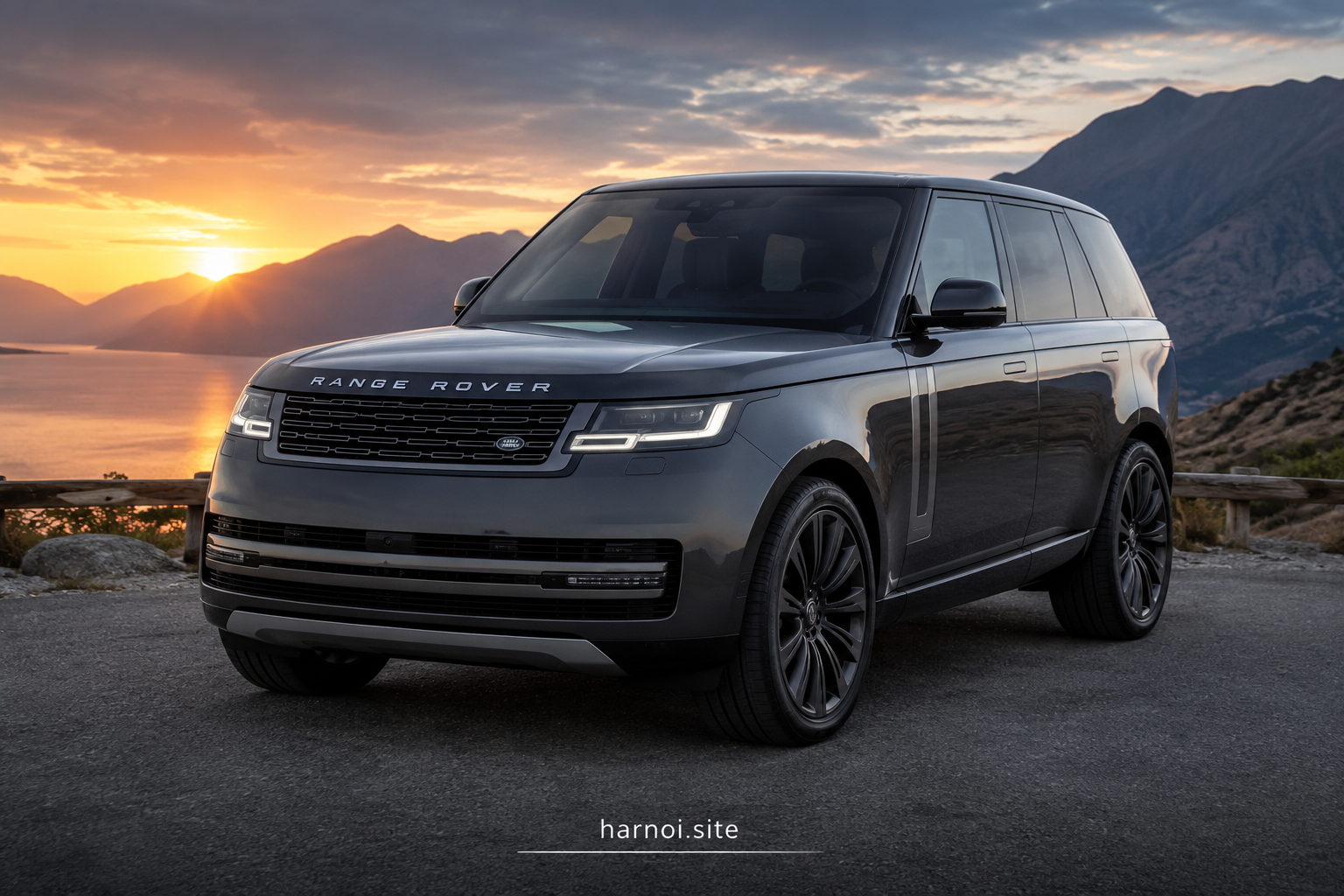
Few nameplates carry the weight the Range Rover does. Since 1970, it has occupied a strange middle ground between working off-roader and formal limousine, and the current fifth-generation model (internally known as the L460) pushes that duality further than ever. This guide walks through everything a shopper or owner needs — specs, real-world performance, running costs, reliability data, and how it stacks up against rivals like the BMW X7, Mercedes-Benz GLS, and Bentley Bentayga.
Range Rover Overview
The Range Rover sits at the top of Land Rover’s lineup as its flagship full-size luxury SUV, built on the aluminum-intensive MLA-Flex platform shared (loosely) with the Range Rover Sport and Defender. For the 2026 model year it’s offered in four core trims — SE, Autobiography, SV, and the new SV Black — <cite index=”1-1″>with 13 distinct trim configurations across body styles and powertrains, ranging from roughly $115,450 for the entry P400 SE up to $263,050 for the P615 SV Black LWB.</cite> A new SV Ultra trim is already confirmed for the 2027 model year.
Exterior Design
The L460’s design language is deliberately minimalist: flush door handles, a clean unbroken beltline, split tailgate, and slim pixel-LED headlights that have become the brand’s signature. <cite index=”7-1″>All 2026 models get privacy glass, flush deployable door handles, rain-sensing wipers, and laminated front windshields, along with heated power-fold mirrors with approach lighting and auto-dimming.</cite> Wheel sizes span 21 to 23 inches depending on trim, and the SV Black adds gloss-black paint, black badging, and a full suite of darkened trim and chrome elements.
Interior Design & Comfort
Cabin quality is where the Range Rover tries hardest to justify its price. <cite index=”7-1″>Signature features across the range include LED or pixel-LED lighting, Windsor or semi-aniline leather, a gesture-operated tailgate, Meridian audio, a panoramic roof, and 24-way “hot stone” massage front seats paired with Executive Class Comfort Plus rear seating on higher trims.</cite> Higher trims add reclining rear seats with center-console club tables (SV Signature Suite), dual rear entertainment screens, and a head-up display. Materials run from perforated leather on the SE up to bespoke ebony semi-aniline leather and sustainable Ultrafabrics/Kvadrat options on SV models.
Engine Options
Land Rover offers four powertrains across the 2026 lineup:
| Engine | Output | Notes |
|---|---|---|
| P400 (3.0L turbo inline-six, mild hybrid) | 395 hp / 406 lb-ft | Standard engine, most trims |
| P550e (3.0L inline-six plug-in hybrid) | 543 hp / 590 lb-ft | ~50-mile EV range, now with DC fast-charging for 2026 |
| P530 (4.4L twin-turbo V8) | 523 hp / 553 lb-ft | Optional across SE/Autobiography |
| P615 (4.4L twin-turbo V8, SV-tune) | 606–607 hp | Exclusive to SV/SV Black |
<cite index=”6-1″>All models come standard with four-wheel drive and an eight-speed automatic transmission.</cite>
Performance & Driving Experience
<cite index=”1-1″>0-60 mph times range from about 5.5 seconds on the base P400 SE down to 4.4 seconds on the range-topping P615 SV Black LWB</cite>, with some SWB SV configurations dipping into the low-4-second range depending on source and testing conditions. Despite its size and roughly 5,700–6,300-lb curb weight, the Range Rover uses adaptive air suspension and rear-wheel steering to feel notably smaller than it is at low speeds, and the Terrain Response system still gives it genuine off-road credibility — a point of differentiation from more road-biased rivals like the GLS and X7.
Fuel Economy & Efficiency
<cite index=”2-1″>The plug-in hybrid P550e is the most efficient option, rated up to 53 MPGe combined on gasoline and electricity, 21 mpg combined on gasoline alone, with a 31.8-kWh battery delivering up to 21 miles of all-electric range.</cite> <cite index=”2-1″>The standard turbocharged inline-six is rated up to 21 mpg combined (19 city/24 highway), while the V8 comes in at up to 19 mpg combined (16 city/23 highway), and the performance-tuned SV trim sits at 18 mpg combined (16 city/22 highway).</cite>
Transmission & Drivetrain
Every 2026 Range Rover pairs its engine with an eight-speed automatic and permanent four-wheel drive with a two-speed transfer case on most trims, plus locking center and rear differentials on off-road-oriented configurations. <cite index=”2-1″>Properly equipped models can tow up to 8,200 pounds.</cite>
Dimensions & Cargo Space
<cite index=”2-1″>In standard-wheelbase form the Range Rover measures 198.9 inches long, 87 inches wide, and 73.6 inches tall.</cite> The long-wheelbase version adds significant rear legroom and is available with either a stretched five-seat cabin or a genuine seven-seat, three-row layout. <cite index=”5-1″>Cargo capacity ranges from about 40.7 cubic feet with seats up to 8.7 cubic feet in the tightest three-row configuration with all rows in use.</cite>
Safety Features
<cite index=”3-1″>Standard safety equipment across the 2026 lineup includes forward collision warning with pedestrian and bicyclist detection, automatic emergency braking, adaptive cruise control, lane-centering assist, blind-spot intervention, rear cross-traffic alert, road-sign recognition, automated parking, a 360-degree camera system, and front and rear parking sensors.</cite> Higher trims add a driver condition monitor and rear traffic monitor.
Technology & Infotainment
<cite index=”1-1″>Base equipment includes a 13.7-inch digital instrument cluster and a 13.1-inch Pivi Pro touchscreen, wireless Apple CarPlay and Android Auto, Amazon Alexa integration, a Wi-Fi hotspot, navigation, a wireless charging pad, a 14-speaker Meridian sound system, and satellite/HD radio.</cite> <cite index=”1-1″>Autobiography trim upgrades to a 34-speaker Meridian system with dual 11.4-inch rear entertainment screens and a head-up display.</cite> Owners should be aware Pivi Pro has had a history of software bugs (see Common Problems below), though most are resolved via over-the-air or dealer updates.
Trim Levels & Variants
- SE — the entry point; still very well equipped with air suspension, rear-wheel steering, heated/ventilated seats, and a panoramic roof.
- Autobiography — adds SV-derived styling touches, upgraded audio, and more luxury features; the trim most reviewers recommend as the sweet spot.
- SV — performance and bespoke-luxury flagship with the most powerful engine, 23-inch wheels, and the SV Signature Suite.
- SV Black — new for 2026, an all-black cosmetic package layered on the SV.
Body styles: Standard Wheelbase (SWB), Long Wheelbase (LWB, 5-seat), and Long Wheelbase Seven Seat (LWB7).
Features Comparison
| Feature | SE | Autobiography | SV / SV Black |
|---|---|---|---|
| Wheels | 21″ | 21–22″ | 22–23″ |
| Audio | 14-speaker Meridian | 34-speaker Meridian | 34-speaker Meridian |
| Rear entertainment | Optional | Standard/no-cost option | Standard |
| Massage seats | — | Front | Front + rear (most configs) |
| Climate zones | 3-zone | 4-zone | 4-zone |
| Engine choice | P400/P550e/P530 | P550e/P530 | P530/P615 |
Pros and Cons
Pros:
- Best-in-class interior materials and ride comfort
- Genuine off-road ability rivals lack
- Strong straight-line performance across the range
- Distinctive, timeless design that ages well
Cons:
- Below-average reliability ratings versus German and Japanese rivals
- High cost of parts, service, and depreciation
- Electrical/software gremlins reported across recent model years
- Some interior rattles and build-quality inconsistency reported by owners
Common Problems
Owner forums and service data point to a recurring set of issues on 2023–2025 model-year L460 Range Rovers:
- Infotainment glitches — Pivi Pro freezes, lagging screens, and connectivity bugs, generally fixable via software updates.
- Air suspension faults — <cite index=”11-1″>unusual noises or slow self-leveling, generally traced to air compressor faults or sensor calibration.</cite>
- Keyless entry/smart key failures — <cite index=”11-1″>intermittent lockouts, sometimes requiring a locksmith or full fob replacement.</cite>
- False driver-assist alerts — <cite index=”11-1″>phantom lane-assist or blind-spot warnings, often traced to sensor misalignment or environmental interference.</cite>
- PHEV-specific quirks — software mismatches and charging/power-delivery issues on P550e models.
- Brake wear and electrical shutdowns — <cite index=”14-1″>owner reports and NHTSA complaint data flag brake-system wear and, in a smaller number of cases, sudden loss of drive power or unexpected stalling, which has drawn regulatory attention.</cite>
Several recalls have touched recent Range Rovers, including <cite index=”9-1″>a Near Field Sensing Module issue that could disable the 3D surround/rearview camera, an oil filter housing that could crack and leak, and a DC-DC converter fault that can cause loss of 12-volt charging and drive power.</cite> By contrast, <cite index=”12-1″>the current L460 generation has not (as of recent reporting) had a formal recall issued in its first several model years, which is unusual for a Jaguar Land Rover product this early in a generation’s life.</cite>
Maintenance & Service Costs
Range Rovers are expensive to maintain relative to mainstream luxury competitors. <cite index=”14-1″>Independent data on the closely related 2025 model puts average annual repair costs around $1,117, with the model ranking near the bottom of the luxury full-size SUV segment on RepairPal.</cite> Air suspension components, complex electronics, and JLR’s parts-supply logistics (owners have reported delays waiting for back-ordered modules) all add to real-world costs. Extended warranty coverage is worth strong consideration once the factory warranty lapses.
Reliability
Independent reliability data is consistently mixed-to-below-average. <cite index=”15-1″>Land Rover as a brand has ranked near the bottom of major manufacturer reliability rankings, for example 27th out of 31 brands in one recent industry brand survey.</cite> <cite index=”14-1″>On Edmunds, the 2025 Range Rover carries a 3.4-out-of-5 owner rating with reliability and manufacturing quality among the most cited weaknesses, and the model has also been given a 2-out-of-5 reliability score with a 17th-of-20 ranking among luxury full-size SUVs on RepairPal.</cite> Owner sentiment is genuinely split: many describe years of trouble-free ownership, while others detail repeated dealer visits for the same unresolved fault. Forum regulars often note that people experiencing problems are more likely to post than satisfied owners, which skews the anecdotal picture somewhat — but it doesn’t change what the aggregated survey and complaint data show.
Ownership Experience
Range Rover ownership tends to be polarized: those who love the brand’s design, ride quality, and prestige generally forgive its quirks, while first-time luxury-SUV buyers coming from more reliable brands are often frustrated by repeat trips to the dealer for issues that “can’t be duplicated.” Loaner-car quality during service visits is also a frequent owner complaint, and customer-service responsiveness from Land Rover corporate gets mixed reviews. A strong relationship with a trusted local dealer or independent specialist meaningfully improves the ownership experience.
Best Model Year to Buy
For the current generation, most owner and expert consensus points toward a 2024 or later model year with the P400 inline-six, once early production issues had been ironed out and before some of the more complex PHEV and V8-specific software issues became more widely reported. <cite index=”12-1″>The 2023-only six-cylinder variant is flagged in complaint data as a comparatively higher-risk pick on the used market, while the BMW-sourced 4.4L V8 in the P530 shows a notably better complaint record with zero fires reported on the engine itself.</cite> If shopping the outgoing generation (L405, sold through 2022) or the earlier L322, later model years within each generation are generally the safer bet as running production changes addressed known faults.
Used Range Rover Buying Guide
- Get a full pre-purchase inspection, with particular attention to the brake system, air suspension compressor, and any stored fault codes — <cite index=”12-1″>brake-related complaints account for roughly a third of reported issues in recent NHTSA data on this generation.</cite>
- Request full service history, especially for any suspension, electrical, or transmission work.
- Verify recall completion using the VIN on the NHTSA website before purchase.
- Budget for a CPO or extended warranty — given the depreciation curve and repair costs, a Certified Pre-Owned example with remaining factory coverage is generally the safer used buy over a private-sale high-mileage car.
- Test the tech thoroughly — cycle through infotainment functions, keyless entry, and driver-assist features during the test drive rather than relying on a quick spin around the block.
Price (New & Used)
<cite index=”1-1″>New 2026 Range Rover MSRPs span roughly $115,450 for the base P400 SE up to $263,050 for the range-topping P615 SV Black LWB</cite>, with most mainstream configurations (Autobiography trims, various wheelbases) landing in the $140,000–$180,000 band. Used values fall quickly in the first two to three years — a well-optioned 2–3-year-old Range Rover can often be found for 30–40% below its original MSRP, though values firm up somewhat on SV and other limited/high-demand trims.
Competitors
The Range Rover’s closest rivals in the full-size luxury SUV segment include:
- BMW X7 — sportier on-road, less standard equipment, no off-road pretensions
- Mercedes-Benz GLS — <cite index=”21-1″>more standard equipment and a stronger available audio system (Burmester vs. BMW’s base setup), plus significantly more interior space and towing capacity than the X7</cite>
- Mercedes-Maybach GLS — direct rival to Range Rover’s top trims on ultra-luxury positioning
- Bentley Bentayga — competes at the SV/Autobiography price point with a more overtly bespoke, handbuilt image
- Lexus LX — stronger reliability reputation, less outright luxury polish
- Cadillac Escalade / Lincoln Navigator — larger domestic alternatives at a lower price point
- Genesis GV80 / GV81 — value-oriented newcomer gaining attention in this space
The Range Rover’s trump card against nearly all of these is genuine off-road capability combined with limousine-level comfort — a combination few rivals attempt to match simultaneously.
Who Should Buy a Range Rover?
The Range Rover suits buyers who prioritize design, ride quality, and brand prestige over ironclad reliability, and who either have access to a good independent/dealer relationship or plan to keep the vehicle under warranty (new lease or CPO). It’s a strong fit for someone who genuinely uses the off-road capability — deep gravel driveways, ranch or rural properties, snow country — rather than someone who simply wants three-row seating and a badge. Buyers for whom dependability and low running costs are the top priority are generally better served by a Lexus LX or Mercedes GLS.
Frequently Asked Questions (FAQs)
Is the Range Rover reliable? Reliability ratings are below average compared to most luxury competitors, though experiences vary widely by individual vehicle and model year.
What’s the difference between the Range Rover and Range Rover Sport? The standard Range Rover is the larger, more formal flagship with a longer-wheelbase option and three-row seating; the Range Rover Sport is smaller, sportier-driving, and doesn’t offer a seven-seat configuration.
How much does a Range Rover cost to maintain? Expect meaningfully higher costs than mainstream luxury brands — budget for air suspension, electronics, and specialist labor rates.
Does the Range Rover come with a plug-in hybrid option? Yes — the P550e delivers roughly 21 miles of electric-only range and up to 53 MPGe combined, with DC fast-charging newly added for 2026.
What’s the towing capacity? Up to 8,200 lbs when properly equipped.
Final Verdict
The Range Rover remains the benchmark for combining genuine luxury with genuine off-road ability — no direct rival matches that blend as convincingly. But that ambition comes at a real cost in reliability and ownership hassle that buyers should go in expecting rather than being surprised by. For someone drawn to its design and capability who’s prepared for the maintenance realities — ideally via a lease, CPO purchase, or extended warranty — it remains one of the most desirable SUVs money can buy. For buyers whose top priority is trouble-free ownership, a Lexus LX or Mercedes-Benz GLS is the safer choice.