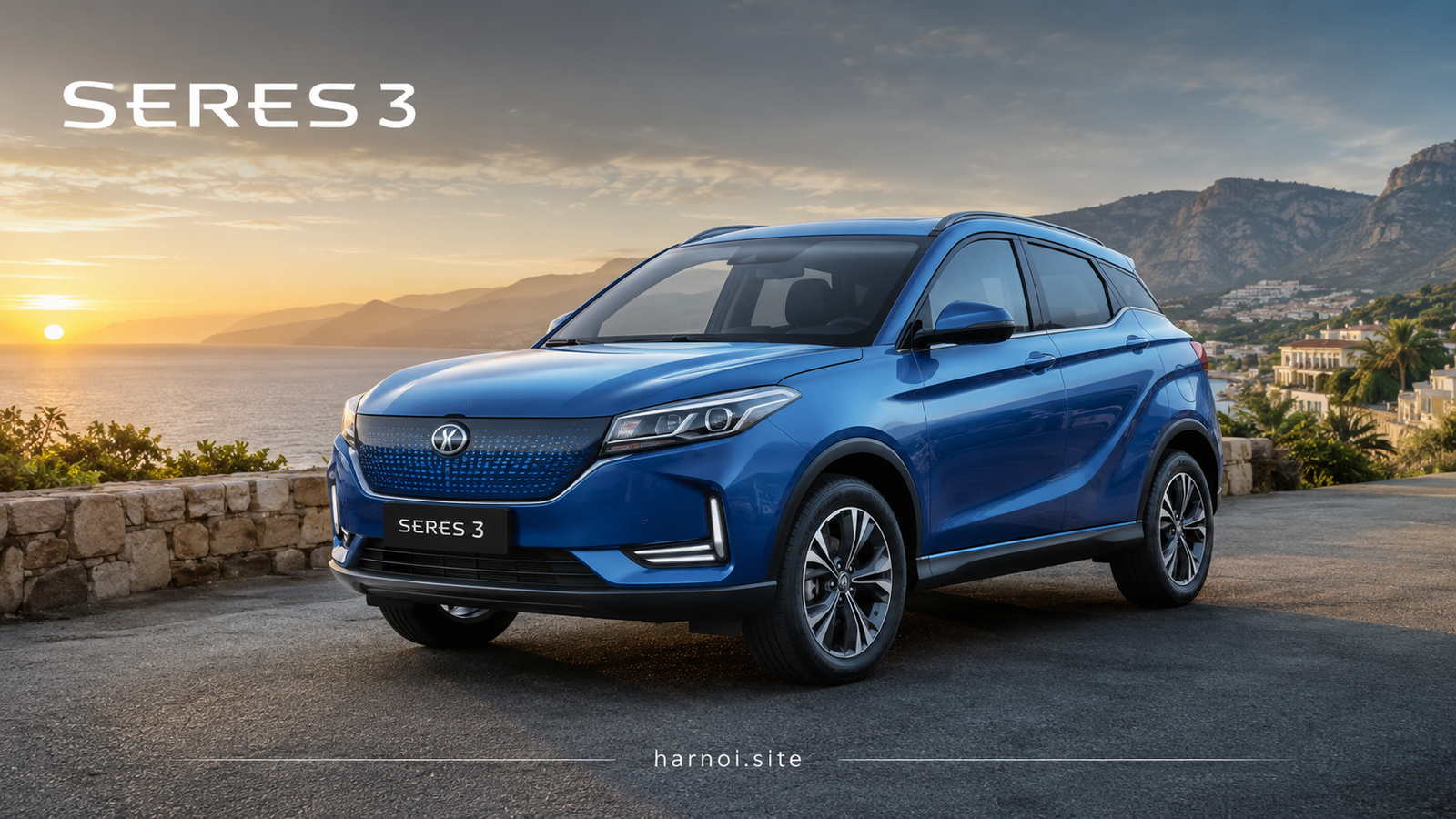
Note: The Seres 3 (sold in China since 2019 as the Fengon E3, and marketed by Seres — a brand tied to Dongfeng) is offered across several markets including China, France, Germany, Italy, Spain, the Netherlands, Israel, and Singapore. Specs, pricing, and available features vary meaningfully by market and model year, so figures below should be treated as representative rather than universal. Where sources disagree, that’s noted.
Introduction
The Seres 3 is a budget-oriented electric compact SUV aimed at buyers who want to get into an EV without spending Tesla or mainstream-brand money. It’s not trying to be exciting — it’s trying to be affordable, practical, and easy to live with. Whether it succeeds at that depends heavily on which market you’re buying in and which reviewer you ask, since opinions on this car range from “solid value” to genuinely scathing.
Exterior Design
The styling is conservative rather than flashy — clean lines, a fairly generic SUV silhouette, and a front fascia with LED headlights and a prominent grille. It won’t turn heads next to something like a BYD Atto 3, but it also doesn’t look cheap or awkward. It’s the kind of design that’s meant to blend in rather than make a statement.
Interior & Cabin Quality
Cabin quality is a mixed bag. The dashboard layout borrows visual cues from more premium brands — the center console and air vents have drawn comparisons to Mercedes-Benz’s EQA, and blue contrast stitching on the seats is a deliberate nod to the car’s electric identity. That said, materials lean heavily on hard plastics, and while faux leather is available on higher trims, several reviewers note it doesn’t do much to elevate the overall feel compared to rivals like the MG ZS EV. The floor is flat, which helps rear legroom, but the rear seats sit low, which some testers found less comfortable for longer trips.
Battery Capacity
The Seres 3 uses a lithium-ion battery pack, with usable capacity reported between roughly 52.5 kWh and 53.6 kWh depending on the source and market. This isn’t a huge pack by 2026 standards, which is reflected in the car’s mid-pack range figures.
Electric Motor & Performance
A single permanent-magnet synchronous motor drives the front wheels, producing figures in the 160–163 hp (roughly 120 kW) range and 300 Nm of torque across most reported specs. It’s worth flagging that one independent French reliability review found the motor’s output can taper off significantly as the battery depletes — dropping to around 109 hp once the pack reaches roughly 50% charge — which would noticeably affect acceleration and responsiveness later in a charge cycle. This kind of power-tapering behavior wasn’t something other reviewers highlighted as strongly, so it may vary by market or software version, but it’s a point worth asking about if you’re test-driving one.
Driving Range
Official WLTP range figures range from about 300 km to 331 km depending on the specific trim and market — figures that place it squarely in “compact budget EV” territory rather than anywhere near long-range EVs. NEDC-cycle figures (a more optimistic older test standard, mostly relevant to the Chinese market) claim over 400 km, but WLTP or real-world numbers are the more useful reference for most buyers.
Charging Time & Charging Options
- AC home/wall charging: With a 6.6 kW onboard charger, a full charge from empty takes roughly 7–9 hours.
- DC fast charging: Maximum DC charging power is reported anywhere from 60 kW to 100 kW depending on the source, with a 10–80% top-up taking approximately 30–45 minutes under ideal conditions.
- One notable red flag: at least one in-depth European road test reported the car occasionally refusing to connect to certain modern public fast chargers, along with unexplained charging interruptions — a real-world reliability concern rather than a spec-sheet issue.
Top Speed & Acceleration
Top speed sits around 160 km/h, with 0–100 km/h acceleration coming in at about 8.9 seconds. This is unremarkable performance — adequate for city and highway merging, but not quick by modern EV standards, where even budget rivals often dip under 8 seconds.
Dimensions & Cargo Space
The Seres 3 is roughly Hyundai Kona-sized. Boot space is a competitive 490 liters, which is solid for the compact SUV segment and useful for family or weekend-trip duty. Towing capacity, however, is rated at 0 kg for both braked and unbraked trailers — this is not a car built with towing in mind, aside from aftermarket bike-carrier solutions some third parties offer.
Safety Features
This is one of the more inconsistent areas depending on trim and market. Some configurations include 360-degree camera views, lane-keep assist, and forward collision warning. However, at least one European test unit reportedly shipped with just two airbags on the base model and lacked autonomous emergency braking or blind-spot monitoring — both increasingly considered baseline expectations in the segment. The reversing camera and 360-degree system have also been criticized for poor screen quality and reduced visibility in bright sunlight. If safety tech is a priority, checking the exact trim and market-specific safety package before buying is essential.
Technology & Infotainment
A 10.25-inch touchscreen is standard, paired with a 7-inch digital instrument cluster on most trims. Smartphone integration is inconsistent across markets and sources — some report Apple CarPlay support without Android Auto, others report neither, with screen-mirroring offered as a workaround instead. Software responsiveness has also drawn criticism, with multiple reviews citing laggy menus, an occasionally freezing reverse camera feed, and recurring software bugs.
Comfort & Practicality
Ride comfort is a genuine bright spot — soft suspension tuning filters out road imperfections well, and cabin noise insulation is reasonable for the price point. Rear passenger space is generous thanks to the flat floor, though taller rear passengers may find headroom tight due to the sloped roofline. Front seats are comfortable for shorter trips, but a few reviews note lumbar support could be better for longer journeys.
Driving Experience
City driving is where the Seres 3 is most at home — light steering, smooth power delivery, and easy maneuverability. Push it onto the highway or into corners, though, and its limitations show: motor noise increases, body control loosens over uneven surfaces, and steering feedback is minimal at speed. Regenerative braking has also been criticized as inconsistent, with one tester describing it as producing an unwanted “bunny-hop” sensation, and multiple reviews flagging overall braking distances as longer than segment norms.
Real-World Efficiency
Energy consumption is reported around 18 kWh/100 km in real-world testing, which is reasonable for a compact electric SUV, though actual efficiency (and therefore real-world range) will vary with driving style, climate, and terrain — as with any EV.
Reliability & Common Issues
Reliability opinions genuinely diverge depending on the source:
- Some outlets (particularly those closer to official marketing content) describe Seres as building a reputation for dependable EVs with reduced maintenance needs due to fewer moving parts.
- Independent European road tests and reliability write-ups tell a rougher story: charging connection failures at public stations, unexplained charge interruptions, power output that reportedly tapers as the battery depletes, underwhelming brake performance, and persistent infotainment software bugs.
- One especially critical review from an EV-focused Australian outlet ranked it among the worst EVs the reviewer had personally driven, citing the DC charging failures and poor overall drive quality as major factors.
The takeaway: this is not a car with a long, proven reliability track record the way an established brand would have. Early ownership reports are mixed, and buyers should weigh the lower purchase price against a real chance of dealing with software glitches or charging quirks.
Maintenance & Service Costs
As with most EVs, there’s no oil changes, timing belts, or exhaust system to worry about, which keeps routine maintenance costs down. Seres backs the car with a 7-year/150,000 km warranty in at least the French market, which is a meaningful safety net given the brand’s limited track record. That said, dealer network density is thin in some markets — one reviewer in France noted encountering barely any other Seres 3s on the road despite dozens of listed dealers, which raises legitimate questions about long-term parts and service availability if the brand doesn’t grow its footprint.
Pros and Cons
Pros:
- Competitive, aggressive pricing relative to established EV rivals
- Generous boot space (490 L) and flat-floor rear cabin
- Comfortable, compliant ride quality on most road surfaces
- Long warranty coverage (7 years/150,000 km in some markets)
- Decent equipment levels for the price, including a large touchscreen
Cons:
- Mixed-to-poor real-world reliability reports, especially around DC fast charging
- Reported power degradation as the battery depletes (per at least one independent test)
- Weak, inconsistent braking performance
- Inconsistent or missing Apple CarPlay/Android Auto support depending on market
- Sparse dealer network in some regions, raising service/parts concerns
- Safety equipment varies by trim and can lag segment expectations (limited airbags, no AEB in some configurations)
Seres 3 vs Competitors
Compared to segment rivals like the MG ZS EV, BYD Atto 3, Hyundai Kona Electric, and MG4, the Seres 3 doesn’t clearly win on price in every market — in France, for instance, the MG4 has undercut it, and the Kona Electric has been priced close to it despite being a more established nameplate. Where the Seres 3 competes best is in cargo space and ride comfort; where it lags is in tech polish, safety equipment consistency, and reliability reputation. Buyers cross-shopping this segment should weigh brand track record and after-sales support as heavily as the spec sheet.
Is the Seres 3 Worth Buying?
It depends heavily on your priorities and risk tolerance. If a low purchase price and decent day-to-day comfort matter more than a proven reliability record and robust safety tech, the Seres 3 is a reasonable, if unglamorous, way into EV ownership. If you want a known quantity — strong crash-test history, mature charging reliability, a dense service network — established rivals from Hyundai, Kia, or even other Chinese brands like BYD currently have stronger track records.
Final Verdict
The Seres 3 is a car of contrasts: comfortable but underwhelming to drive with enthusiasm, generously specced on paper but inconsistent in real-world execution, and aggressively priced but backed by a newer, less-proven brand. It’s best suited to buyers who want a low-stakes, low-cost entry into EV ownership for straightforward commuting and errands — not to those seeking a polished or worry-free ownership experience. As with any newer-to-market brand, it’s worth test-driving the specific trim and market version you’re considering, and asking dealers directly about known charging and software issues before signing anything.
Frequently Asked Questions (FAQ)
What is the real-world range of the Seres 3? Official WLTP figures range from about 300–331 km depending on market and trim. Real-world range will typically run somewhat lower, especially in cold weather or at sustained highway speeds.
How long does it take to charge a Seres 3? Around 7–9 hours on a home AC wall charger (6.6 kW), or roughly 30–45 minutes for a 10–80% DC fast charge, though some owners have reported issues connecting to certain public fast chargers.
Does the Seres 3 support Apple CarPlay or Android Auto? This varies by market and source — some configurations reportedly support Apple CarPlay only, others report neither being available, with screen mirroring offered as an alternative.
Is the Seres 3 reliable? Reliability reports are mixed. Some sources describe it as dependable with low maintenance needs typical of EVs, but independent testing has flagged DC charging issues, possible power degradation as the battery depletes, and infotainment software bugs. Its track record is limited given the brand’s relatively short time on the global market.
How much does the Seres 3 cost? Pricing varies significantly by market — for example, roughly €33,990–€36,990 in France, or around S$160,000 in Singapore, before local incentives or rebates. Check current local pricing, as this shifts often and regional EV incentives can substantially change the effective cost.
What is the warranty on the Seres 3? At least in the French market, Seres offers a 7-year/150,000 km warranty, which is longer than many competitors — a potentially reassuring factor given the brand’s newer status.
Leave a Reply