Overview
The Seres 5 is a mid-size electric crossover from Seres (formerly known as SF Motors/Seres SF5 in China), built as the global-market EV variant of the Seres A5/SF5 platform. Positioned to compete directly with the Tesla Model Y, the Seres 5 pairs a long-range LFP battery lineup with strong dual-motor performance and a tech-forward cabin. It’s currently sold across Europe, the Middle East, Southeast Asia, and other right-hand-drive markets as Seres expands beyond China, with the brand targeting large volume growth outside its home market over the next several years.
Exterior Design
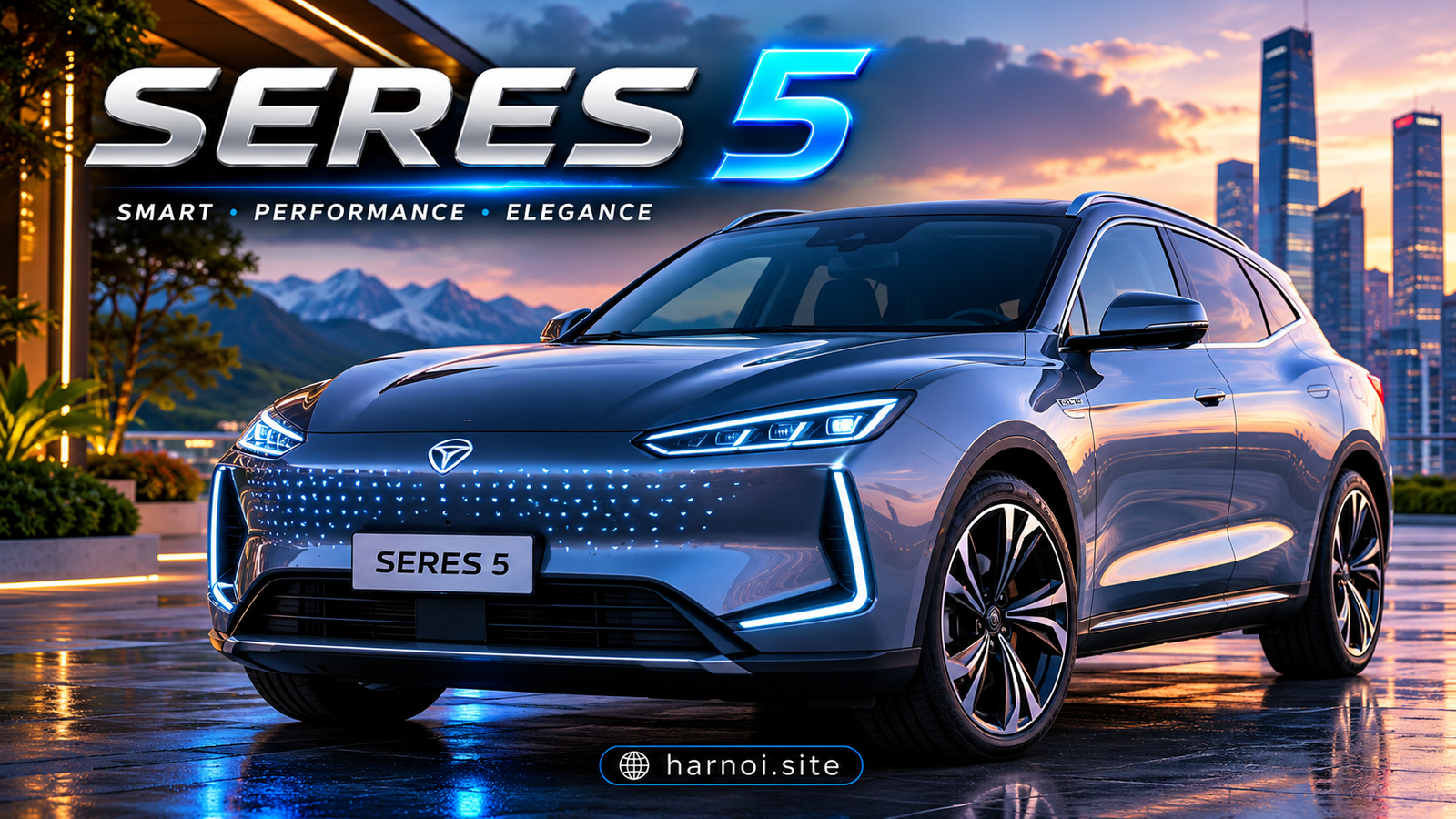
The Seres 5 wears a sleek, coupe-like silhouette with flowing character lines that give it a more dynamic profile than a typical boxy crossover — some reviewers have compared its proportions to European rivals like the Mercedes A-Class. Full-width LED light bars front and rear, a smoothed-over grille (typical of EV design language), flush door handles, and large 20-inch alloy wheels wrapped in Pirelli P Zero tires all contribute to a premium, aerodynamically efficient look designed to maximize range as much as curb appeal.
Interior & Cabin Quality
Step inside and the Seres 5 leans into a minimalist, screen-dominated cabin. Higher trims get Nappa leather upholstery, 12-way power-adjustable front seats with heating, ventilation, memory, and massage functions, a panoramic glass roof, and 64-color ambient lighting. Build quality feels a notch above what buyers might expect from a relatively new entrant, with soft-touch materials on the dash and door panels and tight panel gaps throughout the test cars reviewers have driven.
Technology & Infotainment
The centerpiece is a large central touchscreen (reported between 12.3 and 15.6 inches depending on market and trim) paired with a 10.25-inch digital driver display. The system supports wireless Apple CarPlay and Android Auto, over-the-air updates, and a suite of connected-car features. Convenience touches include a wireless phone charger, multiple USB-C and USB-A ports, and dual-zone automatic climate control.
Battery, Motor & Performance
The Seres 5 lineup is built around lithium iron phosphate (LFP) battery packs, prized for their longevity and thermal stability over the nickel-based chemistries used in some rivals:
- 2WD Standard: 80 kWh battery, single rear motor producing roughly 220 kW (295 hp) and 420 Nm of torque, 0–100 km/h in about 6.8 seconds
- 4WD Premium: 80 kWh battery, dual-motor AWD with a combined output of roughly 430 kW (577 hp) and 940 Nm of torque, 0–100 km/h in around 4 seconds
- 4WD Flagship: Steps up to a larger ~90 kWh semi-solid-state battery while retaining the dual-motor AWD powertrain, with similarly rapid acceleration
The dual-motor variants deliver genuine performance-EV numbers, putting the Seres 5 on paper ahead of many mainstream crossover EVs in a straight line, while the single-motor Standard trim prioritizes efficiency and value.
Driving Range & Charging
WLTP-rated range varies by variant:
- 2WD Standard (80 kWh): up to roughly 500 km (310 miles)
- 4WD Premium (80 kWh): around 483 km (300 miles), slightly lower due to the added weight and power draw of the second motor
- 4WD Flagship (90 kWh): up to roughly 530 km (329 miles), the longest-range option in the lineup
DC fast charging is a strong point across the range, with most variants able to recover a 20–80% charge in well under an hour (figures reported range from roughly 30 to around 50 minutes depending on variant, charger power, and conditions). Onboard AC charging tops out at 11 kW for overnight or destination charging.
Safety Features
Seres has equipped the 5 with a comprehensive active and passive safety package, including:
- Forward Collision Warning (FCW) and Automatic Emergency Braking (AEB)
- Lane Departure Warning (LDW) and Lane Keeping Assist (LKA)
- Blind Spot Detection (BSD) and Rear Cross Traffic Alert (RCTA)
- Lane Change Assist (LCA) and Intelligent High Beam (IHB)
- Multiple airbags (up to 10 depending on market/trim), tire pressure monitoring, and stability control
- A body structure using a high proportion of high-strength and hot-formed steel for crash protection
Comfort & Practicality
The cabin is genuinely spacious for the segment, with a wheelbase of around 2,875 mm translating into generous rear legroom. Dual-zone climate control, heated/ventilated seats, and a well-insulated cabin (Seres cites reduced road and wind noise as a design priority) make it comfortable for daily commuting and longer trips alike.
Cargo Space
Trunk capacity is reported to range from roughly 369 to 776 liters depending on configuration and rear seat position, giving the Seres 5 competitive practicality for family use, weekend trips, or hauling gear, though Seres has not confirmed a front trunk (frunk) on the electric variants.
Driving Experience
On the road, the Seres 5 feels composed rather than harsh, prioritizing a comfort-oriented ride over outright sportiness — though the dual-motor variants have more than enough power on tap for confident overtaking and highway merging. Given the platform’s roots as a converted hybrid SUV rather than a ground-up EV design, some reviewers note it doesn’t feel quite as dynamically sharp as purpose-built EV rivals, but it still delivers a smooth, quiet, and refined experience for most driving situations.
Ride Quality & Handling
The Seres 5 uses a front double-wishbone and rear multi-link independent suspension setup, a more sophisticated arrangement than the simple strut setups found on many crossovers in this price range. This contributes to a ride that soaks up bumps well while keeping body roll in check during cornering. Steering is light and easy to manage in town, though it doesn’t offer huge amounts of feedback for drivers who want a sportier feel.
Available Variants & Trim Levels
Depending on the market, the Seres 5 is typically offered in three core configurations:
- 2WD Standard – 80 kWh battery, single rear motor, longest single-motor range
- 4WD Premium – 80 kWh battery, dual-motor AWD, strong performance
- 4WD Flagship – 90 kWh semi-solid-state battery, dual-motor AWD, longest overall range
Some markets also list Comfort and Premium equipment tiers layered on top of these powertrain configurations, affecting features like seat upholstery, sunroof, and driver-assistance packages.
Specifications
| Spec | 2WD Standard | 4WD Premium | 4WD Flagship |
|---|---|---|---|
| Battery | 80 kWh LFP | 80 kWh LFP | ~90 kWh semi-solid-state |
| Drive | RWD, single motor | AWD, dual motor | AWD, dual motor |
| Power | ~220 kW / 295 hp | ~430 kW / 577 hp | ~430 kW / 577 hp |
| 0–100 km/h | ~6.8 sec | ~4.0 sec | ~4.0 sec |
| WLTP Range | ~500 km | ~483 km | ~530 km |
| DC Fast Charge (20–80%) | under ~42 min | under ~42 min | under ~51 min |
| AC Charging | 11 kW | 11 kW | 11 kW |
| Wheelbase | 2,875 mm | 2,875 mm | 2,875 mm |
| Cargo capacity | up to ~776 L | up to ~776 L | up to ~776 L |
Note: Specs vary by market/region; figures above reflect commonly reported values and should be confirmed with your local dealer.
Pros
- Excellent WLTP range, especially on the Flagship variant
- Strong dual-motor performance for the price
- Spacious, well-equipped, premium-feeling cabin
- Sophisticated double-wishbone/multi-link suspension for a comfort-focused ride
- Comprehensive suite of driver-assistance safety features
- Fast DC charging across the lineup
Cons
- Platform is adapted from a hybrid SUV rather than a dedicated EV architecture, which can show in outright dynamic sharpness
- Brand is new to many Western markets, meaning limited long-term reliability data and a smaller dealer/service network
- No confirmed frunk
- Pricing and exact specs vary noticeably by market, making direct comparisons tricky
Price
Pricing differs significantly by market. As examples reported in various regions:
- Norway: from roughly NOK 599,000 (about $57,000)
- UAE: starting around AED 199,000–230,000 depending on variant
- Other markets list entry pricing in the mid-$30,000s to $50,000+ range depending on battery size and drivetrain
Because Seres prices and configures the 5 differently by country, buyers should check with a local dealer or the official regional Seres website for exact, current pricing.
Competitors
The Seres 5 goes up against a crowded field of mid-size electric crossovers, including:
- Tesla Model Y
- Volkswagen ID.4
- Ford Mustang Mach-E
- Audi Q4 e-tron
- Nissan Ariya
- Hyundai Kona Electric
Against this group, the Seres 5’s strongest selling points are its range (particularly the Flagship trim) and dual-motor performance for the money, while its main disadvantages are brand recognition and charging network familiarity compared to more established players like Tesla.
Who Should Buy the Seres 5?
The Seres 5 makes the most sense for buyers who want maximum range and strong performance per dollar, are comfortable with a newer brand in their market, and prioritize cabin comfort and tech over outright driving sharpness. Families needing rear-seat space and cargo room, plus commuters who want fast DC charging for longer trips, are a particularly good fit.
Final Verdict
The Seres 5 is a genuinely compelling proposition on paper: strong range, quick acceleration in dual-motor form, a comfortable and well-equipped cabin, and competitive pricing in the markets where it’s sold. Its biggest hurdles are the same ones facing any newer EV brand entering established markets — unproven long-term reliability and a smaller support network — rather than anything wrong with the car itself. For buyers willing to take a chance on a newer name, the Seres 5 offers a lot of EV for the money.
Frequently Asked Questions (FAQs)
What is the range of the Seres 5? Depending on variant and battery size, the Seres 5 offers a WLTP-rated range of roughly 483 to 530 km (300–329 miles).
Is the Seres 5 all-wheel drive? The Premium and Flagship trims use dual-motor AWD, while the Standard trim is single-motor RWD.
How fast does the Seres 5 charge? Most variants can DC fast-charge from 20% to 80% in well under an hour, with times ranging from roughly 30 to 51 minutes depending on variant and battery.
How much does the Seres 5 cost? Pricing varies by market, from roughly the mid-$30,000s up to $57,000+ depending on region, trim, and currency/incentives.
Who makes the Seres 5? Seres, a Chinese automaker (formerly known as SF Motors), manufactures the 5 as the global-market EV version of its SF5/A5 platform.
What are the Seres 5’s main competitors? The Tesla Model Y, Volkswagen ID.4, Ford Mustang Mach-E, Audi Q4 e-tron, and similar mid-size electric crossovers.
Leave a Reply