Overview
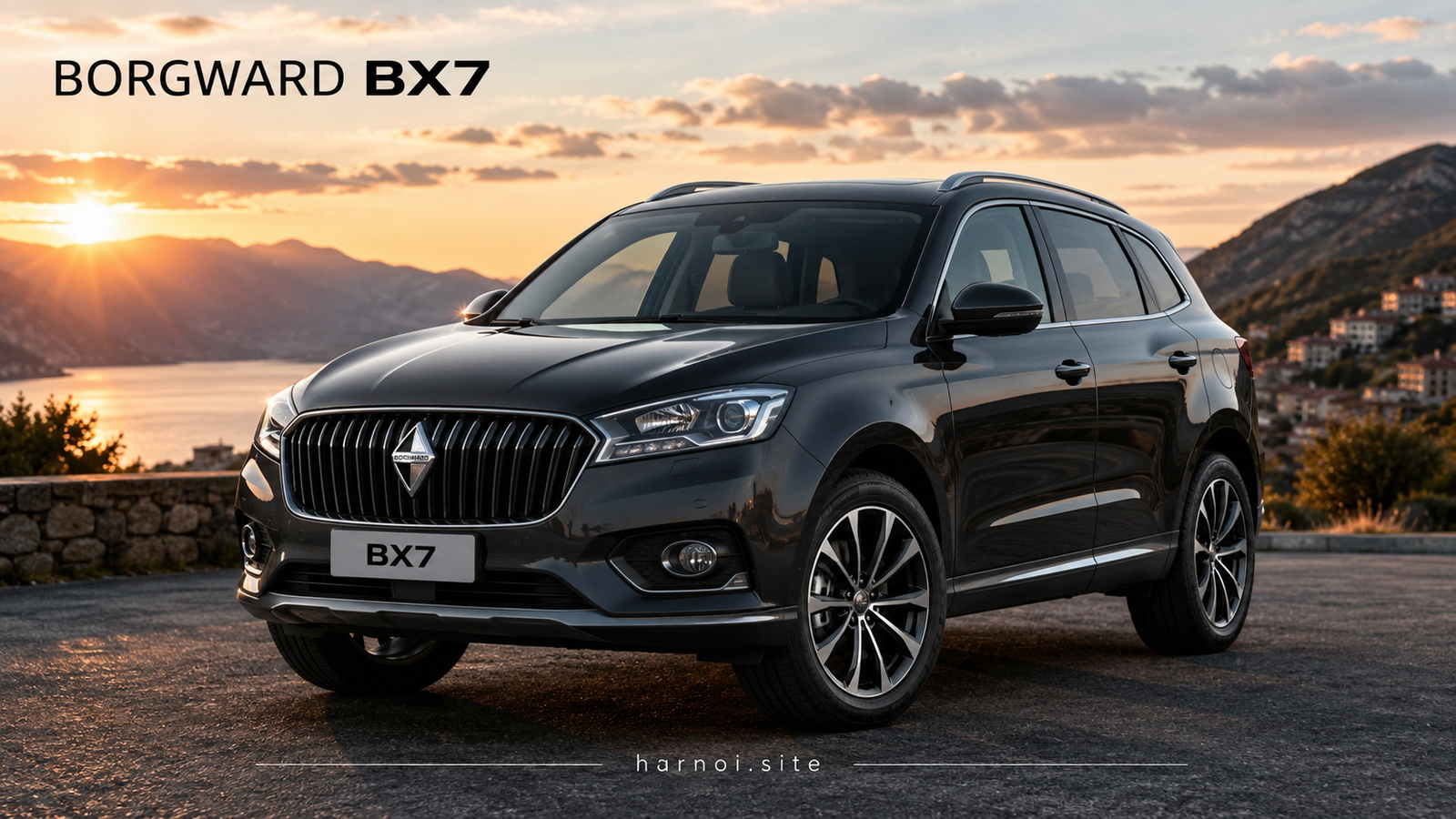
The Borgward BX7 is a compact-to-midsize luxury crossover SUV that marked the return of the historic German Borgward brand after a decades-long hiatus, following the original company’s 1961 bankruptcy. The revival was a Sino-German effort: the BX7 was engineered with German input but built in China by Foton Motor, with the platform tracing back to GM2900/Saab 9-3 underpinnings acquired by BAIC. It debuted at the 2015 Frankfurt Motor Show and was produced roughly from 2016 to 2021, primarily for European, Middle Eastern, and Asian markets. It was never officially sold in North America.
The BX7 aimed to compete with the Audi Q5 and BMW X3-class of vehicles, offering a five- or seven-seat layout, all-wheel drive, and a leather-trimmed cabin at a more accessible price point than the established German rivals.
Exterior Design
The BX7’s front end features a wide hexagonal grille with vertical chrome slats and a large diamond-shaped Borgward badge at its center. A short front overhang, flared fenders, and a subtly rising beltline give it a fairly conventional but well-proportioned SUV profile. Silver roof rails, standard 18-inch wheels (with an optional 20-inch set), and a roof-mounted spoiler with an integrated brake light round out the exterior. At the rear, wide taillights stretch from the quarter panels onto the tailgate to visually widen the car, while a wraparound bumper with rock-slider-style trim and dual exhaust outlets adds a mild off-road flavor.
Interior & Cabin Quality
Inside, the BX7 leans into a premium feel with a leather-wrapped cabin, mildly bolstered front bucket seats designed for long-distance comfort, and a dashboard laid out with a driver-focused center stack. Middle-row buyers could choose between a 60/40 split-folding bench or a pair of captain’s chairs, and a third row was available for two extra passengers — though headroom and legroom back there are tight, as is typical for this vehicle size. Fit and finish were generally regarded as solid for the price bracket, even if some materials don’t quite match the segment’s German benchmarks.
Engine Specifications
The BX7 uses a 2.0-liter turbocharged inline-four gasoline engine, derived from a Saab-originated design. Reported output varies slightly by market and model year, but commonly cited figures are:
- Power: roughly 221–227 horsepower
- Torque: roughly 300–342 Nm depending on tune and source
A hybrid variant was also referenced in some markets, with notably higher combined output, though it saw limited distribution.
Performance & Driving Experience
Performance is adequate rather than exciting — in line with the BX7’s positioning as a comfort-oriented family SUV rather than a driver’s car. Most sources put the 0–100 km/h (0–62 mph) sprint at around 9–10 seconds, with a top speed in the 200–206 km/h range. The turbo engine provides decent low-end torque for city and highway driving, though some reviewers note turbo lag at light throttle and a lack of refinement at higher RPMs compared to rivals with more advanced direct-injection or variable valve timing systems.
Fuel Economy (Mileage)
Fuel consumption figures reported for the BX7 generally fall in the range of 9.5–11.6 L/100km (roughly 20–24 mpg US) in mixed driving, which is acceptable but not class-leading for a turbocharged compact SUV.
Transmission & Drivetrain
The BX7 was primarily offered with a six-speed automatic transmission (some sources cite an Aisin-sourced unit) paired with all-wheel drive, sending power to all four corners for improved traction. Some market listings also mention a 7-speed dual-clutch option, though the six-speed automatic with AWD appears to be the more consistently documented setup across sources.
Dimensions & Cargo Space
- Length: approximately 4,715 mm
- Width: approximately 1,911 mm
- Height: approximately 1,690 mm
- Wheelbase: approximately 2,760 mm
- Seating: 5- or 7-seat configurations
- Cargo capacity: around 545 liters (with rear seats in place)
- Fuel tank: around 60 liters
These dimensions put the BX7 solidly in compact-to-midsize crossover territory, comparable to rivals like the Audi Q5 or Volkswagen Tiguan Allspace.
Safety Features
Being a Chinese-built model aimed largely at emerging and mid-tier markets, the BX7’s safety equipment varied significantly by trim and region. Higher trims typically included features like multiple airbags, stability and traction control, and available driver-assistance features such as parking sensors and a rearview camera. However, independent crash-test data (e.g., from Euro NCAP) for the BX7 is limited or unavailable in many markets, so buyers considering a used example should verify specific safety equipment and any available crash-test ratings for their region and model year rather than assuming parity with established German competitors.
Technology & Infotainment
The BX7’s infotainment setup centered on a touchscreen display (up to roughly 12.3 inches on higher trims) integrated into the dashboard, with steering-wheel-mounted controls. Depending on trim and market, features included dual-zone automatic climate control, a panoramic sunroof, and connectivity options typical of the era. It’s worth noting that the sophistication of these systems — and the availability of smartphone integration like Apple CarPlay/Android Auto — varied by region and model year, so this is another area to verify directly on any specific used unit.
Comfort & Seating
Comfort was one of the BX7’s stronger suits. The front seats were designed with long-distance comfort in mind, and the option of captain’s chairs in the second row added a more premium, spacious feel for smaller families. The third row, while a nice-to-have for occasional use, is best reserved for children or short trips given the limited space.
Ride Quality & Handling
The BX7 uses a MacPherson strut front suspension and a multi-link rear setup, tuned more for comfort than sportiness. Reviewers generally describe competent body-roll control and reasonable noise insulation on smooth roads, but note the chassis can feel less rigid on rougher surfaces, with some vagueness in the electric power steering and brake pedal feel. In short: it’s tuned for relaxed commuting and highway cruising rather than back-road enthusiasm.
Pros and Cons
Pros:
- Distinctive styling with genuine “premium brand” curb appeal
- Comfortable front seats and available captain’s chairs
- Standard all-wheel drive across most trims
- Competitive pricing versus established German SUVs
- Reasonably generous cargo and passenger space for the segment
Cons:
- Turbo lag and less refinement at higher RPMs
- Vague steering feel and some chassis flex on rough roads
- Tight third row
- Limited/inconsistent independent crash-test data
- Sparse dealer and parts network outside its core markets, which affects long-term ownership
- Model is now out of production (as of 2021), so used buyers face aging-vehicle considerations
Maintenance & Reliability
Because the BX7 was built in relatively low volumes and its parent company faced ongoing financial instability, long-term reliability data is thinner than for mainstream competitors. Owners in some markets have reported that parts availability and specialized service can be harder to find outside major cities, which is an important consideration for anyone shopping a used BX7 today. As with any low-volume or discontinued brand, it’s wise to find a specialist mechanic or dealer network before committing to a purchase.
Common Problems
While comprehensive long-term reliability studies are limited, recurring themes in owner and reviewer feedback include:
- Turbo lag under light throttle in everyday driving
- Inconsistent brake pedal feel reported by some drivers
- Chassis flex and reduced steering precision on rough or winding roads
- Uncertainty around parts and service support due to Borgward’s financial struggles and the brand’s eventual production halt
Given the brand’s turbulent corporate history, it’s especially important for used-BX7 buyers to have a pre-purchase inspection done by a mechanic familiar with the platform.
Competitors
The BX7 competed against a broad range of compact-to-midsize crossovers, including:
- Audi Q5
- BMW X3
- Volkswagen Tiguan Allspace
- Haval H6 / H9
- Various Chinese-market SUVs from brands like Geely and Great Wall
Against these rivals, the BX7’s main selling points were styling and price; its main weaknesses were brand recognition, resale value, and long-term parts/service support.
Who Should Buy the Borgward BX7?
The BX7 could make sense for a buyer who:
- Wants distinctive, premium-looking styling without paying full German-brand prices
- Prioritizes comfort-oriented cruising over sporty handling
- Has access to a knowledgeable independent mechanic or regional dealer support
- Is shopping the used market and has budgeted for a thorough pre-purchase inspection
It’s a harder recommendation for buyers who prioritize strong resale value, extensive dealer networks, or best-in-class independent safety ratings, given the brand’s discontinued status and thinner track record.
Frequently Asked Questions (FAQs)
Is the Borgward BX7 still in production? No. The BX7 was produced from roughly 2016 to 2021; Borgward’s ongoing financial difficulties affected the brand’s broader production plans, and any BX7 purchase today would be on the used market.
Is the Borgward BX7 all-wheel drive? Most BX7 trims came with all-wheel drive paired with a six-speed automatic transmission, though exact drivetrain configuration varied slightly by market.
How many people can the Borgward BX7 seat? It was offered in both 5-seat and 7-seat configurations, with the third row best suited to children or short trips.
Is the Borgward BX7 reliable? Reliability data is limited due to the brand’s low sales volumes and financial instability. A pre-purchase inspection by a specialist is strongly recommended for any used example.
How does the Borgward BX7 compare to the Audi Q5 or BMW X3? The BX7 undercuts both on price and offers similarly premium-looking styling and comfort, but it falls short on brand reputation, resale value, driving refinement, and dealer/parts support.
Final Verdict
The Borgward BX7 is an interesting case study in automotive ambition: a historic German name resurrected with Chinese manufacturing muscle, aiming to deliver premium looks and comfort at a value price. It largely succeeded on styling and cabin comfort, and standard all-wheel drive is a genuine plus. But turbo refinement, chassis dynamics, and — most importantly — the brand’s shaky financial history and eventual production halt mean it’s best approached today as a used-market curiosity rather than a mainstream recommendation. Buyers drawn to its unique story and design should budget for a careful inspection and confirm local parts/service support before signing on.
Leave a Reply